Cocopah Tribe Harvests Native Plants to Restore Colorado River Lands
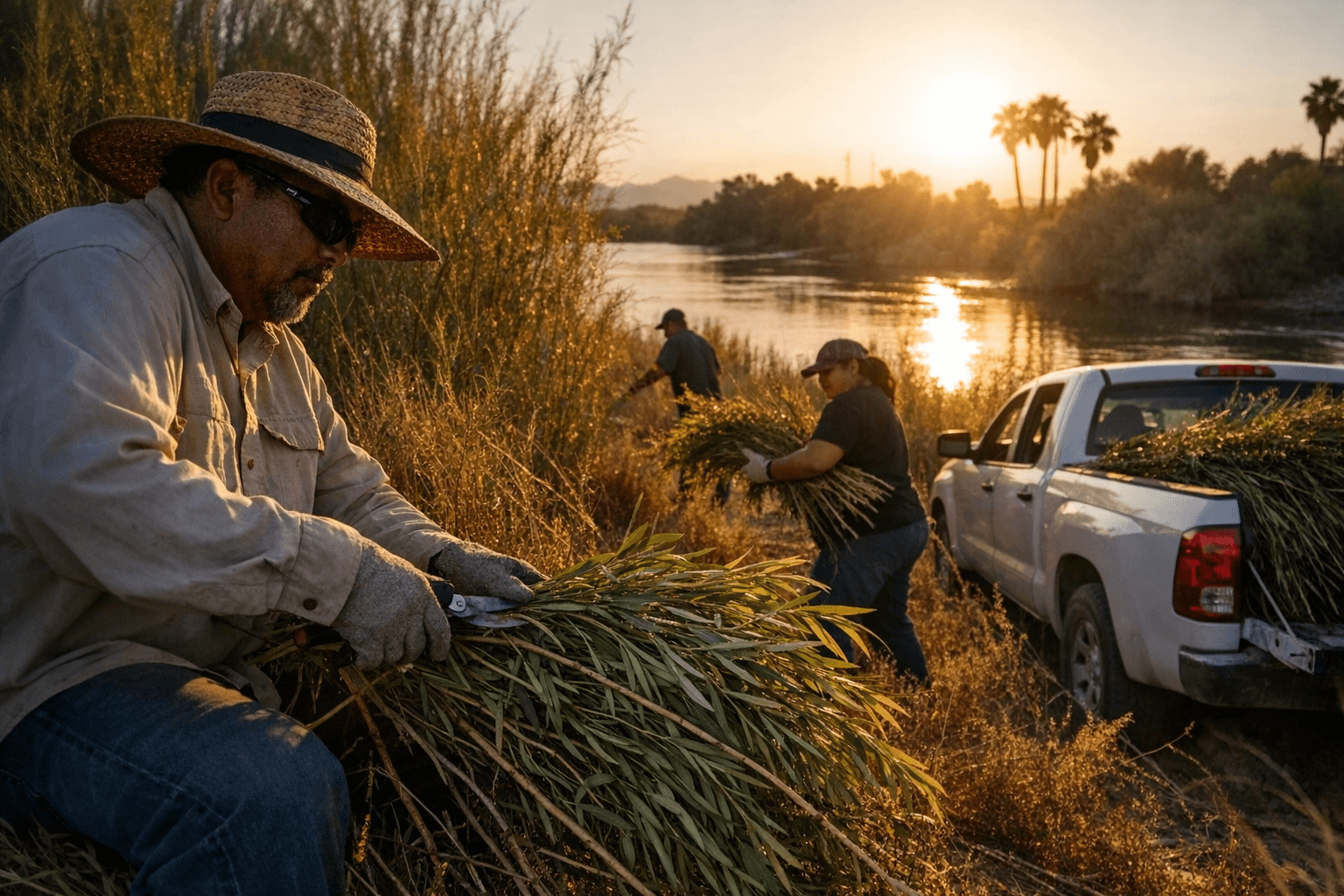
Cocopah tribal members harvested coyote willow at Yuma East Wetlands as part of a river restoration push backed by more than $6 million in federal grants.
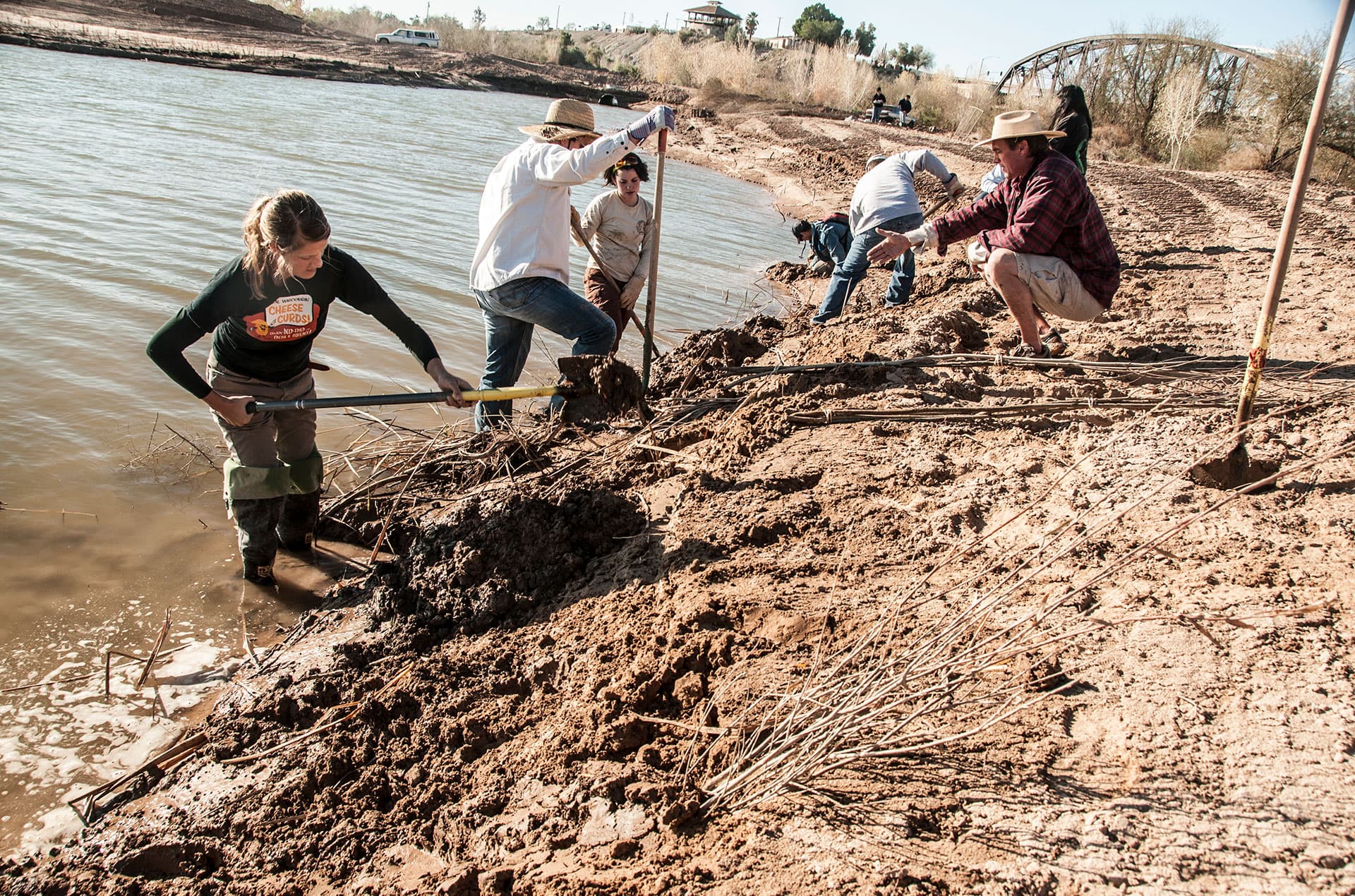
Tribal members from the Cocopah Indian Tribe gathered at Yuma East Wetlands to harvest coyote willow and other native plants, carrying them back to the reservation as living material for a restoration effort that has drawn millions in federal dollars and broad political support from Arizona's governor to the banks of the Colorado River's last tribal stretch before Mexico.
The small section of the Colorado that winds through the Cocopah Reservation near Yuma holds an outsized place in the region's history. For hundreds of years the river fed and sustained the Cocopah and neighboring river tribes. In the 19th century it ran hundreds of yards across, wide enough for steamboats to ferry supplies up and down its length. Today the same channel measures just a few feet across.
That contraction shapes everything the tribe is now trying to undo. Tribal member Luis Sanchez is among those who have maintained a long-term commitment to reviving the Colorado River ecosystem, and the workshop at Yuma East Wetlands reflects the hands-on, community-driven character of that work.
The reservation effort is not an isolated project. It is part of a larger coalition that includes the Quechan tribe, the city of Yuma, and a web of state, federal, and tribal organizations coordinated in part through the Yuma Crossing National Heritage Area. Jesus Melendrez, who works with the Heritage Area, framed the stakes plainly: "All these places exist ... the Cocopah tribe, the Quechan tribe, the city of Yuma exist because of the river. We wanted to be part of the effort to bring the river back to those communities." The coordinated efforts have already produced measurable results, with 400 acres of wetlands restored and 200,000 trees and grasses planted across the broader partnership area.
Funding for the next phase is substantial. In 2023 the 1,000-member tribe received a $5 million grant from the National Fish and Wildlife Foundation's America the Beautiful Challenge to support two riparian restoration initiatives. One will recreate and rehabilitate a 41-acre section of the Colorado River that has been overrun by invasive plants. The second will establish a Cocopah Tribal youth corps to support the restoration work. The NFWF grant is projected to generate at least $12 million in matching donations.
Separately, the Bureau of Indian Affairs awarded the tribe $1.05 million for the 390-acre Cocopah West Limitrophe Restoration Project and an additional $152,000 to build a climate change resiliency program. That funding, announced by the Interior Department, flowed from the tribal climate resilience program using money from the Bipartisan Infrastructure Law, the Inflation Reduction Act, and federal appropriations. Cocopah received those BIA dollars alongside the Pascua Yaqui and White Mountain Apache tribes, with the combined award totaling $1.45 million.
Audubon, which helped the tribe secure funding and facilitated outreach to major water users including the Central Arizona Project and the U.S. Bureau of Reclamation, describes the restoration site in the Colorado River Delta below Morelos Dam as severely degraded, with no available surface water and land dominated by non-native saltcedar. Because the channel is dry that far downstream, restoration requires a dedicated, managed water supply imported to the site; the tribe intends to use its own water rights to sustain plantings in the absence of Colorado River flows.
The tribe has received letters of support from other Basin tribes, Arizona Governor Katie Hobbs, Representative Raúl Grijalva, federal and state agencies, local governments, and the Yuma Audubon Society. Cocopah Museum Director Joe Rodriquez identified the funding as a turning point: "Having the funding to make changes to our tribal lands is a great step for us to continue our vision of returning it to the way it used to be."
Moving freely across restoration parcels is not without logistical hurdles. "We're not able to move around freely we'd have to have permits," Rodriquez noted, an obstacle that complicates access for workers and volunteers moving between sites. The workshop model, which brings tribal members directly to source plants at Yuma East Wetlands, offers one way around those constraints while building local knowledge and cultural connection to the species being restored.
This article was produced by Prism’s automated news system from verified source data, official records, and press releases, then run through automated quality and moderation checks before publishing. The system is built and supervised by the people who set the standards it runs under. Read our full AI policy.
Did this article answer your question?