Col. Charles Seaberry takes command of Yuma Proving Ground
Col. Charles Seaberry took command at Cox Field, taking over a post that employs more than 2,000 civilians and drives over $1.1 billion in local economic activity.
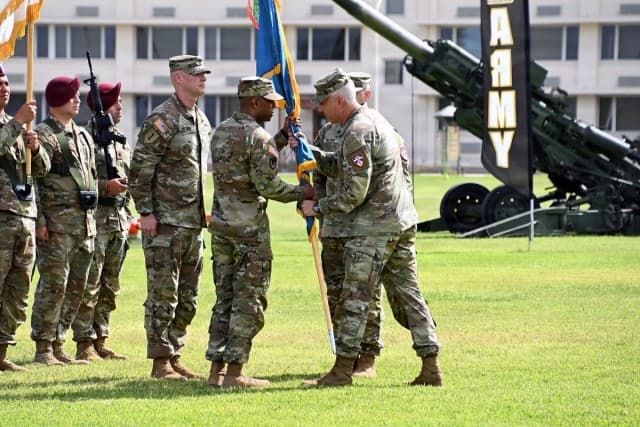
Col. Charles Seaberry formally took command of U.S. Army Yuma Proving Ground at Cox Field on June 11, stepping into a post that sits at the center of Yuma County’s defense economy and the Army’s testing mission. Maj. Gen. Patrick Gaydon, the Army Test and Evaluation Command commanding general, presided over the change of command as Seaberry received the guidon from Col. Johnathon Nelson, who is moving on to command U.S. Army White Sands Missile Range.
Seaberry arrived in Yuma after serving as director of the Army Combat Capabilities Development Command’s Forward Element-Atlantic and earlier as product manager for the Common Synthetic Environment. Commissioned in 2001 and selected for the Army Acquisition Corps in 2007, he said the post’s experienced workforce and long institutional memory stood out immediately, and he made clear that he intends to preserve the installation’s culture of safety and excellence rather than micromanage it.
That approach matters far beyond the fence line. The Army says Yuma Proving Ground is Yuma County’s top civilian employer, with more than 2,000 civilian personnel, and the installation’s combined economic impact is listed at more than $1.1 billion annually. YPG also manages test operations at three locations, the Yuma Test Center in Arizona, the Arctic Regions Test Center at Fort Greely, Alaska, and the Tropic Regions Test Center on leased land in Central and South America.

The scale of the post explains why leadership changes draw close attention in Yuma. Yuma Proving Ground spans more than 838,000 acres, about 1,300 square miles, and the Army describes it as one of the geographically largest military installations in the western world. Its roots go back to 1942, when the military first used the site for desert training; a year later it became a proving site for bridges, river-crossing equipment, boats, vehicles and well-drilling equipment under the Yuma Test Branch, Army Corps of Engineers.
This article was produced by Prism’s automated news system from verified source data, official records, and press releases, then run through automated quality and moderation checks before publishing. The system is built and supervised by the people who set the standards it runs under. Read our full AI policy.
Did this article answer your question?