Colorado River State Historic Park Preserves Yuma's Military and River Heritage
At $10 for adults and free for kids 6 and under, this 10-acre downtown Yuma park holds the story of 900 mules that once supplied every U.S. Army fort in the Southwest.
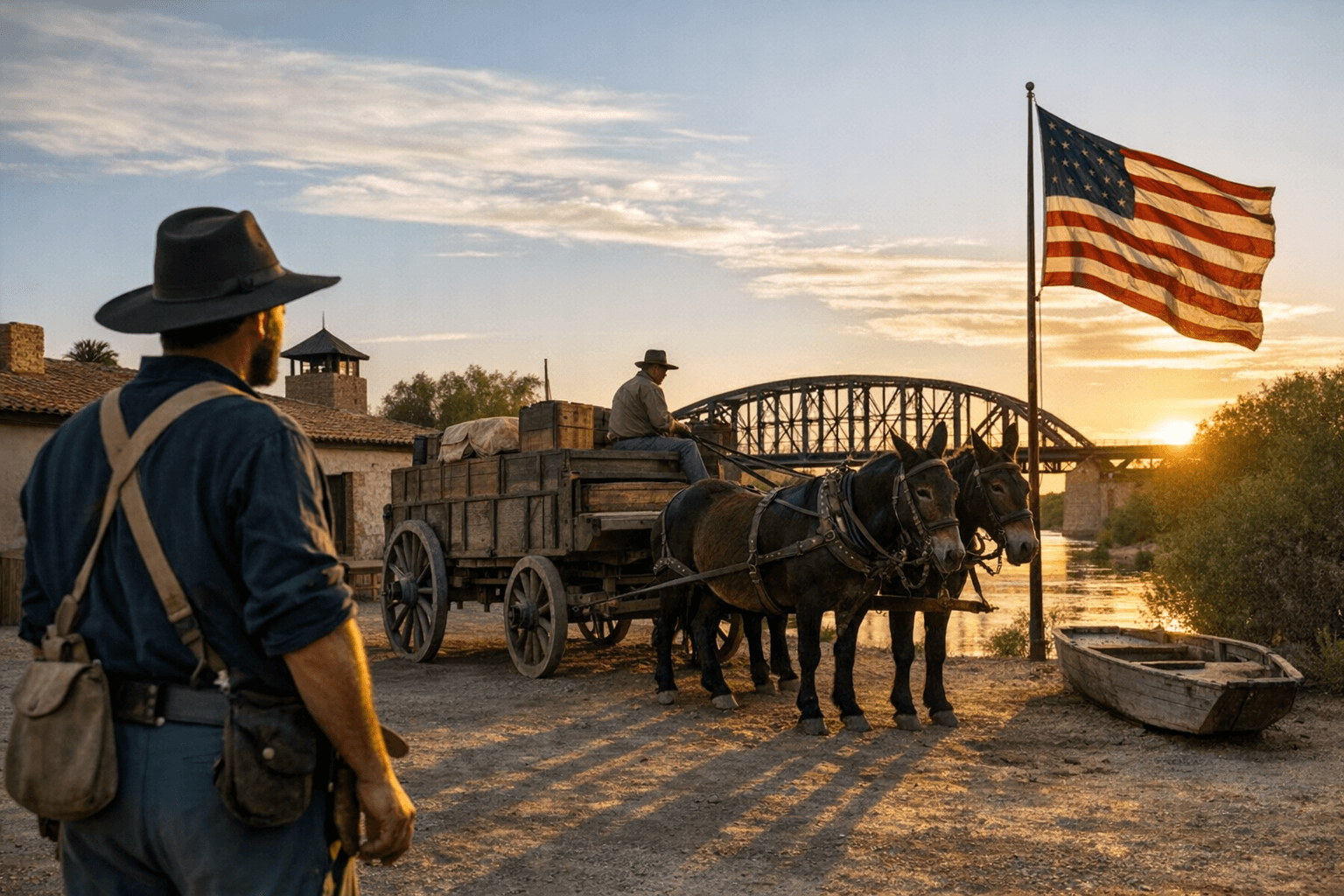
The Depot That Fed Five States
Most people driving through downtown Yuma don't realize they're passing the site that once served as the beating logistical heart of the entire American Southwest military. From 1864 to 1883, the U.S. Army Quartermaster Depot on this bluff above the Colorado River held a six-month supply of clothing, food, and ammunition for forts spread across Arizona, Nevada, Utah, New Mexico, and Texas. Goods arrived by ocean vessel to the Gulf of California, transferred to steamboats for the trip upriver, and then loaded onto mule-drawn wagons for the overland haul into the desert interior. At its peak, the depot's corrals held up to 900 mules. For nearly two decades, every cavalry post and infantry garrison in the Southwest depended on Yuma.
That supply chain collapsed not from enemy action but from a railroad: when the tracks arrived in 1877, the steamboat-and-mule era began its rapid fade, and the Army shuttered the depot in 1883. What happened next is the part most visitors don't expect. The buildings didn't go dark. The Bureau of Reclamation moved in, using the site as its first operational base while engineering the Laguna Dam, the Yuma Main Canal, and the Colorado River Siphon, the very infrastructure that transformed the Yuma Valley into one of North America's most productive agricultural regions.
Colorado River State Historic Park preserves five of those original depot buildings on a 10-acre site that connects military history, river commerce, and the origins of Yuma's farming economy in one walk-through experience.
What You'll See in 90 Minutes
Four of the five surviving buildings house museum exhibits, and the sequence they create rewards a methodical visit.
Start in the Visitor Center, where a scale model of the depot as it appeared in 1872 reframes the entire site before you step outside. A short film in the Colorado River Theatre provides context on the river's central role in regional history and its current status as one of the most dammed and endangered waterways in the country.
The Storehouse is the largest exhibit space and the one that earns the most time. Artifacts include an Army escort wagon, a section of original plank road, and a steamboat-room display reconstructing the mechanics of 19th-century river commerce. The displays make clear that Yuma's geographic position at the confluence of the Colorado and Gila rivers wasn't incidental: it was the reason the Army chose this bluff in the first place.
The Quartermaster's Office doubles as two period rooms in one: a recreation of the working depot office and a separate interpretation of the telegraph and weather station that occupied the building after the military departed. The U.S. Signal Corps' presence here is a detail most Arizona history curricula skip over entirely.
The Commanding Officer's Quarters is a fully furnished house museum presenting officer family life in the 1870s. It's the exhibit that tends to connect most directly with younger visitors, who can walk through the rooms of a household that predates Arizona statehood by nearly 40 years.
The Corral House shifts the story forward in time, with exhibits on the Bureau of Reclamation's Yuma Irrigation Project, including Laguna Dam and the Colorado River Siphon. The connection between military infrastructure and agricultural development is made explicit here: the same federal presence that built the depot later engineered the water systems that made Yuma farming viable.
Outside, the grounds hold additional artifacts including a steam boiler, steamboat components, and a stone reservoir, with interpretive panels tracing the irrigation story along the walking paths.
What It Costs and When to Go
Admission is straightforward: adults 14 and older pay $10, youth ages 7 to 13 pay $7, and children 6 and under are free. Exhibits are open Tuesday through Sunday, 9 a.m. to 4:30 p.m., with the gift shop staying open until 5 p.m. Hours shift seasonally, so check the Arizona State Parks website before you go, particularly around holidays.
A current promotion sweetens the math for families planning a longer day: purchasing admission here gets you 50% off entry into the Yuma Territorial Prison State Historic Park, making a two-park afternoon an easy call. The two sites are close enough to pair in a single afternoon without feeling rushed.
For timing: October through April is the most comfortable window for outdoor exploration. If you visit between June and August, plan to move through the outdoor exhibits in the morning and save the air-conditioned museum buildings for midday. Bring water regardless of the season.
Kid-Friendly Details and Accessibility
Children 6 and under enter free, and the mix of physical artifacts, period rooms, and outdoor relics holds attention better than a traditional gallery setting. School groups and families are encouraged to reserve a docent-led guided tour in advance if they want structured interpretation; the park supports school field trips and volunteer programs regularly through a partnership with the City of Yuma.
Accessible restrooms are available on site. Some of the historic structures carry the constraints of their age, so call ahead if specific mobility accommodations are needed.
Pairing the Park With Downtown Yuma
The park sits at the edge of historic downtown Yuma, which makes it easy to build a half-day itinerary that keeps spending local. After your visit, El Charro is a short drive away and draws repeat visitors specifically for its green chile cheese crisp. The Pint House Bar and Grill, a local standby on Main Street, serves burgers and sandwiches with an extensive craft beer list. The adjacent Yuma Crossing National Heritage Area adds a riverfront walking route with interpretive signage that extends the park's narrative into the surrounding landscape without additional cost.
For a full day, the Yuma Territorial Prison State Historic Park and West Wetlands Park round out a cultural and nature itinerary that uses the river corridor as its connective thread.
Why This Site Still Matters
The Colorado River that carried those steamboats no longer reaches the sea. It slows to a trickle at the Mexican border, 20 miles south of Yuma, a consequence of the same dam-building era documented inside the Corral House exhibits. The park doesn't soften that irony; the exhibits explicitly name the Colorado as one of the most endangered rivers in the United States and frame Yuma's agricultural identity as inseparable from the water decisions made over the past century. Standing on the same bluff where the Army stored ammunition for frontier forts, that full arc from military supply line to irrigation engine to an overallocated river system is visible in a single afternoon. For a city that often defines itself by its agricultural output and winter sunshine, this is the backstory most residents have never been told in full.
This article was produced by Prism’s automated news system from verified source data, official records, and press releases, then run through automated quality and moderation checks before publishing. The system is built and supervised by the people who set the standards it runs under. Read our full AI policy.
Did this article answer your question?