EcoFlight over Yuma helps tribe spotlight Protect Kw’tsàn campaign
A flight over the Colorado River showed Quechan leaders the land they want protected from mining, development and climate pressures. The campaign spans more than 388,000 acres.
From above the Colorado River near Yuma, tribal leaders saw both damaged habitat and stretches of intact desert that the Fort Yuma Quechan Indian Tribe wants to shield from mining, development and other pressures. The aerial view was part of the tribe’s Protect Kw’tsán campaign, a public push for permanent protection of ancestral homelands, cultural objects and sacred places.
EcoFlight pilot Chris Benson flew the group over the river and nearby land so leaders could see the landscape as a whole, not just the boundaries that appear on maps. Benson said the point of EcoFlight is to lift people above the terrain for a meaningful experience that can lead to productive conversations about how the land should be stewarded in the future. For the tribe, that future turns on a basic question: what exactly is being protected, from whom, and who gets to decide how the land is used.
Donald Medart Jr., a Fort Yuma Quechan Indian Tribe council member and co-lead on the campaign, said the effort is meant to show both the damage that has already taken place in natural habitat and the areas that remain pristine. The tribe says those lands are threatened by mining exploration, natural resource extraction, harmful development, unregulated recreation, management shortcomings and climate change. Protect Kw’tsán says the goal is permanent protection for the tribe’s homelands, cultural objects and sacred places.
The Fort Yuma Quechan Reservation sits along both sides of the Colorado River near Yuma, Arizona, and extends across Arizona, California and Baja California, Mexico. It covers about 45,000 acres, but the tribe says its ancestral homelands reach far beyond the reservation. The proposed protection area would span roughly 388,000 to more than 390,000 acres in Imperial County, California, along the California-Arizona border.
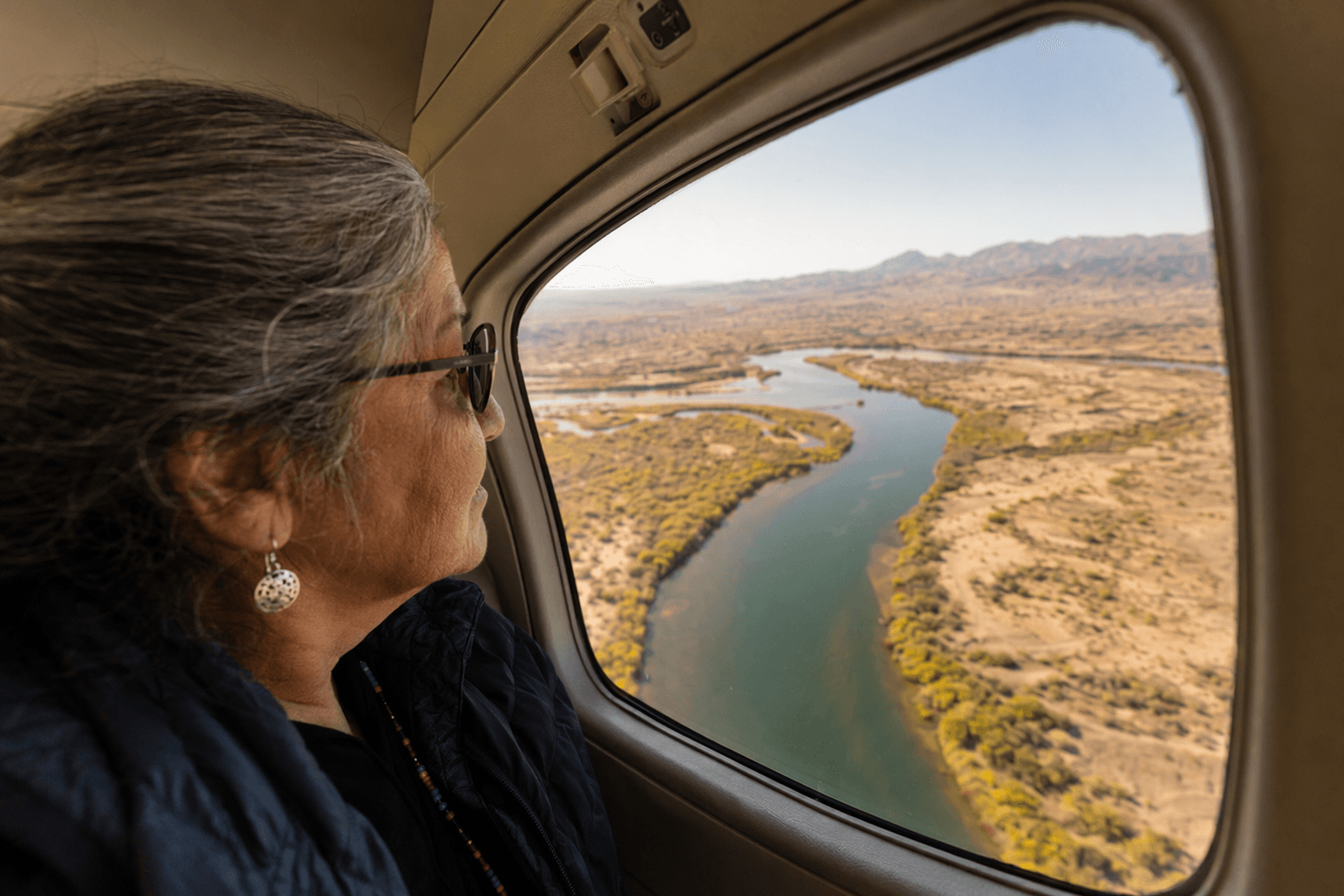
That larger landscape is also a wildlife corridor and a record of deep history. The Bureau of Land Management’s Yuma Field Office says the river and desert habitat supports desert bighorn sheep, Yuma clapper rail, flat-tailed horned lizard and other wildlife, while also containing wilderness areas and archaeological and historic sites. The tribe’s campaign ties those natural and cultural values together, arguing that land use decisions now will shape whether those places remain open to industrial pressure or are protected for the next generation.
The flyover followed a co-stewardship agreement the tribe announced on January 15, 2025, with the Bureau of Land Management for Quechan ancestral landscapes. The tribe had also hosted an aerial view of the proposed monument site on February 16, 2024, and EcoFlight said it flew Quechan Tribal Council and leaders and produced video for the tribe’s advocacy campaign. In Yuma County, where the Colorado River anchors agriculture, identity and tribal history, the campaign is as much about sovereignty as scenery.
This article was produced by Prism’s automated news system from verified source data, official records, and press releases, then run through automated quality and moderation checks before publishing. The system is built and supervised by the people who set the standards it runs under. Read our full AI policy.
Did this article answer your question?