Gusty Winds Trigger Dust Alert, Unhealthy Air Quality Across Yuma County
Wind gusts near 40 mph at MCAS Yuma triggered an ADEQ High Pollution Advisory for Yuma and Fortuna Foothills through 9 p.m.; kids, seniors, and people with asthma face the highest risk.
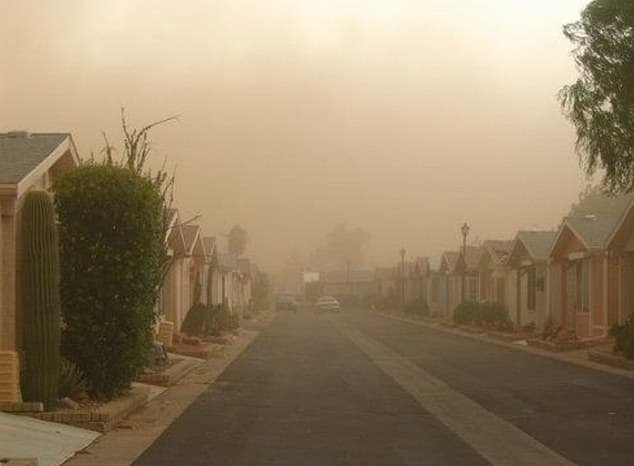
Wind gusts clocking nearly 40 mph at Marine Corps Air Station Yuma swept blowing dust across the city and Fortuna Foothills on Saturday, prompting the Arizona Department of Environmental Quality to issue a High Pollution Advisory through 9 p.m. for both communities. City-wide gusts exceeded 20 mph, and related advisories covering the broader region documented gusts between 20 and 55 mph.
The pollutant driving the advisory is PM10, coarse particulate matter lifted from bare desert soil that is small enough to penetrate deep into the lungs. PM10 elevated to the mid-Moderate range on the Air Quality Index during the event. That reading carries extra consequence in Yuma, which the federal government has designated a PM10 nonattainment area because concentrations here routinely exceed the limit set by the EPA's National Ambient Air Quality Standards. The city currently sits at the Moderate classification under that framework but faces reclassification to Serious if it fails to meet federal thresholds by the applicable deadline.
People with asthma, heart or lung disease, and other chronic respiratory conditions faced the highest exposure risk Saturday, alongside older adults, pregnant women, and children. Those groups should stay indoors with windows closed until winds calm through the evening. Outdoor youth sports practices and any afternoon events scheduled at Foothills-area parks carry particular risk for younger athletes in those categories.
Driving conditions also degraded. Along Interstate 8, visibility in comparable dust events has dropped below one mile, and the National Weather Service advises motorists to pull completely off the road if visibility becomes dangerously low rather than attempt to navigate through near-zero conditions.
Blowing dust carries a threat that extends beyond sore throats and irritated eyes: it stirs Coccidioides spores from desert soil, the fungus responsible for Valley fever, a serious lung infection endemic to the Southwest. Arizona records roughly 10,000 to 11,000 confirmed Valley fever cases annually, but the CDC estimates actual infections run 10 to 15 times higher because mild cases frequently go undiagnosed. Events like Saturday's, when high-velocity winds lift and spread large volumes of disturbed desert soil across populated areas, are precisely the conditions that drive that gap wider.
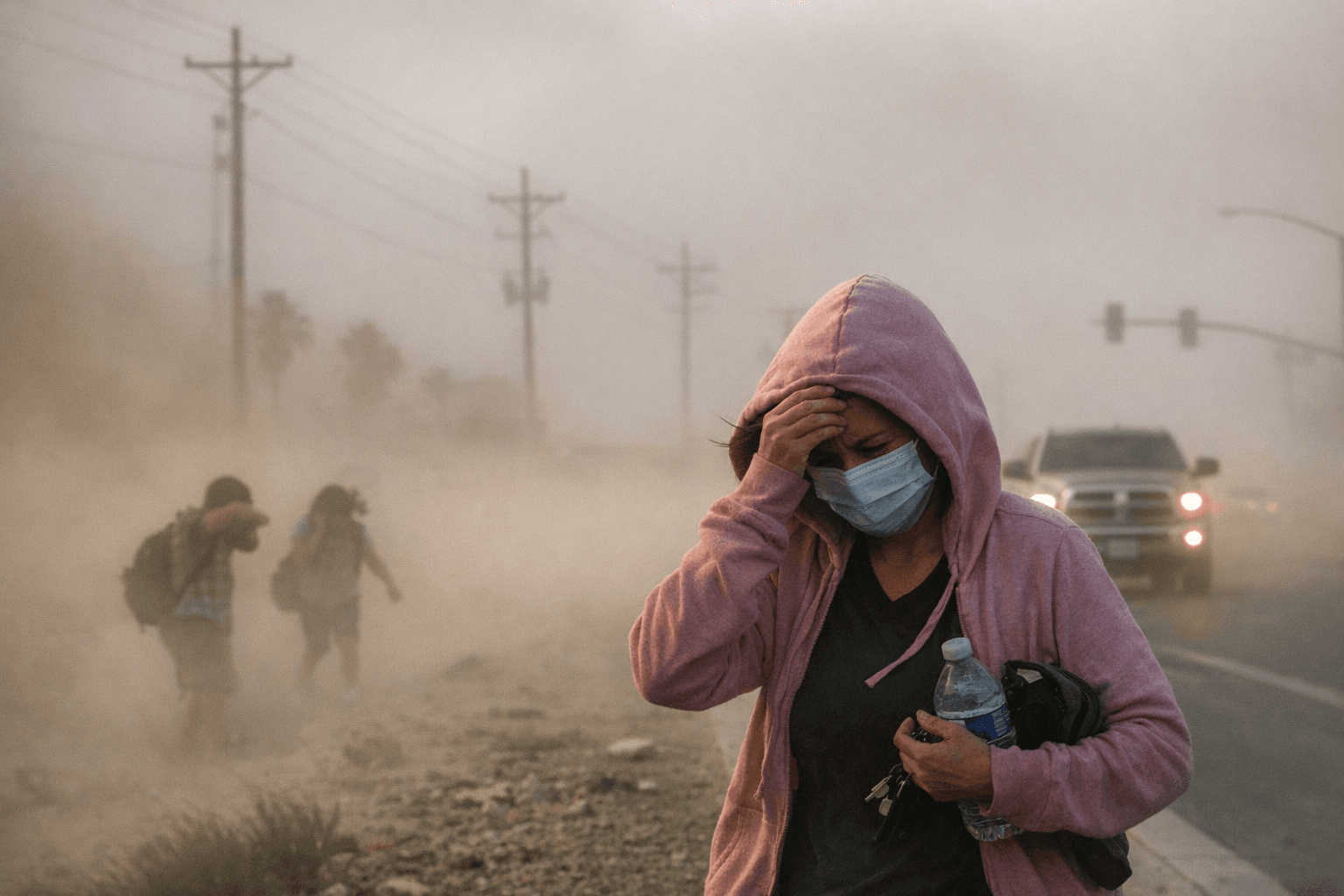
The longer trend amplifies the concern. Dust storms across the desert Southwest have increased in frequency by 240% since the 1990s, a rise researchers link to drought, climate change, and soil disturbance. For Yuma County, which ranked third in the entire United States for vegetable production with $782 million in output in 2017, that trajectory poses direct implications for the approximately 40,000 agricultural workers who cross the border from Mexico daily during the November-through-March harvest season.
The dust event extended westward into California's Imperial Valley, where Calexico, Brawley, El Centro, Niland, and Westmorland recorded moderate-to-unhealthy conditions for sensitive groups.
Local forecasters expected winds to ease as the evening progressed, with conditions improving around the advisory's 9 p.m. expiration. Residents who observe unpaved sources or other dust control violations contributing to the problem can file a complaint with the Yuma County Environmental Programs Division's Dust Control Hotline at 928-217-DUST (3878).
This article was produced by Prism’s automated news system from verified source data, official records, and press releases, then run through automated quality and moderation checks before publishing. The system is built and supervised by the people who set the standards it runs under. Read our full AI policy.
Did this article answer your question?