Historic downtown Yuma shows the city’s history in walkable sites
Historic downtown Yuma is still a working civic landscape, where rail, river and preservation meet in a compact walkable core.
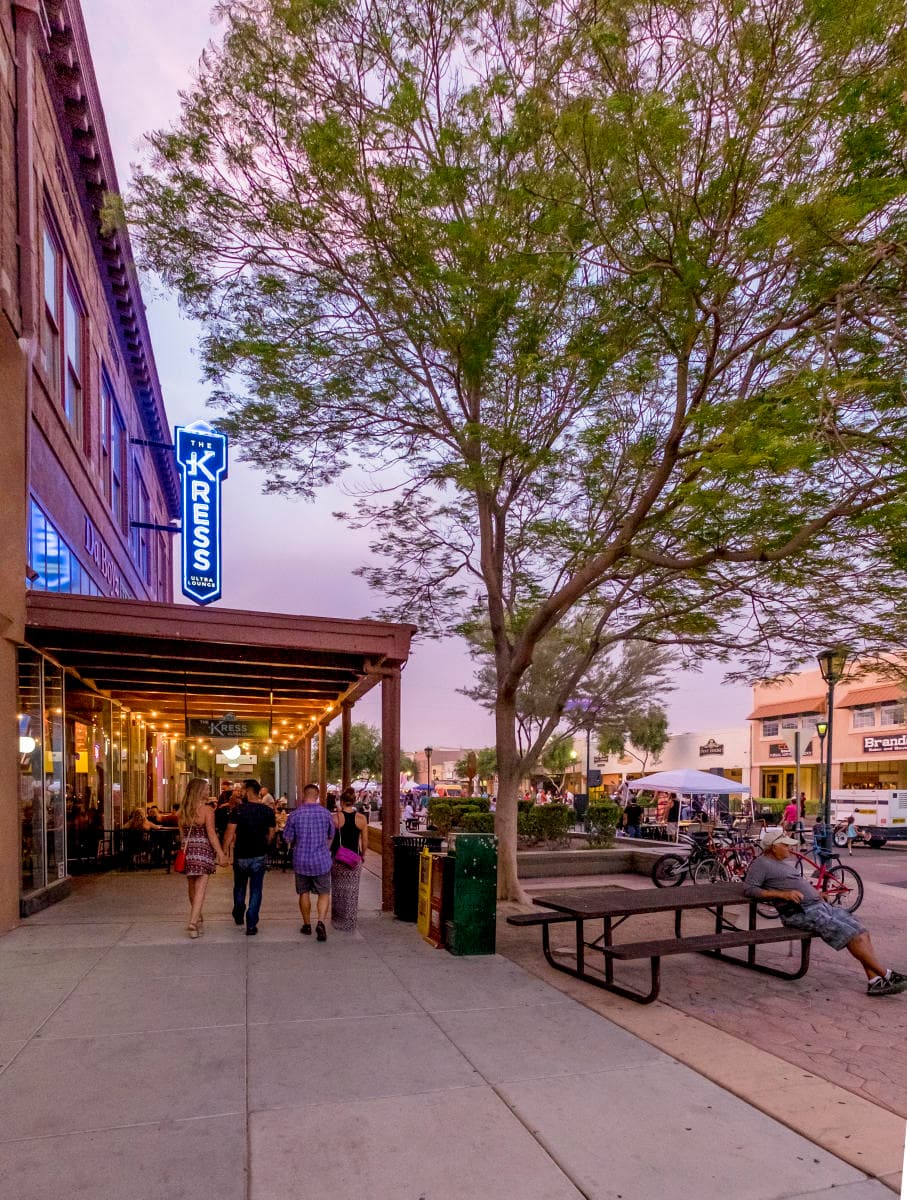
A downtown built around movement
Historic downtown Yuma is one of the clearest places to see how the city still works as a border community, an agricultural hub and a river city at the same time. Visit Yuma describes the area as very walkable, with historic sites that can be explored in a day or two, and that compact layout matters because these blocks are not just scenic stops. They are the places where Yuma’s public life, cultural memory and everyday foot traffic still overlap.
The larger story starts at the Colorado River. Yuma Crossing National Heritage Area says the river crossing has been significant for more than five and one-half centuries, and the city’s history materials extend that timeline even further, back to Hernando de Alarcón, Melchior Díaz, Father Kino and William B. Hooper. The same materials note that the first Europeans arrived in the Yuma area in 1540, in a region already home to thriving communities ancestral to the present-day Quechan and Cocopah tribes. That is the foundation for understanding downtown Yuma now: the historic core is not a preserved backdrop, but the built edge of a long-running crossing point.
The riverfront is still being stitched back together
The most important preservation story in downtown Yuma is not only what survives, but what is being reconnected. The Yuma Crossing National Heritage Area says the riverfront has been blighted in the past and is now being restored so the city can be tied more closely to its historic downtown again. That work matters because Yuma’s identity was built around access to the river, then partially pulled away from it by irrigation-era changes that altered how the city met the Colorado.
That makes the downtown riverfront more than a view. It is a public-space problem, an economic-development issue and a heritage question all at once. When the river edge improves, it strengthens the walkable core, supports nearby museums and arts venues, and helps residents experience the city as a connected place rather than a set of isolated attractions. In that sense, preservation is not about nostalgia. It is about keeping downtown usable, legible and economically alive.
Madison Avenue and the rail story
One of the most useful places to start a downtown walk is Pivot Point Interpretive Plaza, where rail history is still visible at street level. The city says the free public exhibit area opened in June 2010, and Visit Yuma notes that the first railroad train entered Arizona from California in 1877 on an alignment that corresponds to present-day Madison Avenue. The original pivot that supported the swing-span rail bridge still exists and is the centerpiece of the plaza, which gives the site a direct physical link to the moment rail first connected Yuma to the wider Southwest.
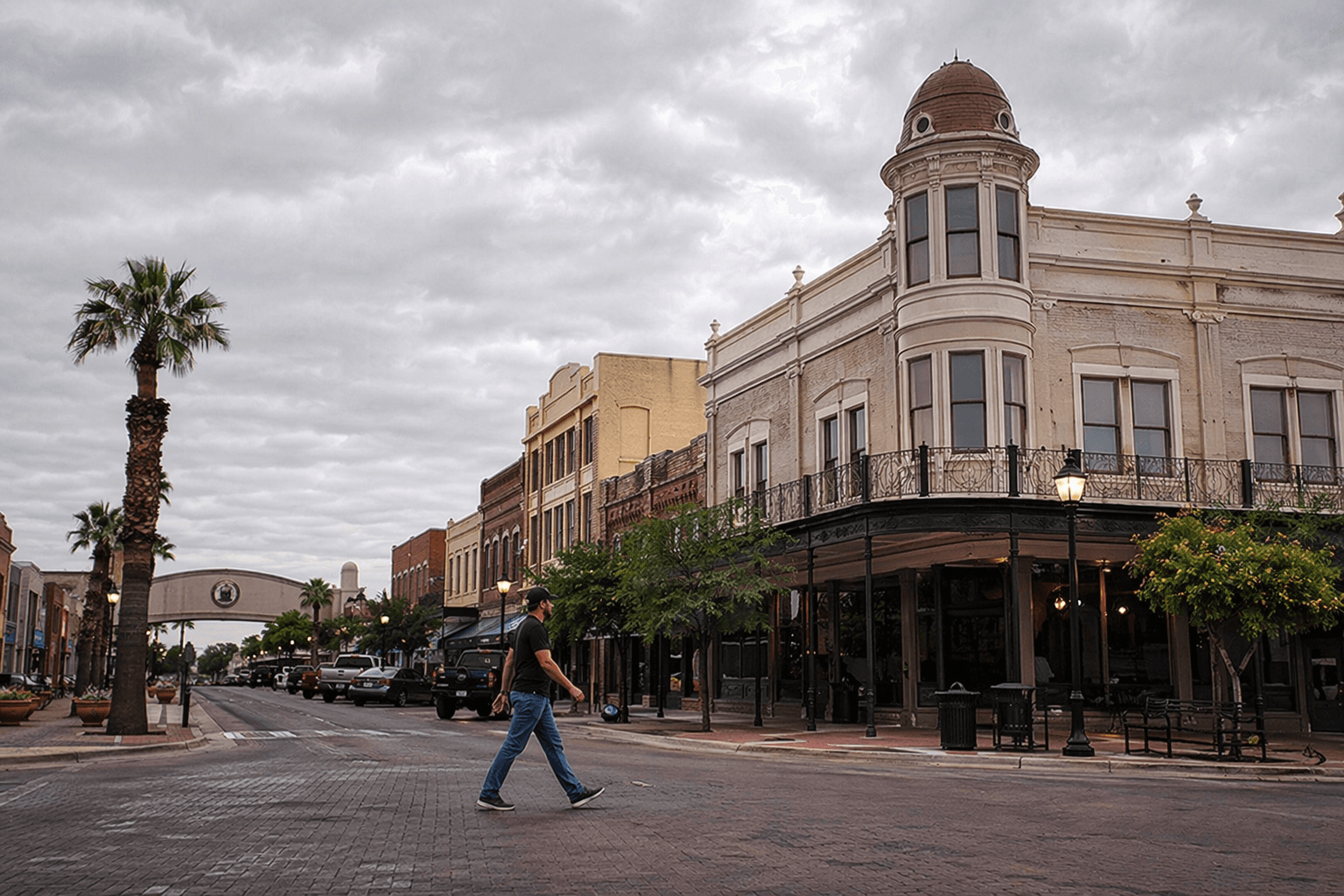
That detail matters because rail is part of the city’s economic DNA. The plaza preserves artifacts from the original rail alignment, so the story is not just told in panels, but anchored in the ground where it happened. For anyone reading downtown as living infrastructure, Pivot Point shows how transportation shaped settlement, commerce and the city’s orientation toward the river long before the modern street grid was fully settled.
Main Street’s active cultural core
If Pivot Point explains how Yuma opened outward, the Main Street arts district shows how downtown still gathers people in. The Historic Yuma Theatre dates to 1912 and has 643 seats, making it one of the strongest reminders of the city’s early 20th-century civic identity. The City of Yuma says the theater is part of the broader Yuma Art Center complex at 270 Main Street, which also includes four visual art galleries, a black box theatre, studios and an artisan gift shop.
This is one of the liveliest parts of downtown today. The city says the Yuma Art Center attracts tens of thousands of visitors annually, which signals real public use, not just heritage display. Local and regional art keeps the building active between performances, while the theater’s original-era décor gives the block a sense of continuity that newer developments rarely match. For residents, that combination turns preservation into an everyday amenity: a place to see art, attend events and spend time in the city center.
Homes, museums and family stops that fill out the story
Downtown’s appeal is also in the smaller sites that make the history more personal. Arizona State Parks says the Sanguinetti House Museum is located within the former home of prominent Yuma businessman E.F. Sanguinetti, and that the home dates to the 1870s. The house gives a sense of what mercantile life looked like when local commerce still revolved around a much smaller town and an even larger freight network tied to the river and railroad.
For families, the Children’s Museum of Yuma County adds a different kind of downtown function. It is not just a learning stop for visitors; it helps make the historic core relevant to people with children who need places to go, things to do and reasons to return. That mix of merchant history, hands-on learning and walkable streets is part of what keeps downtown from becoming a static museum district. It remains a place where different generations use the same blocks for different purposes.
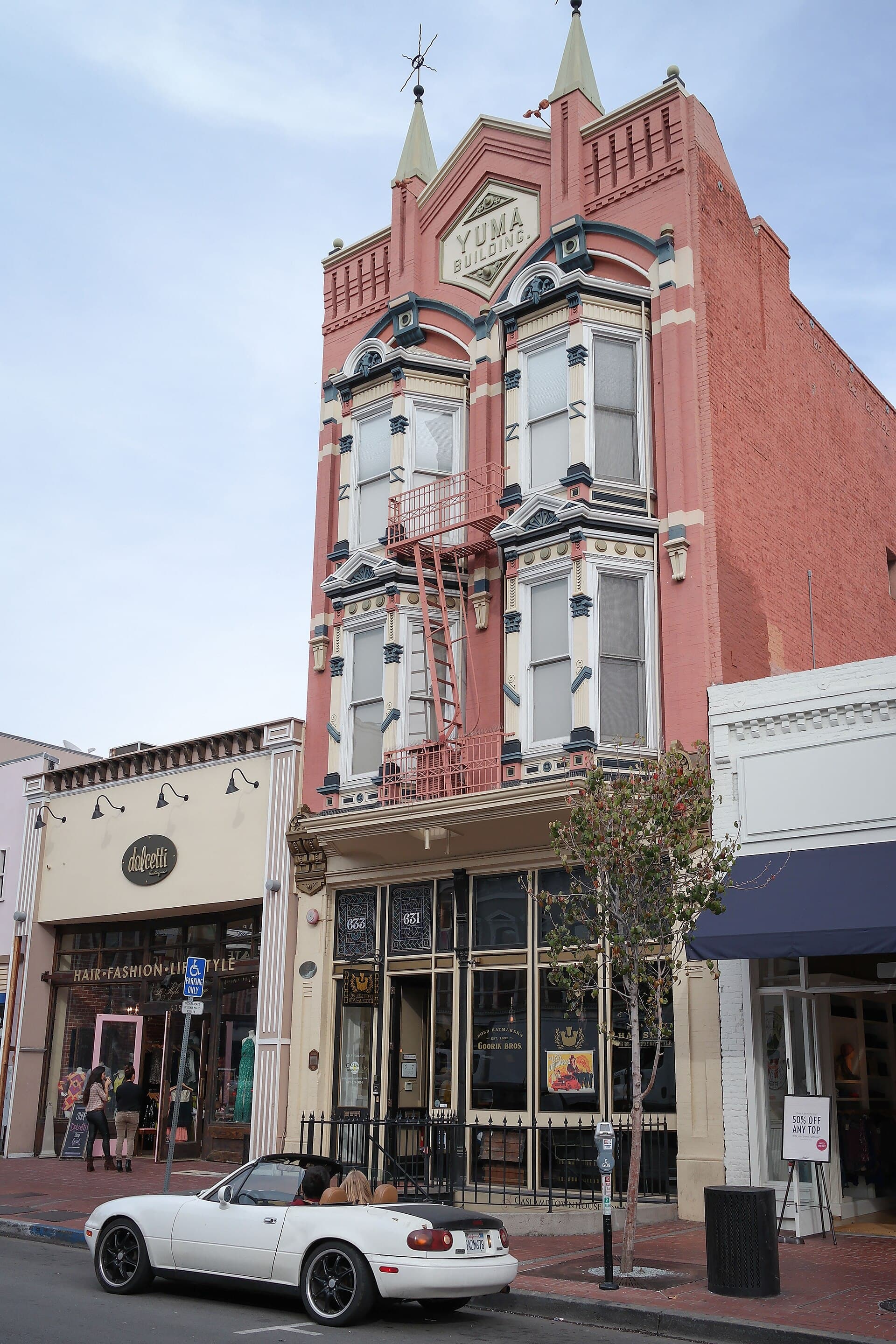
Engineering the modern river city
A little farther out, the historic landscape expands beyond storefronts and galleries into the engineering systems that made modern Yuma possible. The Ocean-to-Ocean Highway Bridge, completed in 1915, was the only highway bridge across the Colorado River for 1,200 miles at the time, and the National Park Service says it still carries vehicular traffic today with only minimal alterations. That is a rare combination of infrastructure and heritage: a bridge that still does the job it was built to do while also serving as a marker of how isolated river crossings once were.
The Colorado River State Historic Park deepens that story. Arizona State Parks says the park sits on part of the old U.S. Army Quartermaster Depot established in 1864, and that for nearly 20 years the Yuma Quartermaster Depot served as the lifeline for military posts across the Southwest. The park’s interpretive materials also connect visitors to Laguna Dam, the Yuma Main Canal and the Colorado River Siphon, showing how irrigation and water delivery reshaped the region. Nearby, the Yuma Territorial Prison State Park remains one of the city’s signature landmarks perched above the river, reinforcing how closely Yuma’s frontier history, punishment system and river geography were intertwined.
Why the walkable core still matters
Taken together, these places show that downtown Yuma is not simply a cluster of historic attractions. It is a compact civic landscape where a bridge, a railroad alignment, a theater, a merchant’s house, a museum district and riverfront restoration all describe the same city from different angles. The strongest sites are the ones that still draw steady use, especially the Yuma Art Center complex and the free public space at Pivot Point, while the riverfront restoration reminds residents that some of the city’s most important ground is still being repaired and reconnected.
That is what makes historic downtown Yuma worth walking today. The area shows how railroads, river crossings, irrigation engineering, cross-cultural history and preservation still shape the city’s identity, not as a finished story, but as a living one.
This article was produced by Prism’s automated news system from verified source data, official records, and press releases, then run through automated quality and moderation checks before publishing. The system is built and supervised by the people who set the standards it runs under. Read our full AI policy.
Did this article answer your question?