Hobbs urges USMCA extension, cites Yuma County agriculture gains
Hobbs said USMCA must be extended to protect Yuma County agriculture, which generated $4.4 billion for Arizona and supported 988 jobs outside the county.

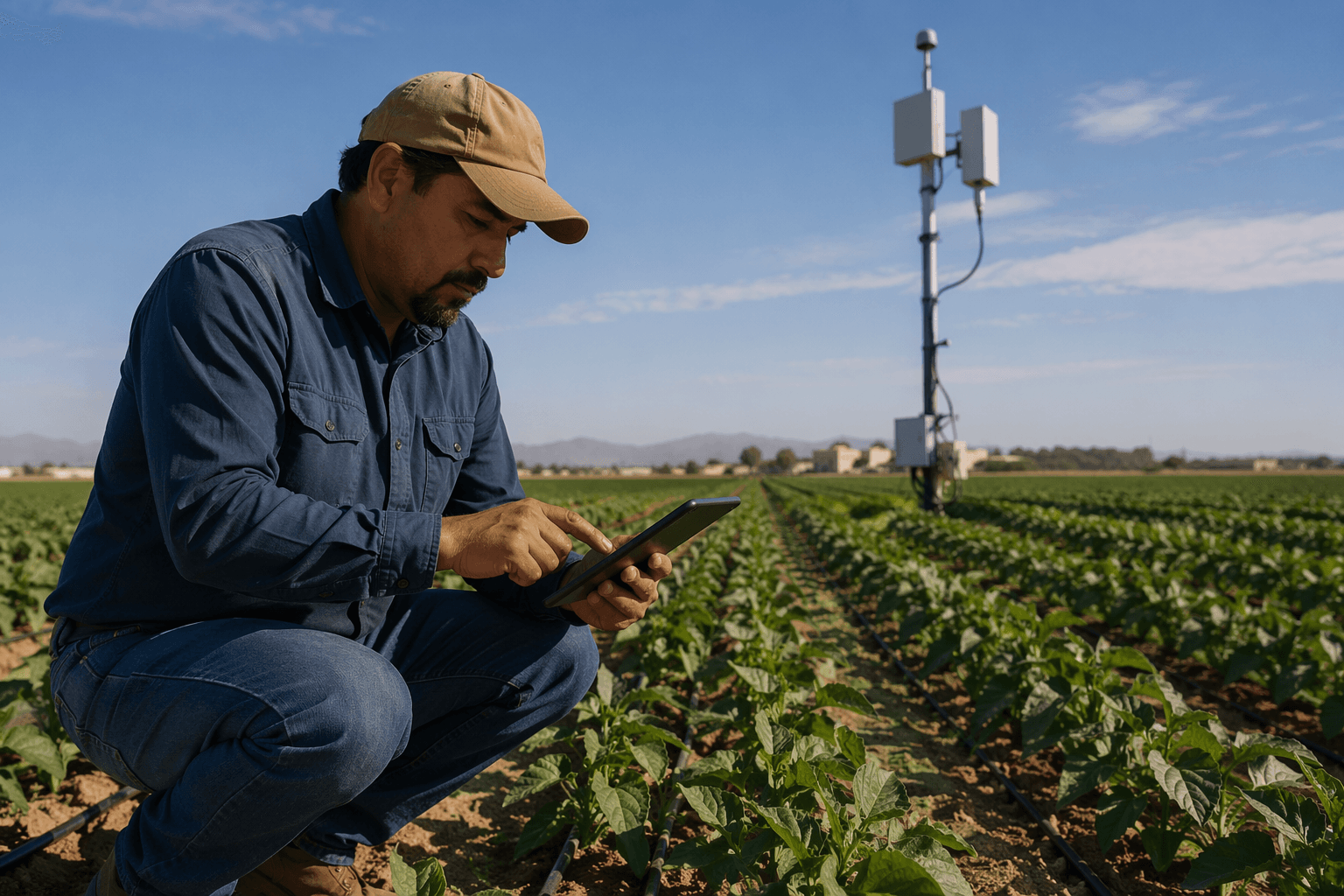
Yuma County’s farm economy sits inside a trade corridor that moves billions of dollars in produce, and Governor Katie Hobbs is arguing that the stakes of the USMCA review reach straight into local fields, packing houses and shippers. The University of Arizona Cooperative Extension estimated that Yuma County agriculture and agribusiness generated $4.4 billion in sales to the Arizona economy in 2022, with another $3.9 billion circulating through the county economy after multiplier effects. The same study put forward-linked sales at $254 million, sales to other Arizona counties at $274 million, and supported 988 jobs outside Yuma.
Hobbs said on May 9 that it was critical for Arizona to extend the free-trade agreement with Mexico and Canada. She also said any review should weigh how much water is used to grow export crops and who benefits from that water use, a point with direct consequences in Yuma, where water, land and freight capacity shape what can be planted and shipped. The current review could either extend the pact through 2042 or allow it to sunset in 2036.
Arizona’s own USMCA study, released in January, found Mexico is the state’s top trading partner and Canada is second. More than 85 percent of the business leaders surveyed and interviewed said Arizona would be hurt if the agreement were not renewed. The study, commissioned in summer 2025 by Hobbs and the Arizona-Mexico Commission and conducted by the Seidman Research Institute at Arizona State University, drew input from agriculture, advanced manufacturing, construction, mining, transportation and logistics.
For Yuma growers, the issue is not abstract. The Cooperative Extension study estimated $3.2 billion in gross consumer retail spending nationally on Yuma-grown produce, underscoring how lettuce, melons and other desert crops move far beyond county lines. Paul Brierley, director of the Arizona Department of Agriculture, has said the region’s value lies in complementary seasons and climates across North America, with Arizona supplying crops such as cantaloupes, tree nuts and dates while importing food from Canada and elsewhere. He described the system as integrated, not competitive.

That integration is what makes the trade pact so important. USMCA took effect on July 1, 2020, replacing NAFTA, which had progressively eliminated almost all tariff and quota barriers from 1994 to 2008. Federal trade data show Canada and Mexico were the first and third largest export markets for U.S. food and agricultural products in 2017, accounting for 28 percent of total food and agricultural exports and supporting more than 325,000 American jobs. In agriculture, Arizona leaders say the gains are especially visible in dairy, with one stakeholder putting national exports at $250,000 in 1994 and $4 billion today, and another local report saying about 65 percent of Arizona dairy exports go to Mexico under USMCA.
Even with an extension, Hobbs warned that tariff pressure from the Trump administration could still reshape trade. Her push follows Arizona’s broader effort to deepen ties with Mexico and Canada, including a trade mission to Mexico City in October 2025 and the opening of Arizona’s first Canadian trade office. For Yuma County, the outcome will help determine whether export access, pricing certainty and farm jobs remain anchored in a trade system that has long favored the desert’s winter harvest.
This article was produced by Prism’s automated news system from verified source data, official records, and press releases, then run through automated quality and moderation checks before publishing. The system is built and supervised by the people who set the standards it runs under. Read our full AI policy.
Did this article answer your question?