Marines train counter-drone tactics at Marine Corps Air Station Yuma
A UH-1Y Venom with a GAU-21 gun joined a counter-drone drill that stretched from MCAS Yuma to the Chocolate Mountain range.
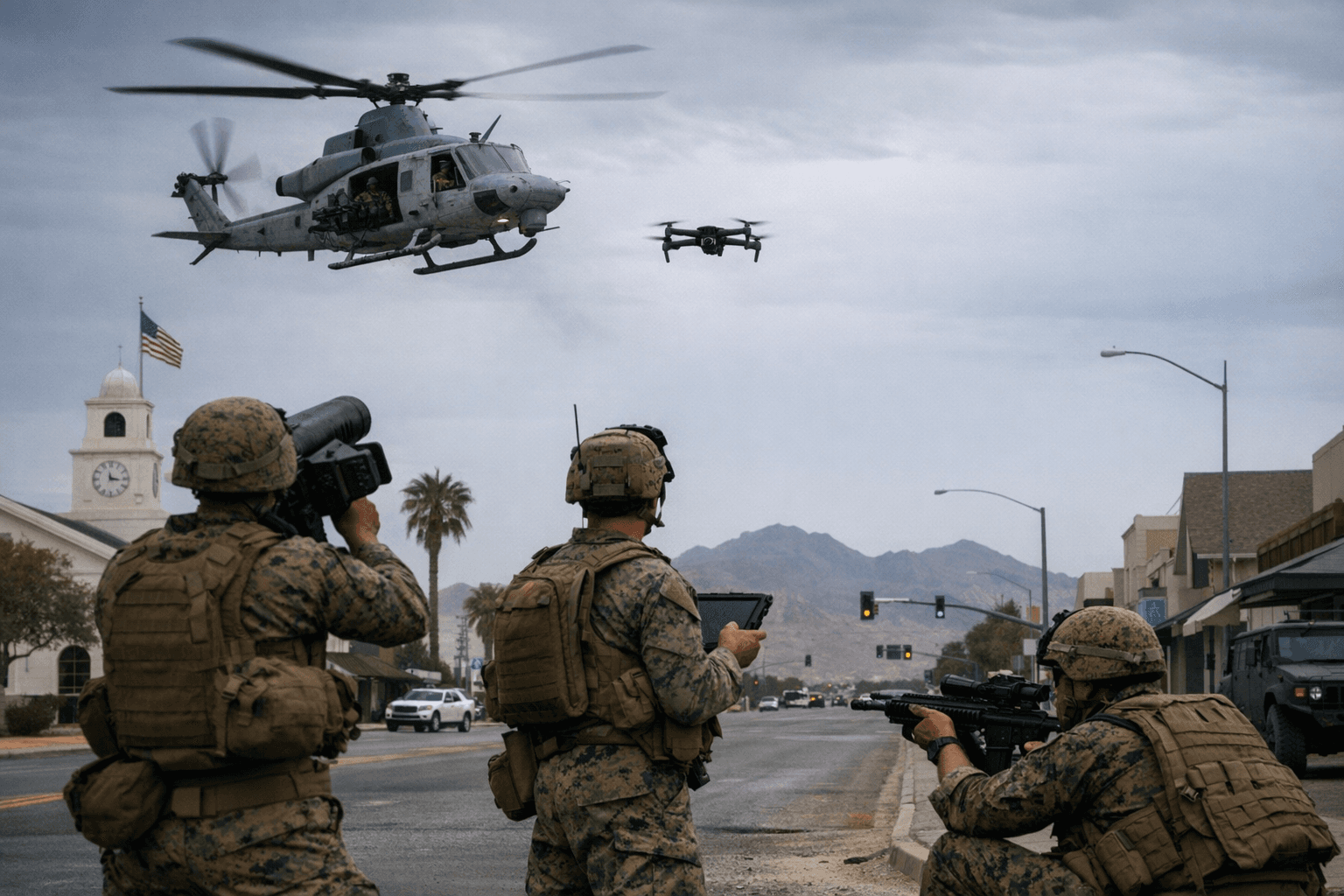
Marines with 3rd Marine Aircraft Wing pushed counter-drone tactics across the Yuma desert this month, using Marine Corps Air Station Yuma and the nearby Chocolate Mountain Aerial Gunnery Range to rehearse how quickly a small unmanned aircraft system can change the fight. The drill, part of Weapons and Tactics Instructor Course 2-26, put UH-1Y Venom helicopters into a counter-sUAS role and underscored why Yuma’s airspace remains a critical testing ground for the Marine Corps.
The training is not a one-off event. WTI 2-26 runs from March 8 through April 26, 2026, as a seven-week course hosted by Marine Aviation Weapons and Tactics Squadron One, better known as MAWTS-1. The squadron describes WTI as its premier advanced tactical training and instructor certification course, built around the seven functions of Marine aviation and designed to prepare crews for Marine Air Ground Task Force, joint, and coalition operations. The counter-drone event was one evolution in that larger cycle, alongside flight line operations, Yodaville maneuver training, and aircraft rescue and firefighting demonstrations.
DVIDS captions placed one counter-sUAS evolution near Observation Point Feets in the Chocolate Mountain Aerial Gunnery Range, California, on April 9, 2026. A related UH-1Y counter-UAS drill took place near Yuma, Arizona, on April 7, with Marines from MAWTS-1, Marine Light Attack Helicopter Squadron 167, and Marine Light Attack Helicopter Squadron 169 taking part. One image showed 7.56mm ammunition loaded into a GAU-21 machine gun mounted on a UH-1Y Venom, a detail that captures how the Corps is blending aviation, firepower, and rapid response against small aerial threats.
For Yuma County, the significance goes beyond a single exercise lane in the desert. MCAS Yuma is where Marine aviation builds the habits it will need in contested airspace, and the surrounding ranges give crews room to practice against threats that can be cheap, mobile, and hard to spot until the last moment. The base’s role as MAWTS-1’s home means Yuma is not just hosting training, it is helping shape how Marines will defend aircraft, troops, and forward positions in future operations.
This article was produced by Prism’s automated news system from verified source data, official records, and press releases, then run through automated quality and moderation checks before publishing. The system is built and supervised by the people who set the standards it runs under. Read our full AI policy.
Did this article answer your question?