San Luis students and elders build bonds through yearlong program
San Luis students are easing elder loneliness at Las Brisas through a yearlong program that pairs lotería, tech help and meals with measurable public-health goals.

A quiet remedy for isolation in San Luis
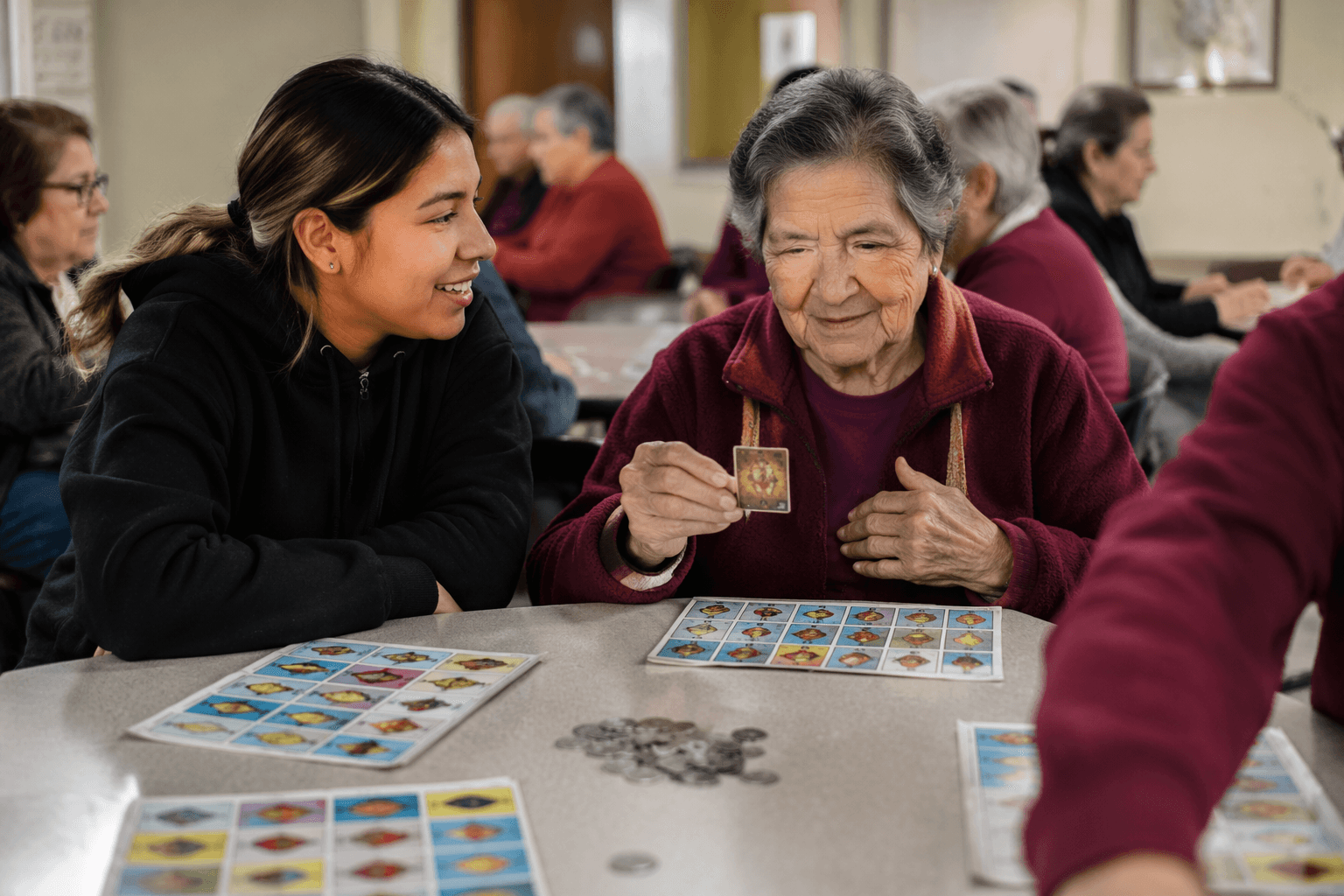
At Las Brisas apartment complex in San Luis, the benefit is immediate: older residents get company, conversation and help staying connected, while San Luis High School students gain a place to serve beyond the classroom. The yearlong Together Across Generations program is built around that simple exchange, using repeated visits instead of one-time outreach to chip away at loneliness in south Yuma County.
The program matters because loneliness here is not treated as a soft social concern. University of Arizona researchers describe loneliness and social isolation as recognized health risks, and the work at Las Brisas is designed to test whether steady, low-pressure interaction can improve well-being over time. That makes the project more than a feel-good story. It is a local response to aging, mental health and family separation in a border community where those pressures often overlap.
How the Las Brisas model works
Together Across Generations, or TAG, relies on ordinary activities that make conversation easier. Students and elders play lotería, share meals, plant together and trade stories. Chloe Ruiz, the program coordinator at Campesinos Sin Fronteras, says the sessions also include board games and basic tech help so older adults can reconnect with family members who live far away.
That tech piece is especially practical in San Luis, where family ties often stretch across the border and across long distances. A tablet lesson or phone setup can mean a grandparent in an apartment complex has a better chance of hearing a grandson in Mexicali, a niece in Calexico or relatives in Zacatecas without waiting for someone else to make the connection happen. The program is not built on spectacle; it is built on repeatable contact that elders can count on.
The student side matters just as much. Recent graduate Carolina Hernandez said the visits reminded her of her grandmother in Zacatecas and pushed her to call more often. That is the kind of spillover effect public-health leaders hope for: young people leave with stronger family habits, not just service hours.
Why a yearlong program can matter more than a one-day event
TAG stands apart because it is not a single event with a ribbon-cutting and a group photo. It is structured as a yearlong effort so relationships can deepen, trust can build and small gains can be observed over time. That approach gives the University of Arizona a chance to look at whether the routine of seeing the same faces, hearing the same stories and returning to the same apartment community changes how elders feel day to day.
The question is practical: do elders feel less alone, more connected and more able to manage daily life when interaction is regular rather than occasional? In a place like Las Brisas, that could mean more than companionship. It could affect whether a resident asks for help, keeps up with family, learns a new phone feature or feels comfortable stepping out of isolation and into community life.
Why TAG is built for border and rural Arizona
The broader TAG initiative is funded by the Centers for Disease Control and Prevention with $5 million over five years. Through the Arizona Prevention Research Center, it is aimed at rural, border and tribal communities in Yuma, Santa Cruz and Cochise counties, as well as within the Hualapai Tribe. The center says TAG includes financial resources, technical assistance and data collection for community-driven programs.
That structure matters because it gives local organizations more than encouragement. It gives them support to strengthen intergenerational efforts they already know how to run. The program is also meant to help youth teach technology skills to older adults while elders share cultural knowledge and traditions, which fits the realities of families in south Yuma County where caregiving, migration and cross-border identity often run together.
The initiative is guided by a community action board focused primarily on promotoras, or community health workers. That detail points to a familiar truth in this region: trusted local messengers often reach people more effectively than outside institutions do. The project also fits into a broader statewide effort to raise awareness about social isolation, treating it as a public-health issue that can be measured, studied and addressed.
The research behind the urgency
The case for this kind of work is reinforced by recent research beyond Yuma County. A 2025 JAMA research letter surveyed nationally representative samples of U.S. adults ages 50 to 80 and tracked loneliness and social isolation at six time points from October 2018 through March 2024. That kind of repeated measurement underscores a key point: loneliness is not just a feeling people describe casually. It is a condition researchers can track, compare and evaluate across time.
For San Luis, that research provides context for what residents already know from daily life. Older adults can go long stretches without meaningful conversation. Students can grow up knowing service only as a school requirement instead of a relationship. TAG tries to interrupt both patterns at once by making connection routine.
Campesinos Sin Fronteras brings the local credibility
Campesinos Sin Fronteras is well positioned to run that work because its roots in the region go deep. The nonprofit was officially established in 1999, but its organizing history stretches back to the mid-1990s, when it was tied to farmworker health and community advocacy. A policy forum presentation from the organization says that legacy includes work on pesticide safety, HIV/AIDS education, housing and farmworker advocacy.
Laura Torres, the organization’s Youth and Family Services director, carries that legacy forward. A University of Arizona profile says the organization’s work began 30 years ago with founder Emma Torres, making the intergenerational mission more than a program theme. In that sense, TAG reflects the organization’s own history of linking health, family and opportunity.
That local track record also shows up in scale. A 2022 Campesinos Sin Fronteras farmworker health fair drew 2,500 people and included 50 participating organizations. The numbers matter because they show the group can convene residents, service providers and community partners at a level that goes beyond a small social program.
Why the border economy makes this work even more relevant
The farmworker context around San Luis and broader southwestern Arizona helps explain why a loneliness project can have regional meaning. The University of Arizona Center for Rural Health has reported that seasonal farmworkers travel from Mexico to southwestern Arizona in winter to plant, harvest, water and package 80 to 95 percent of the leafy greens shipped across the United States. That labor system depends on mobility, long hours and family separation, all of which can make social isolation worse.
So when students sit with elders at Las Brisas, the story is not only about one apartment complex. It reflects a border community trying to keep its older adults connected, its young people engaged and its cultural knowledge moving across generations. If the program shows measurable gains in elder well-being, it could become a model for other San Luis apartment communities and, eventually, for other parts of south Yuma County that face the same quiet burden of isolation.
This article was produced by Prism’s automated news system from verified source data, official records, and press releases, then run through automated quality and moderation checks before publishing. The system is built and supervised by the people who set the standards it runs under. Read our full AI policy.
Did this article answer your question?