Seven Must-See Yuma Attractions for Families, History Buffs, and Outdoor Lovers
From a 19th-century prison perched on Prison Hill to a lake with more than 200 logged bird species, Yuma's seven best attractions are closer than most residents realize.
Yuma sits at one of the most consequential river crossings in North American history, and that geography shapes everything worth seeing here. The Colorado River carved the region's identity long before Arizona was a state, and today it anchors an extraordinary range of experiences: frontier history, living archaeology, open-water recreation, and community traditions that have run for generations. Whether you have a single afternoon or a long weekend, these seven attractions capture what makes this corner of the Southwest irreplaceable.
Yuma Territorial Prison State Historic Park
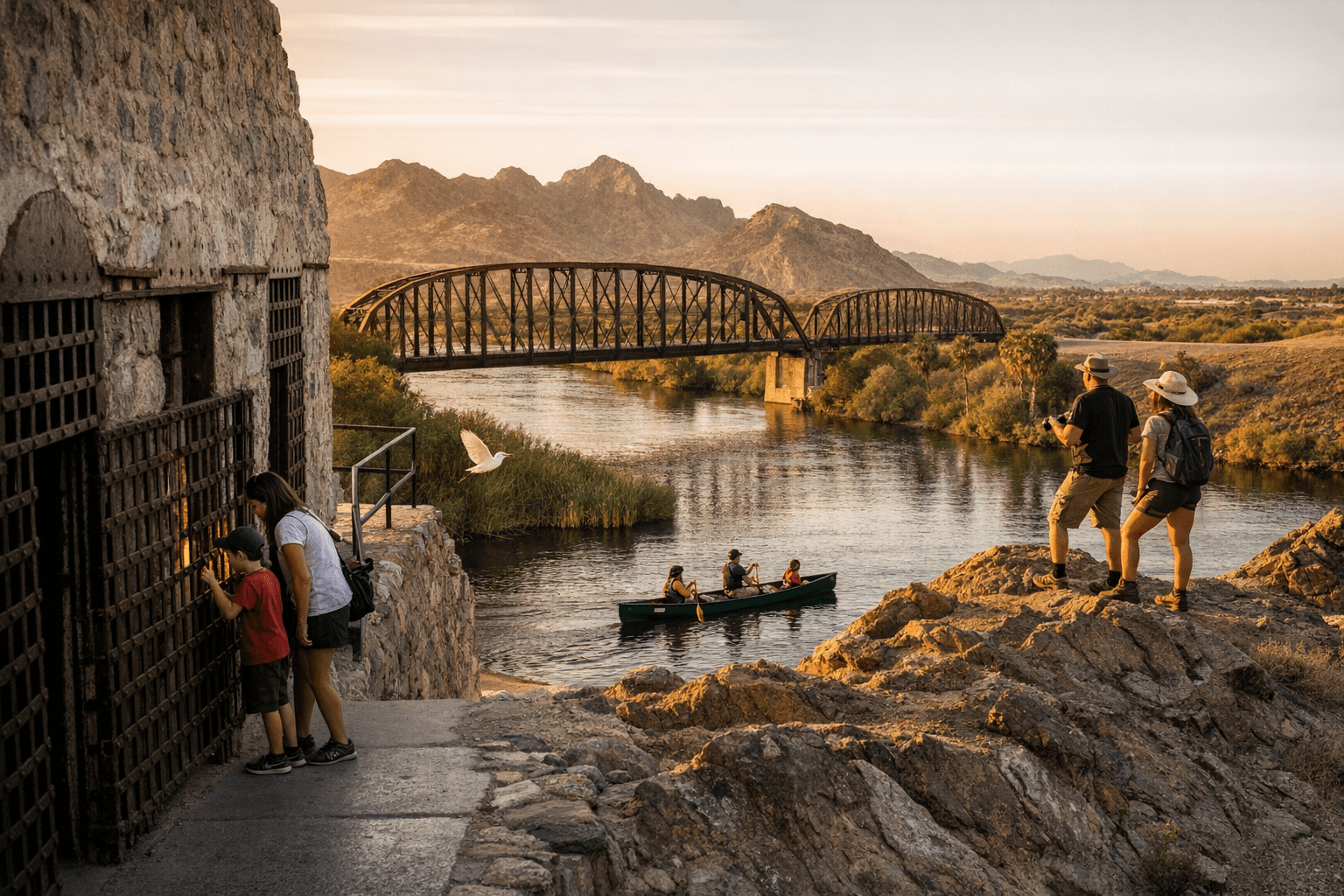
Perched on Prison Hill with commanding views of the surrounding desert, Yuma Territorial Prison State Historic Park is where the territory's frontier justice system left its most tangible mark. The site preserves original cell blocks alongside a full museum and visitor center, and interpretive panels connect the stories of stagecoach-era outlaws and lawmen to the broader arc of Arizona's territorial period. Few places in the Southwest let you walk through the actual physical spaces where that history unfolded. An on-site gift shop and daily visiting hours make it an easy half-day stop, and the elevated position on Prison Hill alone is worth the drive.
Colorado River State Historic Park and Yuma Visitor Center
Just above the banks of the Colorado River stand five original buildings from what was, for nearly 20 years beginning in 1864, one of the most strategically vital supply hubs in the American West. The U.S. Army Quartermaster Depot stored six months' worth of clothing, food, and ammunition for military posts across Arizona, Nevada, Utah, New Mexico, and Texas, all of it ferried upriver by steamboat from the Gulf of California. Inside the storehouse today, exhibits include an Army Escort Wagon, a section of the original plank road complete with a Model T, and a dedicated Steamboat Room tracing the river commerce that kept the frontier supplied. Don't overlook the exhibit on the Yuma Siphon, a massive tunnel bored beneath the Colorado River that first delivered irrigation water to the Yuma Valley in 1912 and still operates today. The park rounds out the experience with a museum, gift shop, and day-use picnic areas, making it a natural anchor for a downtown walking tour.
Yuma Crossing National Heritage Area and the Downtown Historic District
In 1540, well before Europeans reached Plymouth Rock, Spanish explorers Hernando de Alarcon and Melchior Diaz arrived at this stretch of the Colorado River and encountered thriving Native communities along the banks. Those explorers named the people they met the Yumas, drawing on the Spanish word for smoke, humo, after noticing cooking fires filling the valley. That layered encounter between indigenous communities, Spanish missionaries, Mexican settlers, and American military forces is precisely what the Yuma Crossing National Heritage Area preserves. The walkable network of riverfront parks, historic buildings, and interpretive trails links directly to museums, local restaurants, and seasonal programming, giving visitors a compact route through centuries of intersecting cultures. Father Eusebio Kino, Juan Bautista de Anza, and the Quechan tribe who controlled the crossing all figure into the stories told here.
Martinez Lake and Colorado River Recreation
About 40 miles north of downtown, Martinez Lake sits within a stretch of the Colorado River corridor that serious birders have catalogued for decades: more than 200 species have been logged in the area, including migratory birds that use the Imperial National Wildlife Refuge as a critical stopover along the Pacific Flyway. For anglers, the lake holds large bass and catfish, with spinnerbaits and crankbaits working well along channels and reed edges. Boaters can access the water at several points including Martinez Lake itself, Senators Wash, Squaw Lake, and Fisher's Landing. Winter and spring are peak seasons for wildlife viewing, when milder temperatures make long days on the water genuinely comfortable. Sun protection and a check of current water and weather conditions before launching are non-negotiable in this desert climate.
Regional Festivals and the Yuma County Fairgrounds
The Yuma County Fairgrounds anchors an annual calendar of community events that reflect the county's deep roots in agriculture. Fairs, car shows, and seasonal festivals cycle through the calendar, with 4-H and FFA competitions putting youth livestock and agriculture projects front and center in ways that distinguish Yuma's events from generic county fairs elsewhere. These gatherings are less spectacle than tradition, the kind that families return to year after year because they reflect real local production and community investment. Downtown venues contribute additional programming throughout the year. Checking the fairgrounds calendar before planning a visit ensures you catch the events that matter most to you.
MCAS Yuma and the Annual Airshow
Marine Corps Air Station Yuma is one of the busiest military air stations in the world for flight operations, and its presence shapes the county economically and culturally in ways most visitors quickly notice overhead. The annual airshow, which traces its roots to 1962 and has built into a tradition spanning more than six decades, opens the base gates to the public for one of the region's most attended events. The 2025 edition marked the 59th airshow in the event's history, featuring aviation demonstrations that draw crowds from across the Southwest. Airshows typically require advance tickets and security screening consistent with base access protocols; dates are announced well ahead of time and posted on official MCAS channels.
Local Museums, Cultural Centers, and Farmers Markets
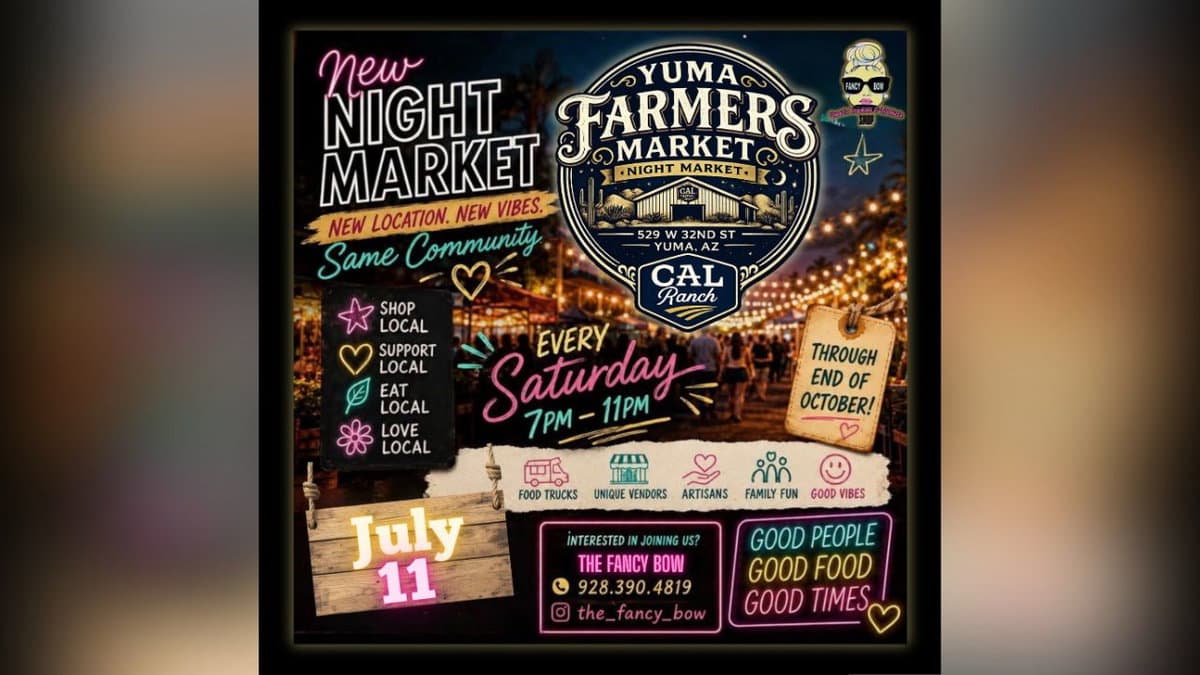
Yuma's smaller institutions and open-air markets fill in the texture that the larger historic parks can't fully capture. The region's binational character, its deep agricultural identity, and the blend of cultures that define daily life along the border all surface at local museums, cultural centers, and the farmers markets where growers sell directly to neighbors. Yuma County produces a significant share of the nation's winter vegetables, and the markets reflect that productivity in the variety and freshness on offer. These venues tend to run on schedules that shift seasonally, so confirming hours through the Visit Yuma tourism site before heading out saves a wasted trip. For families especially, these stops translate abstract regional history into something you can taste, hold, and take home.
Taken together, these seven sites don't just entertain; they explain Yuma. The river brought the explorers, the explorers brought the settlers, the settlers built the depot and the prison, the military built the air station, and the farmers turned desert into one of the most productive agricultural corridors on the continent. Spending a few days moving between these places gives that sequence a shape you won't find in any textbook.
This article was produced by Prism’s automated news system from verified source data, official records, and press releases, then run through automated quality and moderation checks before publishing. The system is built and supervised by the people who set the standards it runs under. Read our full AI policy.
Did this article answer your question?