UA students gain hands-on agriculture training through Yuma pest program
Yuma students are working on the pest problems that hit local fields hardest, turning classroom lessons into workforce training for a billion-dollar farm economy.

Diamondback moth is not a classroom problem in Yuma. It is a crop problem, a cost problem, and a workforce problem, and University of Arizona undergraduates are now helping confront it through a hands-on pest management program built for the desert Southwest.
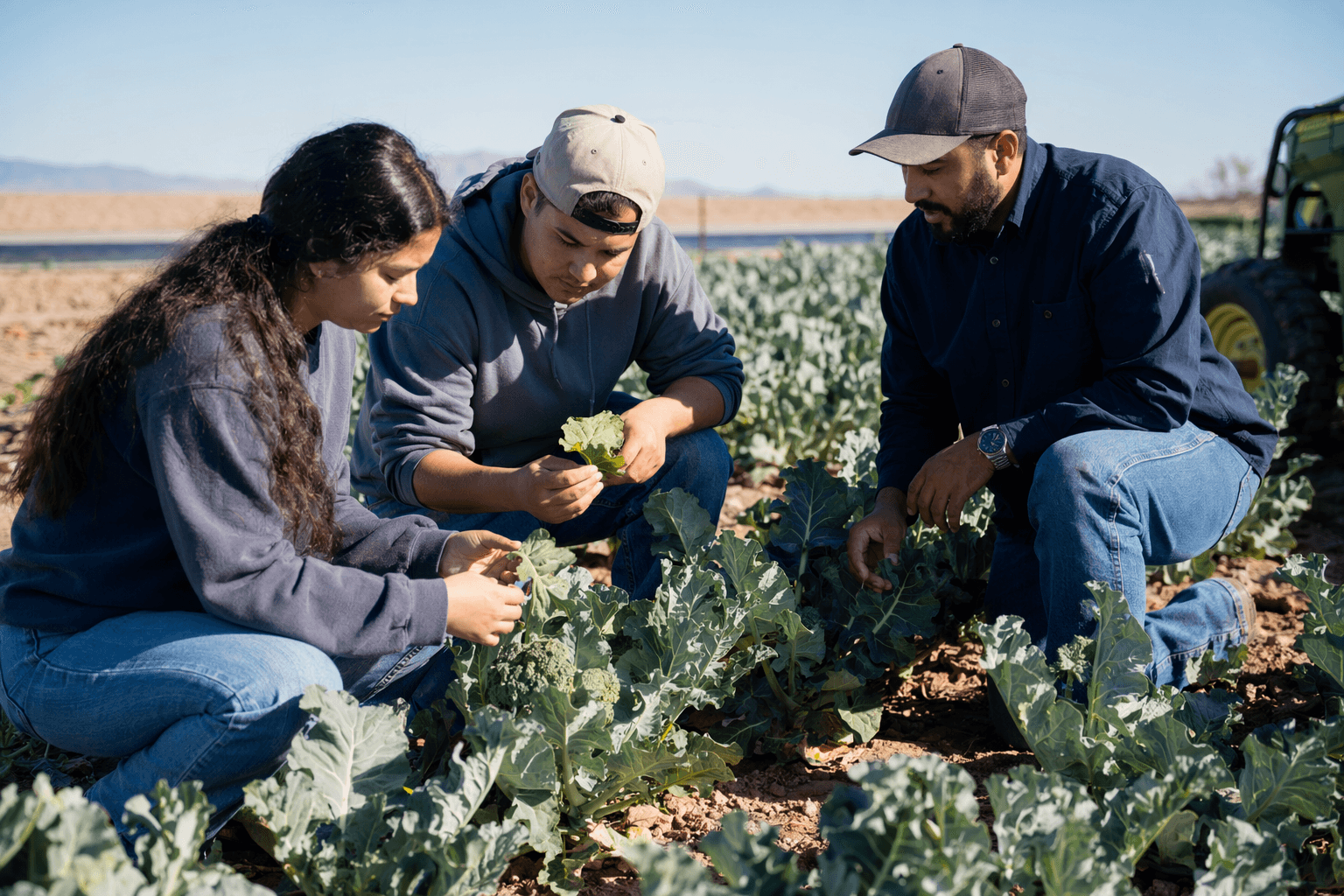
The University of Arizona’s Junior Vegetable Integrated Pest Management team gives students direct experience with the practical side of farming, from sustainable production to pest control methods that protect crops without wasting inputs or damaging the environment. In a county where agriculture is one of the defining industries, that matters far beyond campus. The same questions students are studying, how to manage invasive insects, how to improve control methods, and how to keep crops productive, are the questions local growers face in real fields every season.
Why this training matters in Yuma fields
The strongest example is the diamondback moth, a major brassica pest in Arizona after an unexpected outbreak about a decade ago. University of Arizona guidance says growers and pest control advisors have again reported control difficulties in the fall 2024 and spring 2025 growing seasons, which shows the problem has not gone away. Research published by the university also documented outbreaks of an invasive diamondback moth population and unexpected control failures in October 2016 across all vegetable-growing regions of Arizona, underscoring that this is an ongoing management challenge, not a one-time scare.
For Yuma growers, that makes pest research a business issue. Broccoli, cauliflower, and other vegetable crops are central to the region’s production profile, and a pest that resists control can quickly become a problem for yield, timing, quality, and cost. Students working on this issue are learning in the same pressure system that shapes local farm decisions: fields have to perform, and the margin for error is small.
How the program works
The Junior Vegetable Integrated Pest Management team is funded through a USDA NIFA Crop Protection and Pest Management grant, which supports integrated pest management approaches that are economically viable, ecologically prudent, and safe for human health. That federal backing matters because it ties the student experience to the broader public purpose of protecting crops while reducing unnecessary risk to workers, consumers, and the environment.
Macey Keith, listed by University of Arizona Cooperative Extension as assistant in extension for vegetable crops integrated pest management, manages the program. Her role is not just administrative. The program is designed to give students a safe environment to learn by doing before they enter the professional world, and that safety net makes room for experimentation, mistakes, and career discovery. Keith also frames the experience as a way for students to figure out what they care about and what they do not want to do, which is a useful reminder that workforce development includes both technical training and career clarity.
The students do not work in isolation. They are alongside university researchers in entomology, plant pathology, and weed science, and the broader Yuma Arizona Integrated Pest Management Team also spans mechanization and agronomy. That mix reflects the reality of modern agriculture in Yuma County: solving a pest problem often means understanding insects, crop biology, resistance patterns, machinery, and field management all at once.
The science behind the fieldwork
One student researcher, Josett Clark, focused on the diamondback moth, connecting the program directly to one of the most pressing insect threats facing local vegetable growers. That kind of project is valuable because it teaches students how to move from observation to decision-making, while also giving growers new information that can shape what they spray, when they spray, and how they manage resistance.
John C. Palumbo at the University of Arizona Yuma Agricultural Center is a key figure in that effort, focusing on resistance monitoring and insecticide efficacy for diamondback moth. That work sits at the center of practical integrated pest management. If a control product stops working as expected, growers need to know whether the problem is application, timing, pest pressure, or resistance, and they need that answer fast enough to protect a crop already in the ground.
The program’s emphasis on sustainable farming also has local relevance because desert agriculture demands efficiency. In Yuma, where production is tied to a harsh climate and high-stakes planting windows, farmers cannot afford academic research that stays abstract. The value of this program is that students are learning the same tradeoffs growers face: how to protect a crop, keep costs manageable, and reduce the chance of repeating the same control failure in the next season.
Why the county should care about the pipeline
Yuma County agriculture is not a small piece of the economy. A University of Arizona-backed economic contribution study reported that agriculture and agribusiness generated $3.9 billion in sales within the county in 2022. The same study said Yuma agriculture contributed $4.4 billion to Arizona’s economy when multiplier effects are included. Those figures explain why a student IPM program deserves attention as a workforce story, not just an education story.
The future of that industry depends on people who understand the local crop mix, the pest pressures, and the technical discipline required to keep production moving. Programs like this create a talent pipeline for exactly that purpose. Students leave with experience that is difficult to fake and even harder to learn quickly in a first job: how to observe a field, evaluate a treatment, understand resistance, and work in teams that span multiple specialties.
Just as important, the program helps keep knowledge rooted in Yuma. Students training in entomology, plant pathology, weed science, agronomy, and mechanization are not simply learning theory. They are being prepared for the jobs that keep one of Arizona’s most important farm regions productive.
In the end, the lesson from the University of Arizona’s Yuma pest program is straightforward. When students help solve diamondback moth problems, they are not just completing a research exercise. They are helping build the labor force, technical expertise, and pest management strategy that Yuma agriculture will need to stay competitive in the years ahead.
Know something we missed? Have a correction or additional information?
Submit a Tip