Unseasonable Warmth Keeps Yuma County in Mid December Heat
A persistent ridge of high pressure in early December kept Yuma and Imperial counties about 10 to 15 degrees warmer than normal, producing daytime highs in the upper 70s to lower 80s and dry, mostly clear skies. The stretch mattered for local residents because it reduced winter heating demand, altered irrigation and harvest timing for growers, and kept near term fire risk low with humidity remaining above critical thresholds.

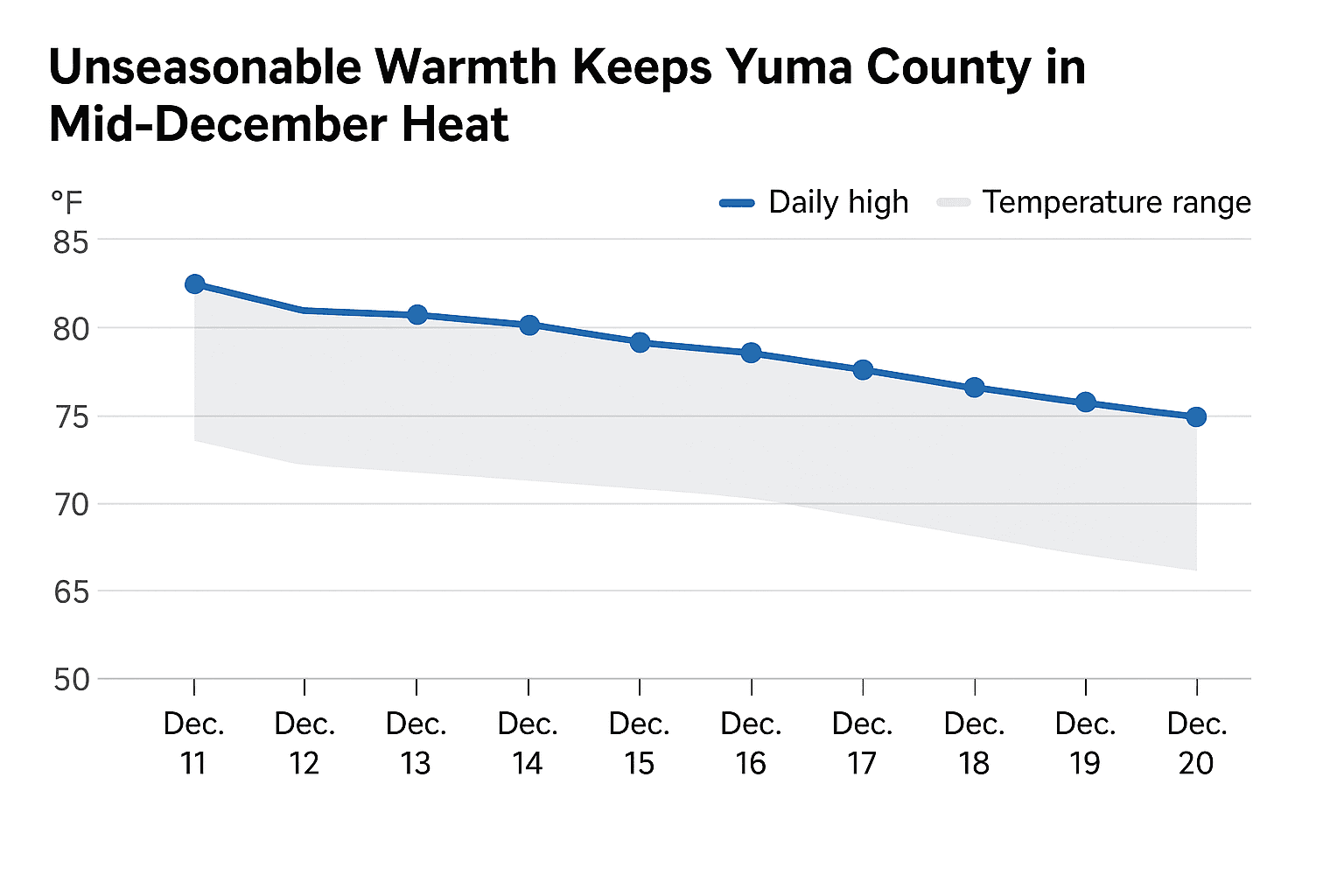
A strong ridge of high pressure that built over the Southwest on December 11, 2025 held Yuma and Imperial counties in an unusually warm weather pattern through the following weekend. Daytime highs stayed in the upper 70s to lower 80s, roughly 10 to 15 degrees above what is typical for mid December. The region saw a very warm and stable air mass with only small daily temperature swings.
Dry conditions dominated the period. No measurable rain was expected through at least the next week and skies remained mostly clear apart from occasional high clouds late in the weekend. Light breezes during the day and calm or nearly calm conditions overnight were the norm. Forecasters noted a weak disturbance could nudge temperatures briefly into the mid 70s around Tuesday or Wednesday, but the cooling was expected to be minor and short lived. High pressure was forecast to regain strength later in the week, returning highs to the mid to upper 70s and possibly near 80 again. Afternoon humidity hovered in the 20 to 30 percent range, while overnight recoveries were generally between 50 and 70 percent, keeping humidity above thresholds typically associated with critical fire weather. Overall meteorological guidance called the pattern warm, dry and quiet with no weather hazards anticipated across Yuma or Imperial counties.
Those weather conditions had practical implications for the local economy and daily life. Warmer temperatures reduced demand for residential heating and lowered short term energy use for space heating, while encouraging outdoor activity and tourism that benefit restaurants and services. For agricultural operations that dominate much of Yuma County in winter months, the warm, dry spell affected irrigation needs and harvest timing. Growers wereleft to balance warmer daytime conditions against overnight humidity recoveries to maintain soil moisture and product quality. The absence of storms eased logistics for field work and transport but also meant continued reliance on irrigation rather than rainfall.
With no immediate hazards expected, residents and businesses experienced an unusually mild mid December period, while planners and producers continued to monitor small forecast changes that could briefly alter temperatures and moisture conditions in the week ahead.
This article was produced by Prism’s automated news system from verified source data, official records, and press releases, then run through automated quality and moderation checks before publishing. The system is built and supervised by the people who set the standards it runs under. Read our full AI policy.
Did this article answer your question?