Yuma County Extension Hosts U-Pick Event to Boost Produce Literacy
On Jan. 3, 2026, the Yuma County Cooperative Extension staged a brief U-Pick event at the Yuma AG Center, inviting locals and seasonal visitors to harvest cauliflower, lettuces, beets, Napa cabbage and radishes. The morning event aimed to show community members how produce grows and to encourage children to sample vegetables, highlighting the Extension's role in hands-on outreach and local food education.
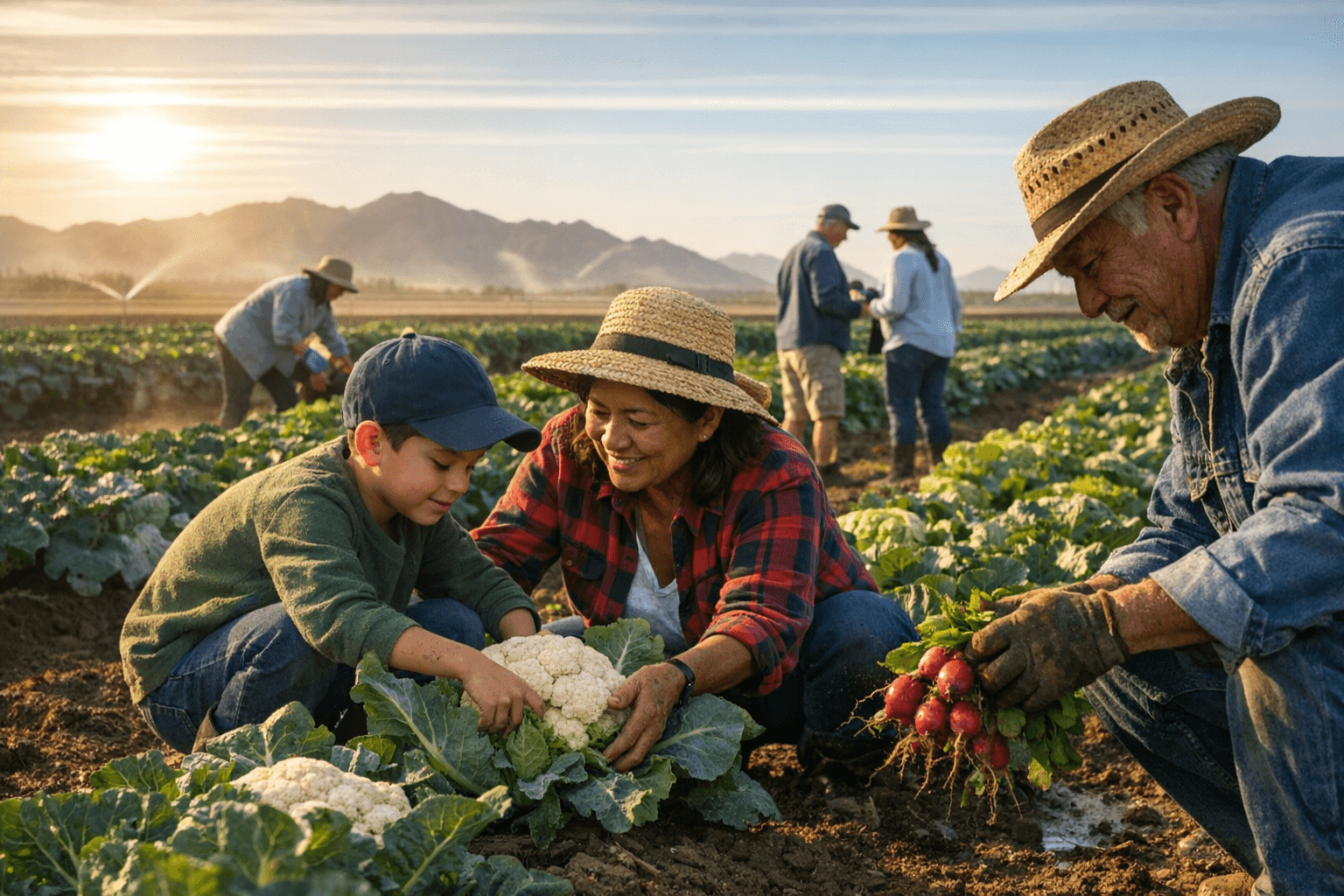
The Yuma County Cooperative Extension opened rows of winter crops to the public on Jan. 3 at the Yuma AG Center, 6425 W. Eighth Street, offering a two-hour U-Pick opportunity for residents and seasonal visitors. Participants picked cauliflower, several varieties of lettuce, beets, Napa cabbage and radishes, and were able to observe produce growing in the field and bring fresh vegetables home.
Extension member Janine Lane said the event helps people see how produce grows and encourages children to try the vegetables they pick. The short, hands-on format focused on direct engagement rather than formal instruction, allowing families to move through the plots at their own pace during the morning session.
Beyond the immediate horticultural experience, the event underscores the Cooperative Extension’s function as a county-facing institution that links agricultural knowledge to community needs. By situating learning in the field, the Extension translated abstract advice about healthy eating and local agriculture into an immediate, tangible experience for attendees. For a county where agriculture is a visible part of daily life, U-Pick events can serve as a bridge between seasonal workforces, long-term residents and county services.
There are practical policy implications for local officials monitoring public health outreach and community engagement. Short events like this one offer a low-cost method to promote nutrition education, but their impact depends on frequency, outreach to underserved neighborhoods and coordination with other county programs. Measuring participation and follow-up behavior would help county leaders evaluate whether field-based demonstrations change shopping or eating habits, especially among children introduced to vegetables for the first time.
The presence of seasonal visitors at the event also raises questions about how extension programming reaches transient populations and whether more consistent offerings could strengthen food literacy across diverse community segments. For civic leaders, such programs illustrate how county-supported institutions can build public trust by showing, not only telling, how local food systems operate.
As the Cooperative Extension continues community outreach, the model used Jan. 3 provides a template for practical, place-based education. Expanding the frequency of U-Pick opportunities, tracking outcomes and integrating these events with broader nutrition and public health initiatives would help quantify benefits and guide local policy decisions about sustaining hands-on agricultural programming.
This article was produced by Prism’s automated news system from verified source data, official records, and press releases, then run through automated quality and moderation checks before publishing. The system is built and supervised by the people who set the standards it runs under. Read our full AI policy.
Did this article answer your question?