Yuma Crossing National Heritage Area Protects Riverfront Parks, Wetlands, History
Yuma Crossing National Heritage Area protects downtown riverfront parks, restored wetlands and historic sites, preserving wildlife habitat and Yuma’s frontier and river history for residents and visitors.
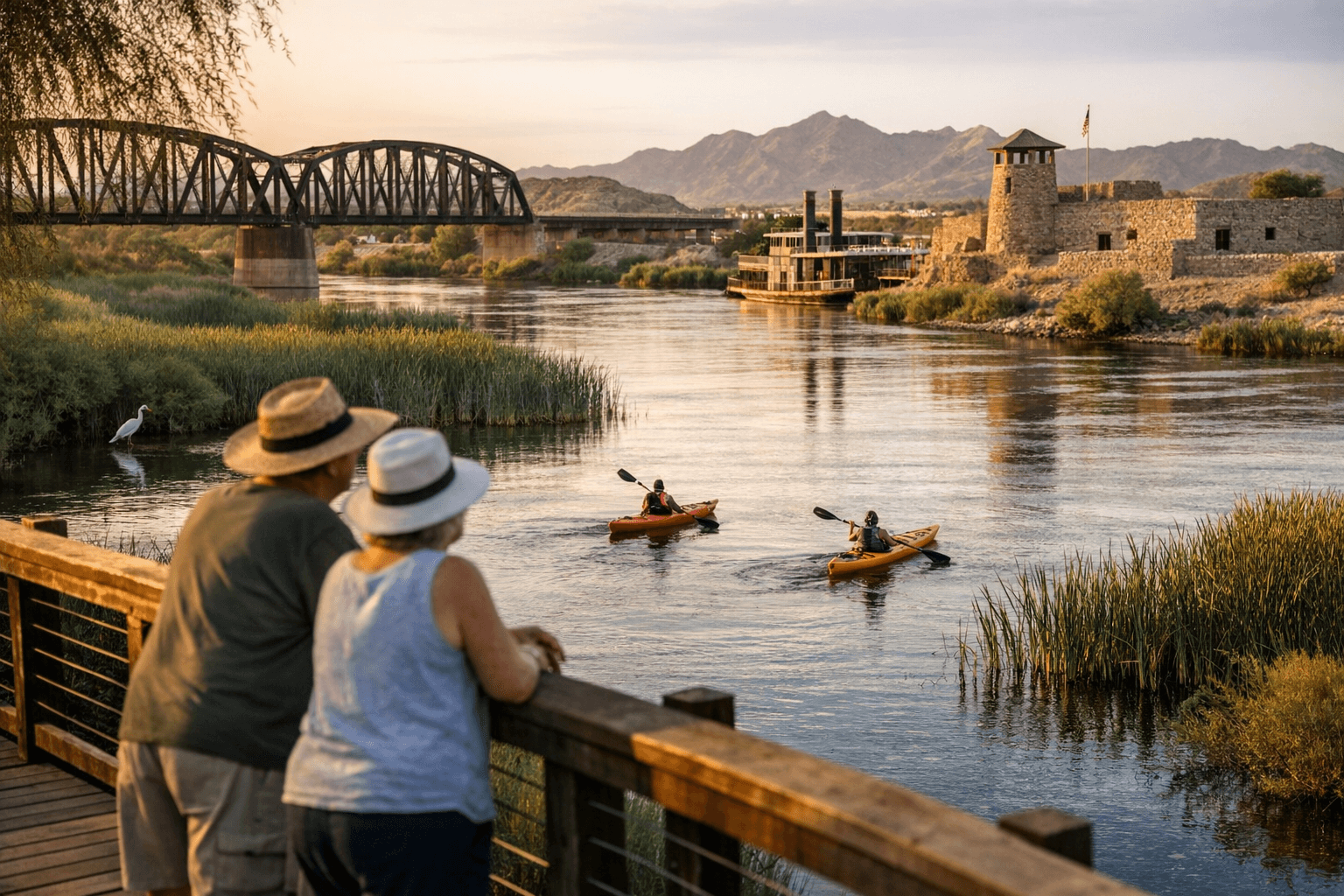
The Yuma Crossing National Heritage Area anchors downtown Yuma along the Colorado River, preserving riverfront parks, restored wetlands and a cluster of historic sites that shaped the Southwest. The federally recognized National Heritage Area and the Yuma Crossing and Associated Sites National Historic Landmark are managed locally by the Yuma Crossing National Heritage Area Corporation, a partnership that blends conservation, interpretation and tourism management.
The heritage area presents layered history spanning more than five and one-half centuries, beginning with Hernando de Alarcon’s 1540 expedition up the Colorado River in support of Coronado’s exploration. Later frontier and military chapters are visible on the riverfront. The Colorado River State Historic Park interprets life at the Army supply depot that operated from 1864 to 1883 and displays a model depicting the depot as it appeared in 1872. Nearby, the Yuma Territorial Prison State Historic Park, described as “The Yuma Territorial Prison is a living museum of the Old West,” sits on a bluff overlooking the river. Over the decades the prison held 3,069 prisoners, including 29 women, and 129 prisoners are buried in its cemetery. Visitors are invited to “Venture into the infamous ‘Dark Cell’, if you dare.”
Interpretation and visitor services center on the Yuma Crossing Discovery Center. The Discovery Center headlines its role with “THE YUMA CROSSING DISCOVERY CENTER” and the tagline “THE LEGEND LIVES ON.” Staff encourage visitors to “Stop into the Discovery Center to learn about Yuma’s riverfront history and discover the many opportunities to explore the sites, museums, parks, and trails along Yuma’s riverfront.” The center also offers group coordination support: “Have a large group? Call us – we can help coordinate your visit or assist you in planning your special event.”
Restoration of riparian habitat is central to the heritage area’s mission. The National Park Service lists “400 acres of restored wetlands” and describes the project as reconnecting the city to its historic downtown after decades in which irrigation and agricultural development left riparian areas blighted. Local sources identify Yuma West Wetlands as a 110-acre riverfront ecosystem and describe East Wetlands Park as paved and accessible with no-to-low-incline trails that make birding and walking possible for all abilities. One tourism account credits restoration with doubling local bird populations and increasing species diversity; visitors may encounter the endangered yellow-billed cuckoo.
The combined cultural and ecological investment has practical local effects: linked riverfront parks and a multi-use path improve access between downtown businesses, museums and natural areas; museums and attractions such as the Sanguinetti House Museum & Gardens and the Yuma Art Center feed cultural tourism; downtown businesses including The Chile Pepper, Colorado River Pottery and Desert Olive Farms benefit from foot traffic tied to heritage tourism. The heritage area corporation’s multi-decade work is summed up in its own words: “The Yuma Crossing National Heritage Area has been restoring, preserving, maintaining, and promoting Yuma’s history for over 20 years.”
For Yuma residents the story is both conservation and economic policy: ongoing restoration requires continued coordination among the Yuma Crossing National Heritage Area Corporation, federal and state park managers and local businesses to secure funding, manage visitor services and protect habitat. Next steps include clarifying wetland acreage and species-recovery data with heritage managers, sustaining accessible trail connections and ensuring that preservation investments translate into year-round benefits for local jobs, recreation and civic pride.
This article was produced by Prism’s automated news system from verified source data, official records, and press releases, then run through automated quality and moderation checks before publishing. The system is built and supervised by the people who set the standards it runs under. Read our full AI policy.
Did this article answer your question?