Yuma East Wetlands restored from dump to desert birding hotspot
Yuma East Wetlands turned nearly 400 acres of dump and neglected riverfront into habitat, trail access and a birding draw along the Colorado River.
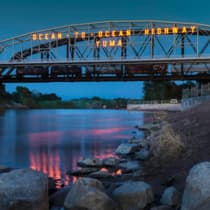
Yuma East Wetlands changed one of the city’s most damaged riverfront stretches into nearly 400 acres of marsh, mesquite, cottonwood and willow habitat along the Colorado River. What was once a trash dump and former hobo-camp area is now a public-facing restoration site that draws birders, hikers and visitors while keeping land in active ecological use.
From neglected river edge to restored habitat
Restoration work at Yuma East Wetlands began in 2004, but the project’s local logic goes back much farther. The Yuma Crossing National Heritage Area treats the wetlands as a model for restoration in the desert Southwest because it replaced a degraded river edge with habitat that functions as both wildlife corridor and civic asset. That before-and-after change matters in Yuma County because river access, habitat recovery and recreation now occupy the same ground that once held little value for the public.
The site is not a single-purpose park. It is a stitched-together landscape where marshes, cottonwood stands, willow groves and mesquite thickets support birds and other wildlife while trails and access points bring people close enough to use the area without overwhelming it. The waterfront park and trail brochure places East Wetlands alongside Gateway Beach, Sunrise Point Park, Riverside Park and the Colorado River, showing how the restored land fits into a broader riverfront system rather than standing apart from it.
The partnership behind the rebuild
Yuma East Wetlands is the product of a four-way partnership: the Yuma Crossing National Heritage Area, the Quechan Indian Tribe, the City of Yuma and the Arizona Game and Fish Department. That mix matters because the project had to solve more than one problem at a time. It needed heritage planning, tribal stewardship, city-level infrastructure and wildlife management to work together on the same stretch of river.
The broader Yuma Crossing story began even before the wetlands restoration itself. Congress authorized the Yuma Crossing National Heritage Area in October 2000, and a grassroots initiative that same year brought together the Quechan Tribe, the City of Yuma and private landowners to restore more than 1,400 acres of degraded habitat. The heritage area’s management plan says the riverfront effort reflects generations of Yumans, and its acknowledgements include the Quechan Tribal Council, the City of Yuma, the Yuma County Historical Society and the Yuma County Water Users’ Association. In Yuma, that makes the wetlands part of a longer public record of land and water management, not a one-off beautification project.
The National Park Service has also framed the wetlands as part of a larger regional restoration effort. That matters for Yuma County because the project sits at the intersection of floodplain function, wildlife habitat and public recreation, the three pressures that most often collide along urban river corridors in the desert.
What the site offers today
For visitors, East Wetlands works as both a nature park and a trailhead. The Arizona Birding Trail lists East Wetlands Park as a birding site, and eBird identifies Yuma East Wetlands as a hotspot with a 2.25-mile loop trail built for hiking and birdwatching. Those details give the area a practical identity: this is a low-impact destination where the trail network supports use without turning the restored habitat into a hard-edged urban park.
That recreational role has been improved over time. The Yuma Crossing annual report for 2014-2015 says access to the East Wetlands was being enhanced with help from a generous donation from a local contractor. The fact that access improvements continued years after the initial restoration shows how the site has been managed as a living public space, not a finished project locked in place after the first planting season.
The larger riverfront context also matters for everyday use. East Wetlands sits among familiar Yuma names like West Wetlands Park, Gateway Beach, Sunrise Point Park and Riverside Park, which helps residents and visitors think about the Colorado River corridor as a connected sequence of places. That connectedness is part of what gives the wetlands value: it is habitat, but it is also part of how Yuma organizes access to its river.
Why the funding and maintenance still matter
The restoration story is not frozen in the past. In April 2024, the Department of the Interior announced $5 million to protect and maintain Yuma East Wetlands, and the Fort Yuma Quechan Tribe publicly applauded that funding. That support matters because wetlands require steady maintenance: water management, trail upkeep, habitat care and long-term protection all determine whether the site keeps working as intended.
The 2024 funding also reinforces the central local lesson of the project. A damaged riverfront can be reclaimed, but only if agencies, tribal leaders and local partners keep treating it as infrastructure worth maintaining. For Yuma County, East Wetlands now stands as a 400-acre example of what happens when neglected land along the Colorado is converted into habitat, public access and a birding destination at the same time.
The model is straightforward, but the consequences are not small. Riverfront land that once had little public value now contributes to habitat recovery, tourism draw and civic identity, and the decisions made there will keep shaping how Yuma handles water, recreation and restoration along the river for years to come.
This article was produced by Prism’s automated news system from verified source data, official records, and press releases, then run through automated quality and moderation checks before publishing. The system is built and supervised by the people who set the standards it runs under. Read our full AI policy.
Did this article answer your question?