Yuma Riverfront Historic Loop Drives Downtown Tourism and Preservation
Yuma's most visited historic sites cluster along the Colorado River and downtown, forming a walkable riverfront loop that combines museums, river access and shaded ramadas. The concentration of attractions strengthens local tourism, supports nearby businesses, and raises planning questions about seasonal hours, visitor services and heat mitigation for residents and visitors.
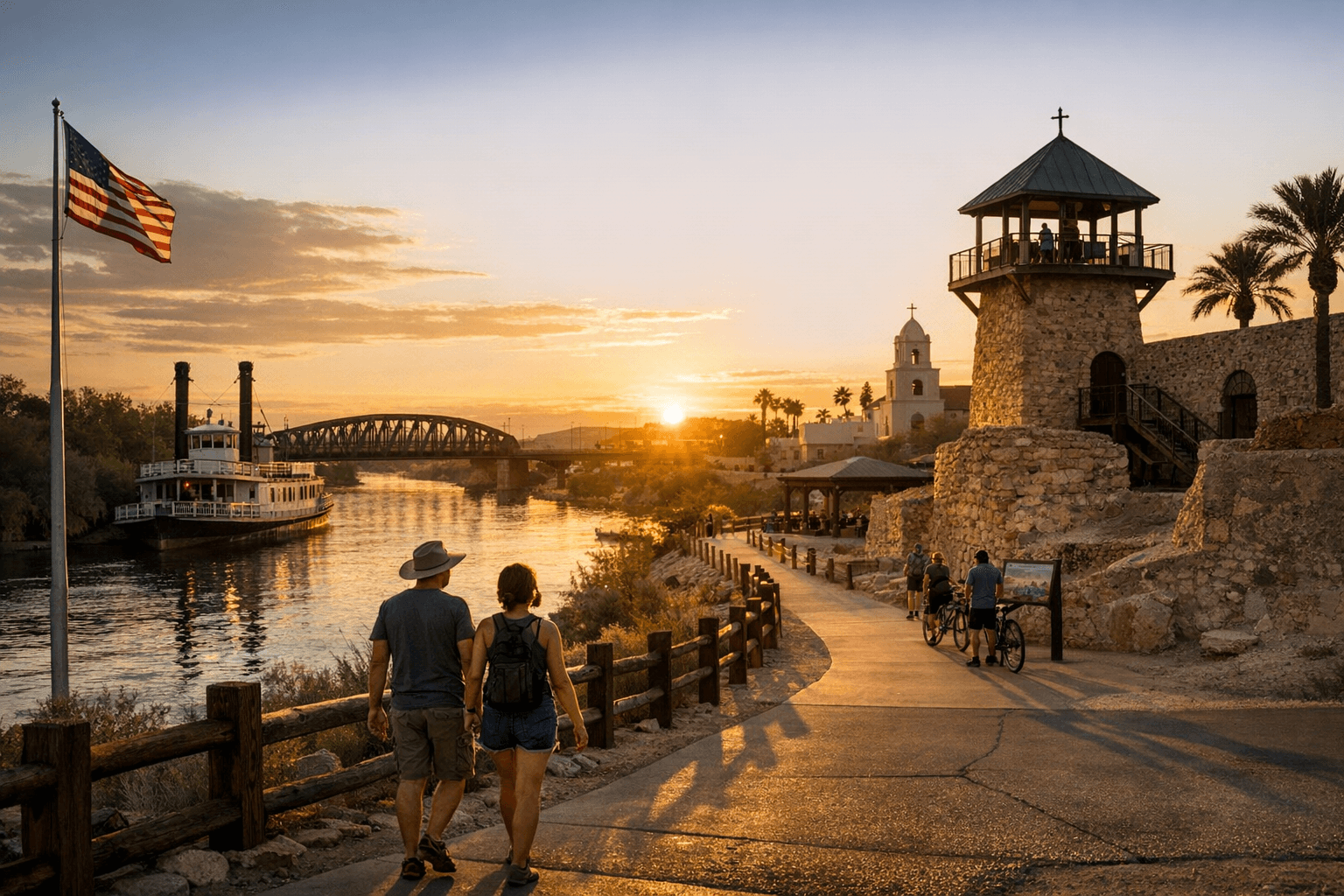
Yuma's historic heart sits along the Colorado River, where the Yuma Territorial Prison State Historic Park, the Sanguinetti House Museum and Gardens, and the Colorado River State Historic Park form a compact corridor of preserved sites and interpretive trails. The prison preserves 19th century territorial prison buildings and exhibits on early frontier and correctional history. The Sanguinetti House is a restored Victorian home showcasing local social history, period interiors and rotating exhibits. The riverfront park preserves steamboat era sites and riverfront structures while providing visitor information and accessible trails.
These three sites are walkable as part of a riverfront historic loop that combines museums, river access and shaded ramadas. That proximity concentrates foot traffic in downtown Yuma and along the river, creating regular customers for restaurants, shops and service providers in the immediate area. Winter months bring additional programming with guided tours and living history programs, which typically enhance weekday and weekend visitation and help stretch tourist activity beyond peak holiday weekends.
Practical visitor guidance is straightforward and relevant to residents. Check seasonal hours and special event schedules before planning a visit, look for guided tours and living history programs particularly in winter months, and plan for limited shade in midday by bringing sun protection. Those simple precautions can improve the experience for families, older residents and visitors who rely on downtown services while touring the loop.
The clustering of historic assets also has policy implications for Yuma County. Concentrated visitation highlights the need for coordinated wayfinding, consistent hours across sites, and investments in shade infrastructure and accessible river access points to extend time spent downtown and capture more local economic benefit. Preservation efforts that maintain period architecture and interpretive programming support long term heritage tourism, but public planning should factor in seasonal demand and the region's strong sunlight to protect visitors and programming.
Maintaining and promoting the riverfront loop can continue to anchor downtown economic activity while preserving Yuma's river history. Local officials, business owners and cultural stewards can use the current concentration of attractions to coordinate events, expand offerings in winter programming and make targeted infrastructure improvements that improve comfort and accessibility for residents and tourists alike.
This article was produced by Prism’s automated news system from verified source data, official records, and press releases, then run through automated quality and moderation checks before publishing. The system is built and supervised by the people who set the standards it runs under. Read our full AI policy.
Did this article answer your question?