Yuma Territorial Prison Marks 150 Years as Arizona Landmark
The first seven inmates hacked their own cells from granite — 150 years later, 3,069 prisoners' stories still echo at Yuma's most infamous landmark.
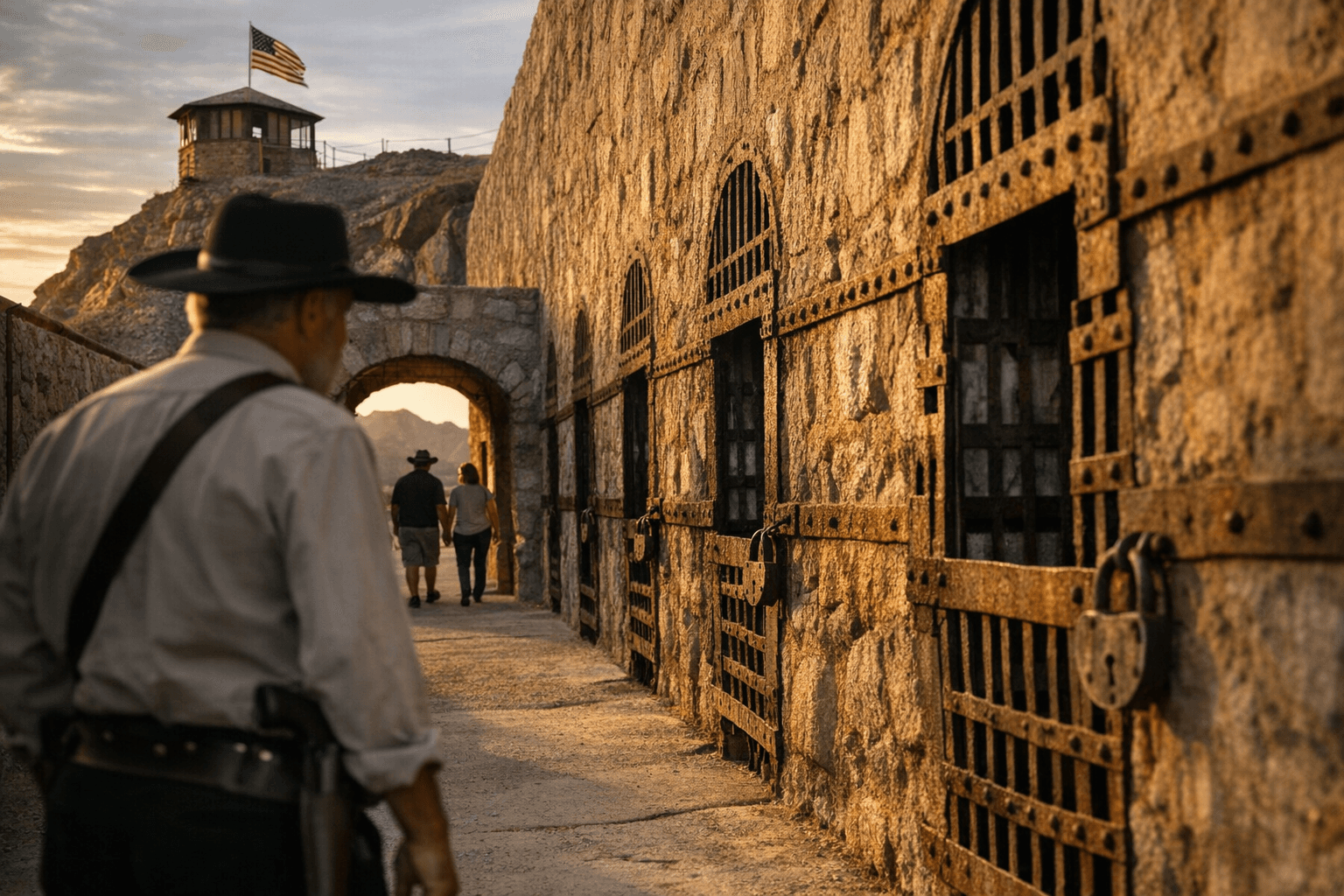
Perched on a bluff above the Colorado River, the Yuma Territorial Prison State Historic Park is marking 150 years since the first seven prisoners were locked into cells they themselves hacked from the granite hillside. The 1876 opening of what became known as the West's most infamous institution set in motion a 33-year chapter of Arizona territorial history that the park now preserves in stone, adobe, and artifact at 220 N. Prison Hill Road.
Over its operating life, the prison held 3,069 inmates, including 29 women, convicted of crimes ranging from polygamy to murder. When the facility closed in 1909, 129 prisoners remained on the grounds permanently, buried in the prison cemetery that visitors can walk through today. The two-foot-thick adobe walls, studded with chunks of granite, still stand alongside the original cellblocks, guard tower, Sally Port entrance gate, the Dark Cell, and the caliche hill, giving the site a physical continuity with its frontier-era past that few Arizona landmarks can match.
The 3,600-square-foot museum houses original prison artifacts, a video presentation, and exhibits interpreting the lives of both convicts and prison staff. One of the more striking features is a large mural of Arizona Native Americans and desert scenery painted by an unnamed World War II Italian prisoner of war, a reminder that the site's layered history extends well beyond the territorial era. Exhibits also include turn-of-the-century medical equipment from the prison's hospital.
Among the named figures associated with the prison is Pearl Hart, known as "The Girl Bandit," whose story is featured in the interpretive programming. The site has drawn national media attention through appearances on the television programs "Mysteries at the Museum" and "Ghost Adventures," and USA Today voted it the best haunted destination in the United States.
Visitors can climb the guard tower for views of the Colorado River, follow the path of former inmates through the original Sally Port, and enter the infamous Dark Cell. A replica prison uniform station allows visitors to take commemorative mug shot photos. The picnic area, situated above the river with a sight line into California, offers a quieter counterpoint to the cell block tours.
Admission runs $10 for adults, $7 for youth ages 7 to 13, and is free for children 6 and under. The park is open seven days a week from 9 a.m. to 4:30 p.m. Annual passes are available for individuals, couples, and families. The Visitor Center gift shop carries T-shirts, baseball caps, keychains, handcuffs, and books, with online ordering also available through Arizona State Parks and Trails. The park's modern restrooms are handicap accessible.
Special events throughout the year include Wild West Days and a lineup of supernatural programming that reflects the site's ghost-hunting reputation. Groups can call the park directly at (928) 783-4771 to coordinate visits or plan private events.
A century and a half after those first inmates broke ground on their own confinement, the prison's granite walls continue to draw visitors from across the country to a bluff at the edge of the Colorado River where Arizona's territorial story is still told in stone.
This article was produced by Prism’s automated news system from verified source data, official records, and press releases, then run through automated quality and moderation checks before publishing. The system is built and supervised by the people who set the standards it runs under. Read our full AI policy.
Did this article answer your question?