1-3-5 Ring Stacking Rule: Styling Gold, Diamond, Silver for Indian Outfits
Master ring layering with a simple 1‑3‑5 approach—balance a focal gold or diamond with complementary silver and texture, while prioritising fit, comfort and avoiding damage.
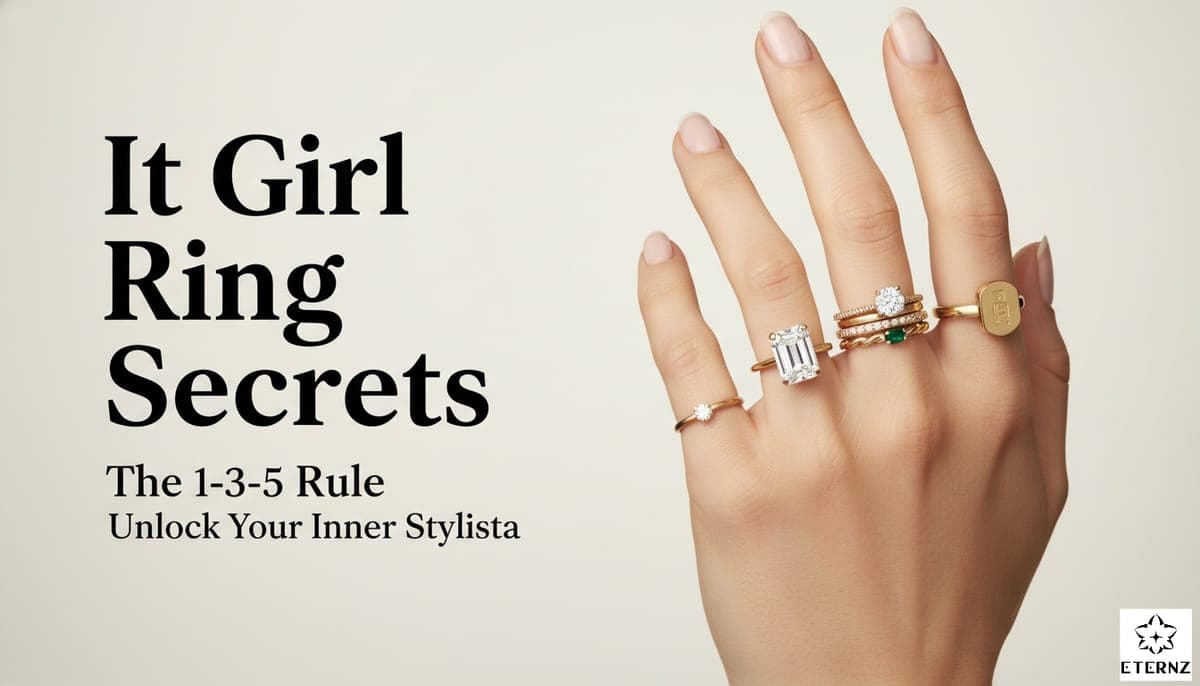
Master the art of ring stacking with the 1 3 5 rule. That promise — to "style gold, diamond, and silver rings for Indian outfits" — sits beside an equally important caveat repeated across expert sources: comfort and preventing damage are the only non‑negotiables. The Original Report described the concept as "The 1 3 5 Ring Rule is a styling formula designed to create a balanc", while ring guides from Vrai, Jacquieaiche, Gardensofthesun, Brownjewelers and Galleria Armadoro offer practical, often overlapping advice on how to make the idea wearable, day to night.
What is the 1‑3‑5 idea (and what the notes actually say) The phrase 1‑3‑5 appears in the Original Report as a styling formula intended to create a balanced ring stack for gold, diamond and silver when worn with Indian outfits. The provided material does not supply an explicit step-by-step definition of what "1", "3" and "5" numerically denote, so treat the 1‑3‑5 concept as a design shorthand: one focal piece, a few complementary rings, and a broader distributed total across fingers that achieves visual balance. Editors and stylists in the sources frame it as a helpful formula, not an absolute rule — which matters when you translate the idea into sari pleats, lehenga blouses or bandhgalas.
Start small: one ring or three as your base Guides differ but agree on one principle: begin with intention. Jacquieaiche offers two practical entry points — "Begin your ring-stacking journey with one ring that feels special—perhaps a cherished diamond engagement ring or a meaningful emerald ring," and elsewhere, "A good rule of thumb is to start with three rings as a base and adjust based on the look and comfort you aim for." Both approaches work: start with a treasured central ring as the story's protagonist, or build a triad from the outset and refine. Gardensofthesun urges spreading that intention across fingers: "Wear rings on up to four fingers of your hand at a time, leaving at least one finger bare," and recommends experimenting with uneven counts — three, five or seven fingers out of ten — for the most pleasing balance.
Triangle placement: a simple visual architecture Two sources converge on a single, repeatable tactic: "If you’re stacking rings on multiple fingers, you should always stack your rings in triangles." Vrai advises creating "a triangular shape across your fingers" to ensure symmetry and balance; Gardensofthesun repeats it plainly: "There's one simple rule when it comes to the position of your rings: stack in triangles." Try the explicit patterns both sources give: wear a low stack left, a high stack middle and a low stack right; or wear a high stack left, low stack middle and high stack right. These triangular placements read well with Indian silhouettes, where one hand frequently presents itself during draping or when adjusting a dupatta.
Choosing the base and building a theme Treat rings like characters in a story. Gardensofthesun phrases it vividly: "Like a good story, ring stacks are a form of art. Think of rings as different characters to write a story with." Identify "The base — The main character in your story and the focal point in the set." Jacquieaiche recommends picking an overarching theme — a metal colour, diamond shape, or ring style — so disparate pieces feel curated: "Choose to match one of the following to create a common thread: metal color, diamond shape, or ring style." Once you have a focal ring (gold kundan, a diamond solitaire, an emerald cocktail piece), supplement it with accents that either echo or purposefully contrast its tone and texture.
Mixing metals, widths and textures without chaos Mixing gold, diamond and silver is expressly invited in the Original Report's framing; the tactic that keeps mixed-metal stacks from looking accidental is intentional contrast and proportion. Vrai advises: "Position chunkier rings next to thinner bands, or textured bands next to plain bands." Jacquieaiche similarly recommends "Create contrast and accents by stacking rings with varying widths or textures." Brownjewelers expands the principle into a larger styling rule: "The most successful stacking jewelry looks follow the principle of intentional imbalance." For Indian outfits, where embroidery, zari and stones already create visual density, balance chunkier rings with delicate bands so a ring cluster complements, rather than competes with, the outfit.
Sizing, comfort and a practical home sizer Comfort is not optional. Multiple sources warn that "Stacking rings can make them feel tighter. The more rings you stack, the tighter they will feel." Vrai emphasises the only true rule: "avoid stacking any rings together that would cause damage." Practical sizing tips are unanimous: move rings between fingers, try them above the knuckle, and remember "Your finger size changes from day to night and over the years." If you don’t have a jeweller’s mandrel, Galleria Armadoro's social clip gives a simple home method — the exact steps offered are: 1) Wrap it around your finger. 2) Mark where the ends meet. 3) Measure the length. 4) Use our ring size guide to find your fit! Use this sequence to get a baseline; then test the rings together on the day you plan to wear them, because stacks often feel different than single rings.

Do’s, don’ts and a contradictory line to note Practical guidance across the sources is direct and actionable. Vrai’s explicit do-list includes: "Use simpler and fewer ring stacks to frame your tallest stack(s)" and "Position chunkier rings next to thinner bands, or textured bands next to plain bands." Its don’t list verbatim includes two items that require care when you apply them: "Be afraid to experiment with varying heights for your stacks" and "Stack rings that will rub against each other." The first line is contradictory to much of the advice elsewhere — Jacquieaiche, Gardensofthesun and Brownjewelers all encourage experimentation with heights and positions — so treat that Vrai don’t line as likely a source error and favour the broader consensus to experiment carefully while avoiding friction that causes wear.
Occasion and dress: day, office, evening Context matters. Jacquieaiche and Brownjewelers divide stacks by occasion: daytime and professional settings call for refined, comfortable combinations with consistent metals and proportionate pieces; "Evening occasions call for more dramatic stacking. This is when you can embrace bolder combinations, mixing statement pieces with delicate accents." With Indian looks, adjust ring scale to sleeve style: heavy lehengas tolerate more theatrical stacks, while minimalist sarees and churidar silhouettes benefit from subtler clusters.
Common mistakes and practical warnings Avoid stacking all your rings on one finger — Gardensofthesun warns that while you can wear ten rings across ten fingers, "stacking all of them on one finger is definitely too much." Spread weight, leave a finger bare (most prefer the pinky or thumb), and always test for rubbing or catching on fabrics. Remember Vrai’s bottom line: "The only true rule for ring stacking is to avoid stacking any rings together that would cause damage."
Why people stack: expression, versatility, resale value Galleria Armadoro articulates the cultural appeal: "Each stack tells a story—whether it’s your journey, style, or mood. Versatility: From pinky rings for women to signet rings for women, the combinations are endless. Timeless Appeal: Stacked rings, such as silver wedding rings for women or band rings for women, can be dressed up or down." That narrative logic is what makes the 1‑3‑5 idea so useful: it’s a mental toolkit for turning personal pieces into a composed look.
Practical takeaway Treat the 1‑3‑5 rule as a styling formula — a useful starting point for balancing gold, diamond and silver with Indian outfits — but let fit, durability and personal taste be the final arbiters. Begin with one special ring or a trio as your base, use triangular placement across fingers for balance, mix textures deliberately, and always prioritise sizing and wearability so your stack is beautiful and built to last.
Know something we missed? Have a correction or additional information?
Submit a Tip