12-inch Water Main Rupture Floods Oak Street, Cuts Service to 54
A 12-inch SCWA water main ruptured on Oak Street, flooding Oak and Great Neck and cutting service to 54 customers; crews restored water later the same day.

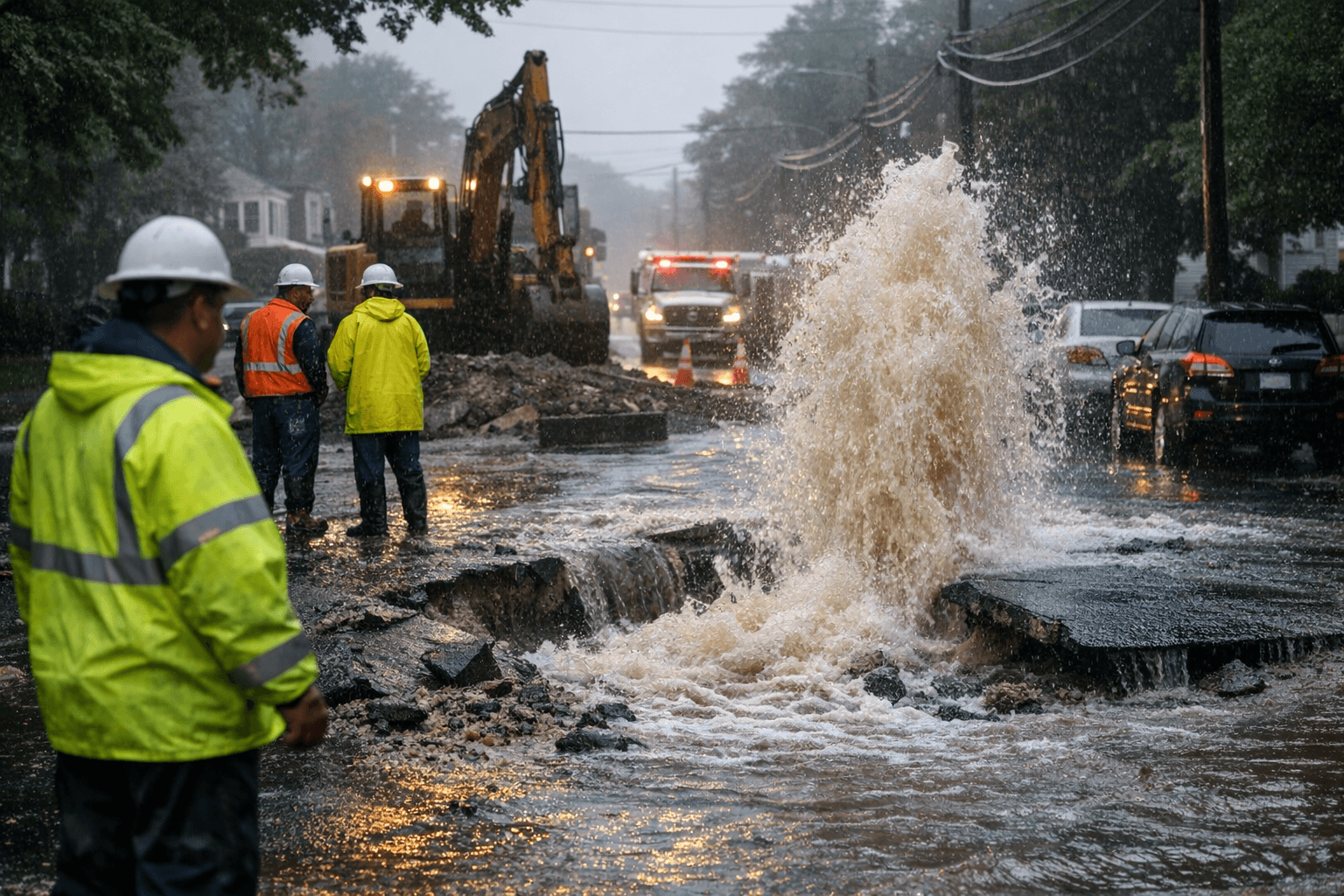
A 12-inch Suffolk County Water Authority main ruptured on Oak Street south of the Copiague LIRR station, sending water across the intersection of Oak Street and Great Neck Road and temporarily cutting service to 54 SCWA customers. The break occurred during the morning hours on Jan. 27, 2026, and created a sinkhole at the roadway that required immediate utility repairs.
Suffolk County Water Authority crews closed Oak Street and Great Neck Road to begin emergency work and remained on scene through the afternoon to repair the main and restore service. Water service to the affected customers was fully restored later that day. Local officials cautioned motorists about the closures and warned residents to expect repair work into the evening. Roadway repairs to fill the hole left by the break were scheduled to follow completion of the water repairs.
The SCWA attributed the failure in part to frigid temperatures, a factor that public works and utility crews say can exacerbate stresses on distribution pipes and joints. While the authority’s same-day restoration limited the duration of the outage for the 54 customers, the incident underscores recurring operational challenges for winter maintenance and the resilience of underground infrastructure across Suffolk County.
For residents and commuters, the immediate impacts were confined to traffic delays near the Copiague station, potential business disruption along Oak Street, and the short-term loss of potable water in a small cluster of homes and premises. The closure of Oak Street and Great Neck Road also affected scheduled travel and local access during peak hours for LIRR riders and nearby businesses, highlighting how a single main break can ripple through daily routines in a compact commercial-residential corridor.
Beyond the localized disruption, the rupture raises policy questions about preparedness, system monitoring, and capital investment. Emergency response by SCWA crews demonstrated operational capacity to mobilize and restore service quickly, but the event will likely prompt scrutiny of inspection schedules, winterization practices, and the allocation of funds for pipe replacement versus reactive repairs. Local officials and utility managers will need to weigh short-term repair costs against longer-term investments to reduce the frequency of similar incidents as climate variability and extreme cold increasingly test aging water systems.
Residents affected by the outage and neighbors near Oak and Great Neck Road should expect follow-up roadway work and any advisories from the Suffolk County Water Authority. The break serves as a reminder for voters and civic stakeholders that decisions about utility budgets, infrastructure prioritization, and emergency planning have direct consequences on daily life in Suffolk County; those consequences will be central to discussions about public works funding and oversight in the months ahead.
Sources:
Know something we missed? Have a correction or additional information?
Submit a Tip