13 Practical Tips for Choosing Your Dream Wedding Dress
Start with vision, not pressure: match your venue, timeline and fabrics to the dress you actually want—and keep an open mind so the one you love finds you.
Define your wedding theme "Define your Wedding Theme." Zola's first order is practical: before you try on a single gown, think about venue, season and the mood you want to create. A city loft, a vineyard or a winter chapel each demand different scales of drama, and when your dress reflects the setting it will photograph and feel cohesive across the day.
Pick three adjectives to describe your dream dress Zola advises brides to "Pick 3 Adjectives to Describe your Dream Dress" as a decision shortcut. Names like “modern — streamlined — effortless” or “romantic — structured — luminous” narrow a thousand options into a clear direction you can bring to appointment stylists and Pinterest boards.
Be open to unexpected favorites "The best strategy when shopping for your wedding dress is to keep an open mind. Many brides go in thinking they want a certain bridal gown, only to then fall in love with something completely different. Your dream dress could be something you didn’t necessarily expect or plan for, but is ultimately perfect for you—so make sure to keep an open mind and be willing to try on a variety of dress types. You never know which will be the perfect dress for you!" —Zola. Bring that curiosity; some of the most memorable looks come from surprising silhouettes or details you never imagined wearing.
Do your research — and use trend shorthand Zola’s header "Do your Research" pairs perfectly with the practical approach at True Society: look into designers, silhouettes and boutiques before you step into the fitting room. Use Myreliq’s trend shorthand for quick inspiration—bohemian lace, romantic ruffles, statement sleeves, illusion details, colorful hues, eco-friendly fabrics and high-low hemlines—to help you describe what you want to a stylist without getting overwhelmed.
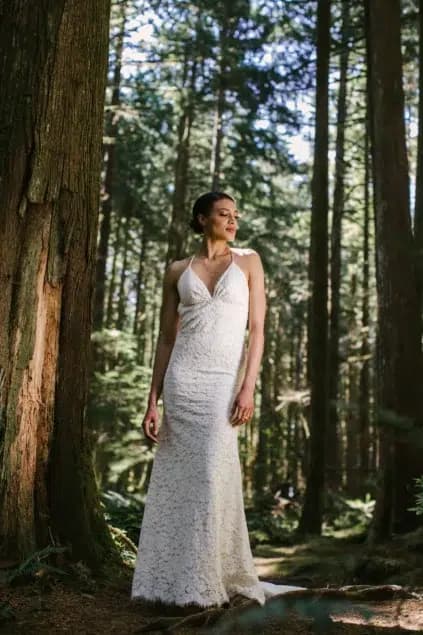
Choose a silhouette and neckline that suit your setting True Society counsels: "Think about the theme of your wedding – is it classic and traditional or modern and funky? ... If you’re going with a classic look, opt for timeless silhouettes like ballgowns or sheath dresses. If you’re going for something more modern and edgy, try contemporary details like cutouts or asymmetrical elements." Match silhouette to photo scale and practical movement: a cathedral will take a train; a beach needs a skirt that moves and breathes.
Consider season, venue and how you’ll move "The season and venue of your wedding can influence your choice of wedding dress. A lightweight and flowy dress may be ideal for an outdoor summer wedding, while a warm and cozy dress may be perfect for a winter wedding indoors." —Simplicity Bridal. Oreateai adds the choreography angle: "When you’re exploring these shapes, it’s always a good idea to think about where you’ll be celebrating and how you’ll be moving." Practically, that means fewer layers for summer, a sturdier fabric for cold-weather formalities, and trains or bustle plans if you’ll be dancing hard.
Set a realistic budget and ask stylists for options "It’s important to set a realistic budget for your wedding gown so that you can find something you love without breaking the bank. Consider how much you are willing to spend, and then narrow down your options. There are endless stunning styles at True Society that come in various price points — don’t be afraid to ask your True Crew bridal stylist about affordable options!" —True Society. Framing your budget up front keeps you from falling in love with a gown that’s out of reach and helps stylists show you attainable alternatives.
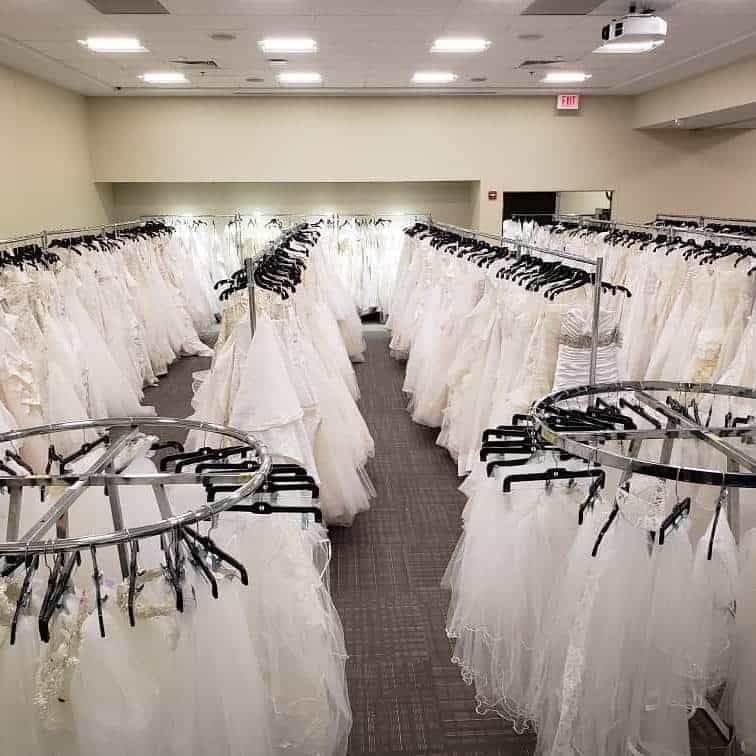
Start early and plan for lead times True Society’s timing is blunt and useful: "It’s best to start shopping at least one year ahead of your big day. Keep in mind that different designers and brands have different lead times, so be sure to order your ideal wedding dress 8-12 months before you say ‘I do.’ We also offer in-stock wedding dresses if you’re short on time, though the selection might not be as extensive as special-order gowns." If you’re cutting it close, prioritize in‑stock or sample sales; otherwise build cushion for production and multiple fittings.
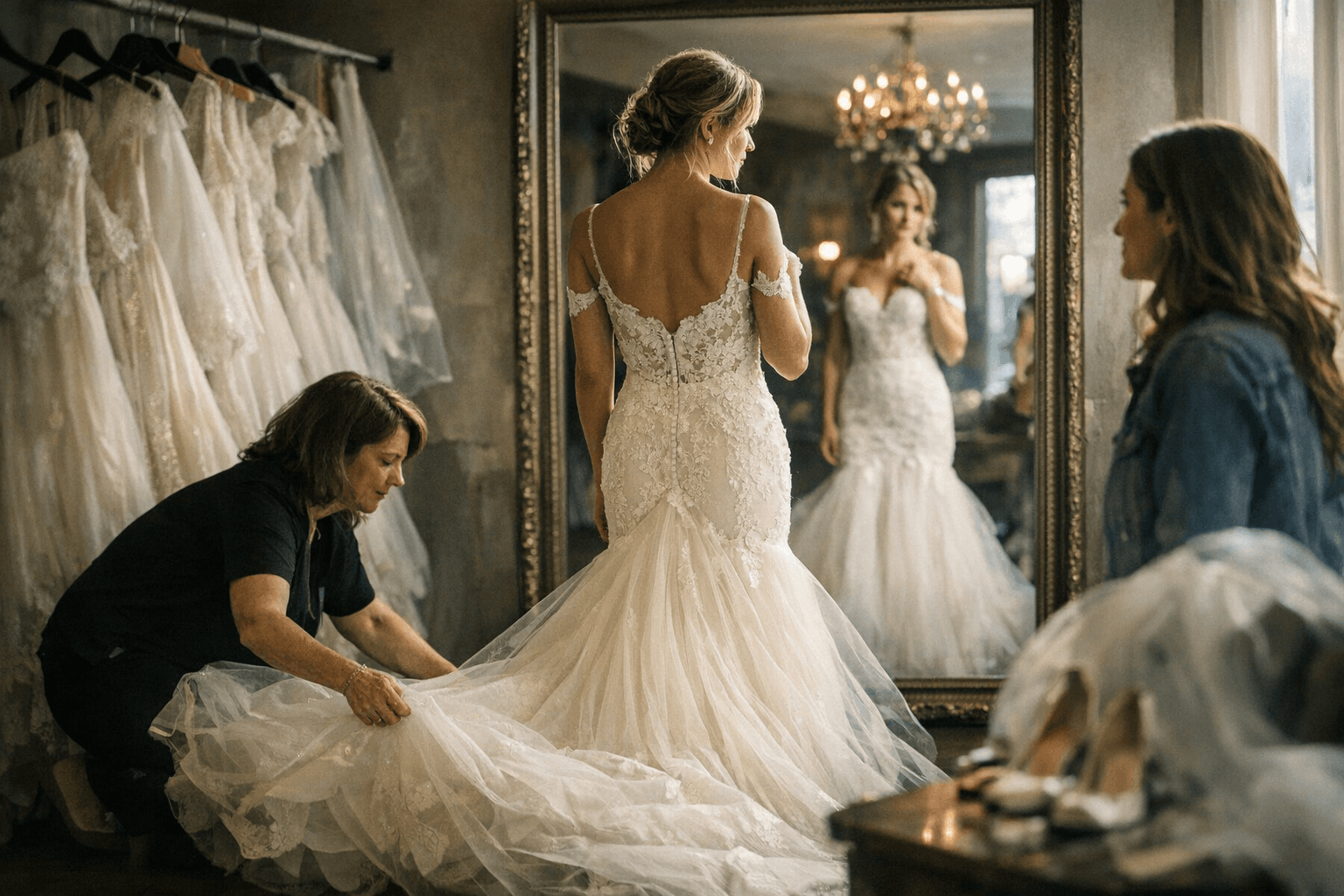
Plan alterations and fitting cadence Alterations are where a good dress becomes the perfect dress. Simplicity reminds you to include "planning ahead for alterations" in your checklist, and Zola’s guide lists "alteration timing" as a core topic—so schedule at least two fittings inside your final eight weeks and factor the seamstress’s calendar into that 8–12 month ordering window.
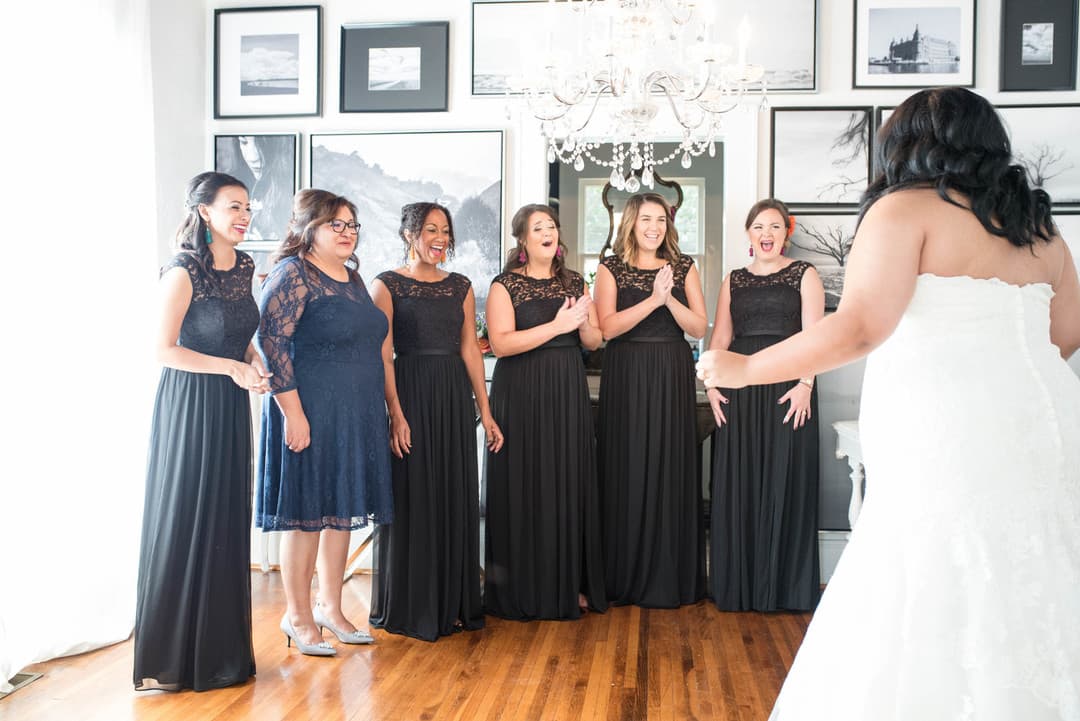
Bring the right people "Shopping for wedding dresses can be an emotional and personal experience that requires feedback, support, and honest opinions. Choose a person you trust, who knows you well and understands your style, to join you in the shopping journey. Avoid bringing too many people whose opinions may confuse or pressure you." —Simplicity Bridal. One trusted voice and one stylist is enough; too many cooks turn tears into indecision.
Try on many styles—and sit in every gown Zola’s instruction is succinct: "Sit in Every Gown at Least Once." Pair that with the earlier "Be Open" tip and you get the practical reason: posture, seam placement and skirt volume reveal themselves when you sit, turn and lift your arms—actions you’ll do all day. Give each gown a proper run-through: walk, sit, dip and lift to see what the dress asks of you physically.
Pay attention to fabric—how it shapes and feels "The fabric of your wedding dress can influence the overall look of the dress, how it falls on your body, and if it flatters your body type. Think about the shape you want to create and choose a fabric that provides that kind of silhouette. For example, if you want something that’s going to cling to the body, you might go with something like silk—or, if you want something that will keep its shape, you might want a more structured material, like lace or tulle. When choosing a fabric, it’s also important to consider how it feels on your body. Remember, you’re going to be wearing the dress all day and into the night—so choose something comfortable." —Zola. Oreateai’s vignette about Sarah makes this concrete: "The silk mikado fabric gave it structure without stiffness, and the chapel train added just the right amount of ceremony." Choose fibers that look beautiful and let you move.
Think accessories, bustle and a backup plan Simplicity’s closing counsel bundles the logistics you don’t want to forget: "By setting a budget, researching styles and designers, trying on different styles, considering the season and venue, thinking about accessories, shopping with a trusted person, not rushing the decision, planning ahead for alterations, having a backup plan, and trusting your instincts, you can make your dream dress a reality." Consider veils, belts, shoes and a bustle as part of the dress equation—accessories can alter silhouette and comfort instantly.
Look to current trends for inspiration, not obligation Myreliq’s trend notes are a handy moodboard: "Bohemian Chic" with crochet lace and fringe, "Romantic Ruffles" for movement, "Statement Sleeves" that "can transform a simple dress into a showstopper," "Illusion Details" for subtle allure, "Colorful Hues" to reflect personality, and "Eco-Friendly Fabrics" for a greener aisle. Use these trends as texture and detail cues rather than mandates—pick one trend tweak that excites you rather than layering them all at once.
Don’t rush the decision; trust your instincts Simplicity’s warning is plain: "Finding the perfect wedding dress may take some time and several appointments. Do not feel pressured to make a decision soon, especially if you have not found ‘the one’ yet. Take your time, compare designers and boutiques, and schedule follow-up appointments to try on previous favorites. You want to avoid regretting your choice after the wedding or feeling that you missed out on other options." When the gown feels right—in the mirror, in movement, in your chest—you’ll know; trust that, and keep a backup plan so last-minute nerves don’t force a poor choice.
Closing note Treat dress shopping like a creative collaboration: bring a clear theme, a three-word compass, and real timelines—then surrender a little to surprise. With Zola’s shopping instincts, True Society’s lead times, Simplicity’s emotional safeguards and Myreliq and Oreateai’s stylistic cues, you’ll pare chaos into clarity and find a gown that looks like your day and feels like you.
Know something we missed? Have a correction or additional information?
Submit a Tip