20 U.S. Roasters Named 2026 Good Food Awards Coffee Finalists; Single-Origins Lead
Twenty U.S. roasters produced 25 Good Food Awards coffee finalists, led by single-origin entries from Ethiopia and Colombia; winners will be revealed June 28-30 in New York.
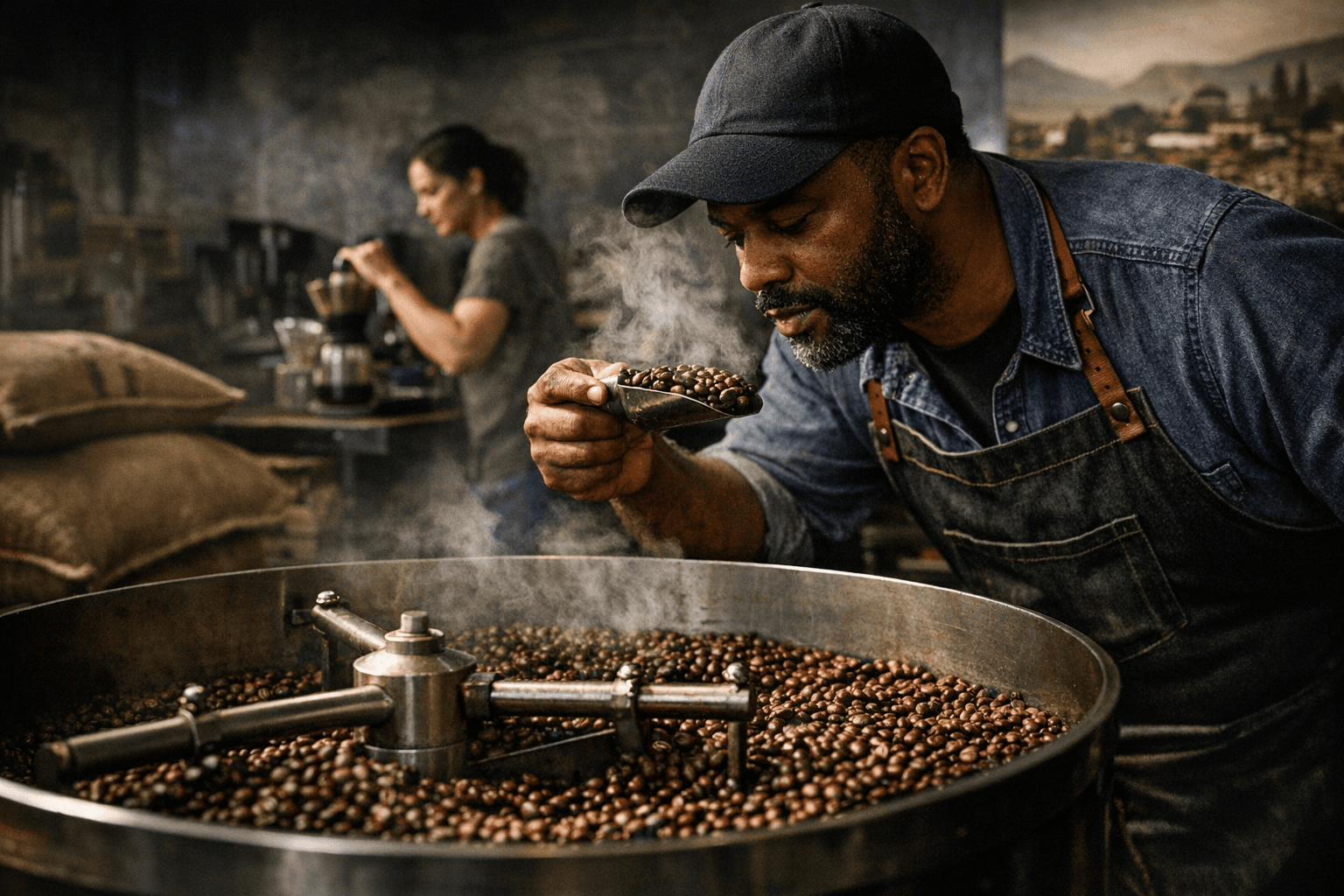
Twenty U.S. roasters are behind 25 coffees named finalists in the Good Food Foundation’s 2026 coffee competition, a field that skews heavily toward single-origin coffees and advanced post-harvest processing. The foundation published the finalists on Jan. 30, 2026, and winners will be announced June 28-30, 2026, at the Good Food Mercantile in New York City, coinciding with the Specialty Food Association’s Summer Fancy Food Show.
All but five of the 25 finalists are single-origin offerings, with the others being blends or other branded products. California leads state representation with four finalist roasters, and 12 states are represented in total. Crimson Coffee and Magnolia Coffee each have three finalist coffees, while Mikava has two. Other states with multiple finalists include Colorado, North Carolina, New York, Oregon, and Texas, each with two roasters represented; single finalists come from Massachusetts, Maine, Montana, Nevada, New Jersey and Washington.
The finalist lineup emphasizes origin and variety: Ethiopia and Colombia are the most frequent countries of origin, with Costa Rica, Panama, Rwanda and El Salvador also named. Varietals called out among entries include Gesha, Pink Bourbon, Pacamara and SL-28, with Gesha the most prominent. Several roasters highlighted advanced post-harvest processing in their entry descriptions, using terms such as "thermal shock," "carbonic maceration" and "anaerobic honey," language that signals greater attention to experimental processing and traceable farm practices in the specialty market.
The Good Food Foundation updated its coffee criteria for 2026 to include a new delineation between "seasonal and year-round offerings" designed to encourage "market-ready" entries. The program’s coffee category remains distinct among the awards because "roasted coffee is built from a single primary agricultural ingredient produced outside the U.S., putting extra emphasis on origin transparency, sourcing practices and how roasting choices translate to the cup." That emphasis helps explain why single-origin coffees dominate this year’s finalists and why roasters increasingly document varietal, processing and farm-level details.
The coffee judging format this year consists of two rounds. Round 1 combines at-home brewing by Bay Area coffee evaluators with a public component, and Round 2 is led by coffee professionals using cupping and established evaluation protocols. The foundation published a 2026 judges roster that includes Hailie Stevens, Associate Coffee Program Manager at Fellow Products; Audrey Parise, Director of Coffee, Thread Coffee Roasters; Kat Natividad, Lead Roaster, Verve Coffee Roasters; LaNisa Williams, Founder/Owner, Barista Life LA; Joel Lohner, Roastery Operations Manager, Bay Area CoRoasters; Taylor Friesen, Head Roaster, Counter Culture Coffee; Francisco Flores, Director of Coffee, Cafe Unido; Madison Leonard, Head of QC and Trading, Onyx Coffee Importers; Olivia Morris, Director of Coffee & Sales, Little Bear Coffee; Brittney Gross, Director of Coffee, Sweetspire Coffee; Marissa Childers, Founder, TANBROWN COFFEE; Michelle Anariba, Quality Control Manager, Covoya Specialty Coffee; Gabriela Correa; and Michelle Fleming, Head Roaster, Equator Coffees.
For community follow-up or media inquiries, the Good Food Foundation lists an email at connect@goodfoodfdn.org and phone (415) 275-1794, with an office at Fort Mason Center, 2 Marina Blvd, Building C, Suite 362, San Francisco, CA 94123. Industry context this season includes other roaster recognition: late 2025 honors named Kafiex Roasters and Driftaway Coffee as Roaster of the Year winners in micro and macro categories, respectively. An Instagram post also celebrated Dark Martyr by Critical Mass Coffee as a finalist in the Global Coffee Awards' Blend in the Flat White - Alternative Milk Category.
What this means for roasters, cafes and consumers is clear: origin stories, varietal transparency and experimental processing are shaping award attention and retail interest. Watch the Good Food Mercantile in late June for which roasters translate those labors into award wins and broader shelf and menu presence.
Know something we missed? Have a correction or additional information?
Submit a Tip