20/20 special explores Toy Story's creative history and secrets
The new 20/20 special shows how a risky computer-animated gamble became Pixar’s business model, Hollywood’s family-film template, and a franchise still built for the tech era.
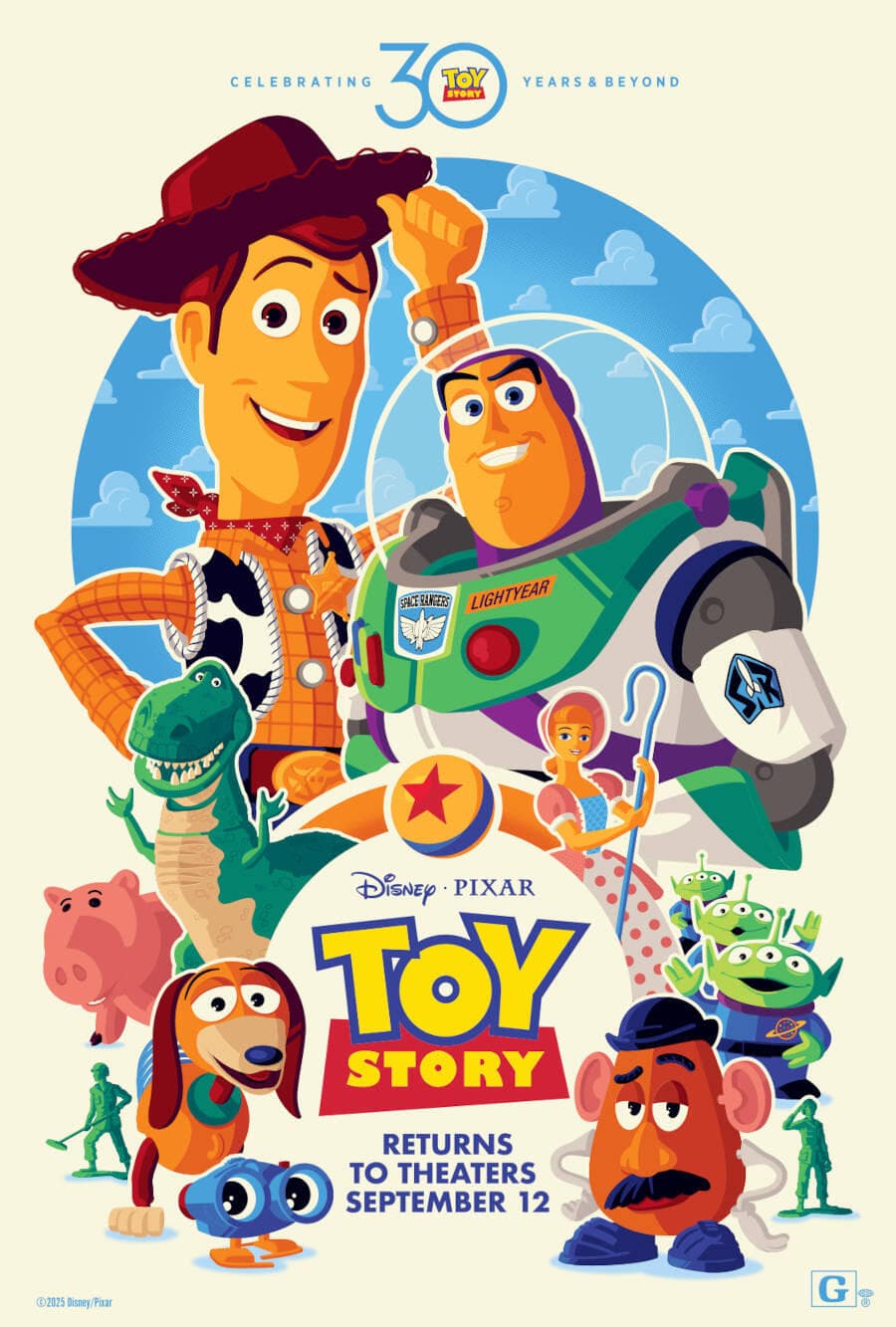
Toy Story is getting a fresh accounting on ABC with a one-hour special, “Toy Story 30 Years and Beyond - A Special Edition of 20/20,” airing Friday, June 12 from 8:00 to 9:00 p.m. EDT and streaming the next day on Disney+ and Hulu. The program looks at Pixar’s rise from shorts and TV commercials to an animation powerhouse, while tracing how the first fully computer-animated feature nearly fell apart before it became the studio’s defining success.
What the special is really about
This is not just a tribute reel for nostalgia’s sake. According to ABC, the special digs into the making of the original film, the creative and technical risks that almost stopped it, and the way Toy Story 5 pushes those same characters into a modern, tech-driven world. It also includes exclusive footage from the new film and a behind-the-scenes look at Pixar’s Emeryville campus, where the next generation of storytellers is working inside the studio that Toy Story helped build.
The special’s interview list shows how broad the franchise’s reach has become. It features Tom Hanks, Tim Allen, Joan Cusack, Greta Lee, Tony Hale, Ernie Hudson, Craig Robinson, Blake Clark, Jeff Bergman, Wallace Shawn, Pixar chief creative officer Pete Docter, Toy Story 5 director Andrew Stanton, co-director Kenna Harris, and Taylor Swift, who discusses why she wrote an original song for the soundtrack. Swift says the movie’s message spoke to her personally and inspired “I Knew It, I Knew You,” which she says brought her back to her country roots.
Why Toy Story changed the business of animation
When Toy Story opened in theaters on November 22, 1995, it was more than a hit. Pixar and Disney describe it as the world’s first fully computer-animated feature film, and the results were immediate: it opened at No. 1, earned $192 million domestically and $362 million worldwide, and became the highest-grossing movie of 1995. It also won a Special Achievement Academy Award and earned Oscar nominations for Best Original Song, Best Original Score, and Best Original Screenplay, the first time an animated film was recognized for screenwriting.
That mattered economically because it proved computer animation could support both scale and repeatable franchise value. Disney says the Toy Story films have generated $3.3 billion at the global box office across five films, and Toy Story 3 and Toy Story 4 each crossed the $1 billion mark worldwide. The franchise did not just sell tickets, it established that animated family entertainment could anchor the same long-tail economics as live-action tentpoles, from sequels to platform streaming to consumer products.
The creative bets that still define Pixar
The original film’s biggest gamble was not only technical. Pixar says the company began work on the project while still making commercials and short pieces, and Disney notes the first Toy Story pitch came from a small staff of just three animators, who were already juggling competing ideas before the studio chose the toy concept. Andrew Stanton has said that Pixar’s core identity was already visible then: story first, character first, and technology shaped by the needs of the narrative rather than the other way around.
That philosophy is still the spine of Pixar’s brand. Stanton says the studio still waits for a story and characters worth chasing, then figures out the technology afterward, a mindset that explains why the company has stayed influential even as tools have changed. In other words, the real legacy of Toy Story is not simply that Pixar learned to animate plastic, but that it built a business around emotional clarity, comic timing, and technical invention working in tandem.
The technology bets that reshaped Hollywood
Pixar’s RenderMan system was another foundational wager. The company explains that the Reyes algorithm, introduced in 1988, helped RenderMan create photorealistic images when ray tracing was too expensive for the hardware of the time, and that system enabled Toy Story, while also powering effects work on films like The Abyss and Jurassic Park. That technical workaround became a production standard, showing the industry that visual limits could be engineered around rather than accepted as fixed.
The deeper lesson is that Toy Story helped establish a feedback loop Hollywood still follows today: technology enables new storytelling, and storytelling justifies new technology. Pixar’s own description of RenderMan says, “the art challenges the technology, and the technology inspires the art,” a line that captures the studio’s enduring operating model. That model still matters because the most valuable entertainment companies now compete not just on characters, but on the speed at which they can innovate around them.
What no longer fits the old formula
Some parts of the original Toy Story playbook are harder to repeat now. In 1995, the film could feel like a radical leap simply by proving that a non-musical, character-driven animated feature could work at the highest commercial level. Today, that assumption no longer surprises audiences, and Pixar itself has expanded into shorts, specials, and series, while the broader market has become more crowded with streaming-first family content and faster-moving franchise cycles.
That is why the new special lands at an important moment. Toy Story 5 opens in theaters on June 19, 2026, with Andrew Stanton directing and a premise built around toys confronting electronics, a reminder that the franchise’s original question, what happens when toys are left alone, now has to compete with the realities of screens, devices, and shifting childhood habits. The 30th anniversary special shows that Toy Story still matters because it keeps absorbing the present tense, not because it lives safely in the past.
This article was produced by Prism’s automated news system from verified source data, official records, and press releases, then run through automated quality and moderation checks before publishing. The system is built and supervised by the people who set the standards it runs under. Read our full AI policy.
Know something we missed? Have a correction or additional information?
Submit a Tip