2026 Cold Plunge Setup and Safety for Beginners with Søberg Protocol
Get a beginner-ready cold plunge setup and safety checklist built around the Søberg Protocol, temperatures, session times, equipment, and maintenance you can use this month.
1. Key takeaways at a glance
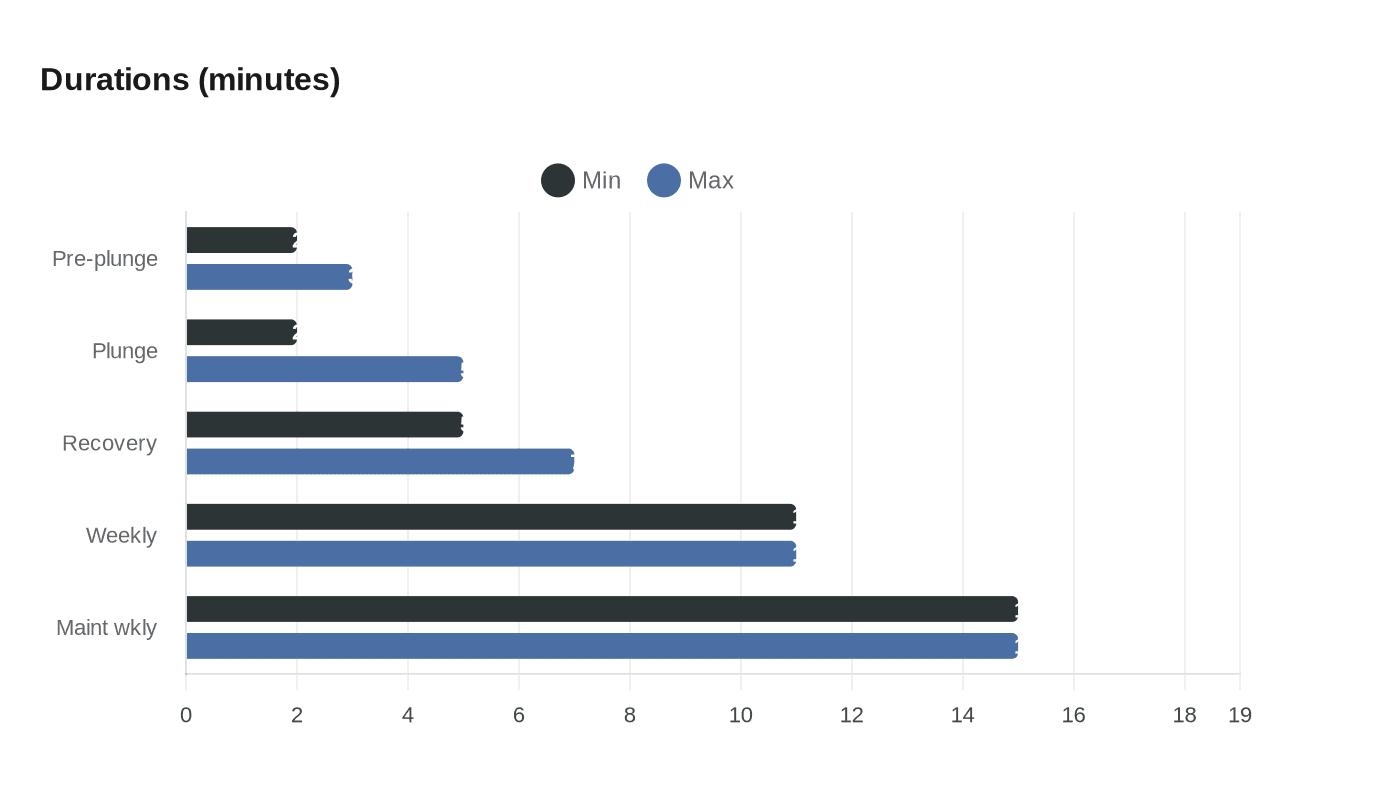
Icebaths presents the headline points you’ll want on the workbench: “The Protocol: 11 minutes total weekly exposure at 10-15°C (Søberg Method).” Their page also lists: “The Routine: 3-4 sessions per week, 2-5 minutes per session,” “The Setup: Integrated tub + 1HP chiller (recommended) or DIY ice method (for testing),” and “The Maintenance: 15 minutes weekly prevents 90% of problems.” Icebaths reports these recommendations come from proprietary data from 500+ installations and frames the guide as a 13-minute read.
2. The Søberg Protocol and how to treat it
The Søberg Method is stated as a named prescription: “11 minutes total weekly exposure at 10-15°C (Søberg Method).” Treat that as the protocol’s weekly target while you use session timing to reach it; for example, three sessions averaging ~3.7 minutes each lands near 11 minutes. Note that Icebaths lists both this 11-minute weekly target and “3-4 sessions per week, 2-5 minutes per session,” an internal inconsistency you should watch for if you’re tracking an exact weekly total.
3. Beginner routine: week-by-week roadmap
Icebaths gives a clear phased start: “The first 30 days determine whether cold plunge becomes a lasting habit. Progress gradually: cold showers during weeks 1–2, immersion at 15°C during weeks 3–4, then full protocol from week 5 onward.” Weeks 1–2 focus on cold showers, “tap cold, 30 seconds at the end of your regular shower,” building to “2 minutes by day 14”, so you train the nervous system and the gasp reflex without jumping into full immersion. Weeks 3–4 move to immersion at 15°C, with full Søberg routines beginning in week 5.
4. Pre-plunge checklist (2–3 min)
Follow Icebaths’ exact checklist for a safer entry: “Step 1: Pre-Plunge Preparation (2–3 min)”, Check water temperature on the chiller display or app. Remove the insulated lid completely. Position your towel and robe within arm’s reach. Set your timer for the target duration. Take 3–5 slow breaths using 4-count inhales and 6-count exhales.
5. The plunge method (2–5 min)
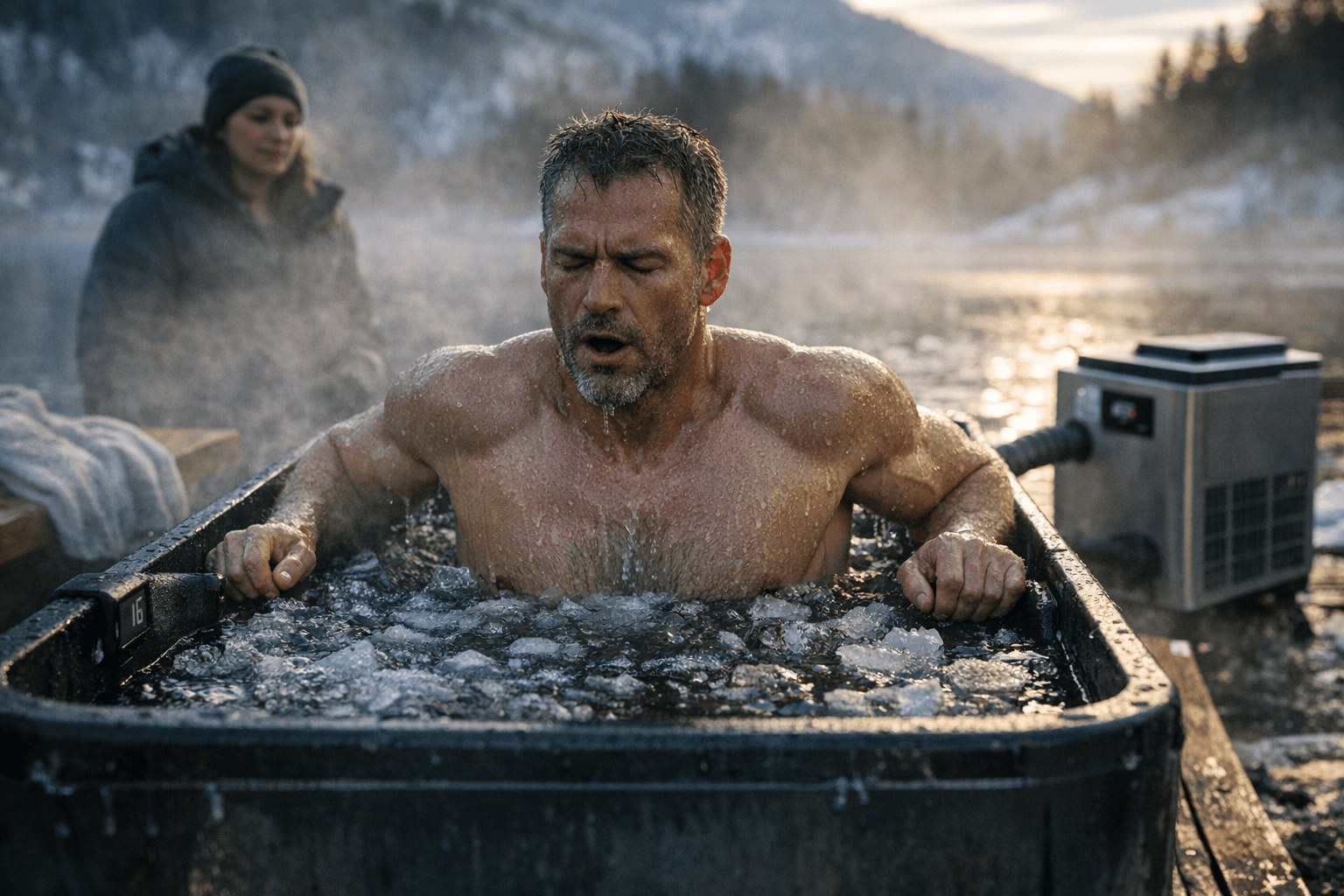
Use the prescribed in-water technique: “Step 2: A Plunge Method: Total Immersion (2–5 min)”, Enter the water steadily. No jumping. Submerge to chest level at minimum. Begin 4-6 breathing: inhale through nose for 4 counts, exhale through mouth for 6 counts. Keep hands submerged beneath the water surface. Focus attention on breath rhythm rather than the countdown. Exit when the timer sounds. These step-by-step cues are practical, steady entry reduces cardiac stress and the breathing pattern calms the autonomic response.
6. Immediate recovery (5–7 min)
Icebaths labels recovery as: “Step 3: Post-Plunge Recovery: Natural Thermogenesis (5–7 min).” After exit, allow your body to self-warm for 5–7 minutes before adding heat or vigorous movement; this natural thermogenesis period supports circulation returning to baseline. Keep your towel and robe within reach (as Step 1 advised) and avoid abrupt rewarming (hot showers) for several minutes to let vasomotor control reset.
7. Equipment and setup: tubs, chillers, and DIY options
For a consistent, year-round plunge, Icebaths recommends an “Integrated tub + 1HP chiller (recommended) or DIY ice method (for testing).” A 1HP chiller is the common baseline for small integrated tubs and gives reliable control at 10–15°C; use the chiller display or app to verify temperature before every session. If you’re experimenting or testing location/interest, the DIY ice method works short-term but won’t deliver consistent temperature control or the water treatment benefits of a recirculating chiller system.
8. Temperatures and how Celsius and Fahrenheit line up
Søberg’s recommended band is 10–15°C; that range overlaps directly with common wellness guidance in Fahrenheit, most designers place beginners in the 50–60°F range. Plungechill states, “Most wellness-oriented cold plunge and plunge pool design guides place beginners in the 50–60°F range. That is cold enough to trigger a strong physiological response but warm enough to be tolerable and relatively safe for short exposures in healthy individuals.” Treat the 10–15°C (≈50–59°F) band as the practical beginner window; colder water in the 40s°F or 39–45°F should be left to experienced practitioners or supervised environments.
9. Time guidelines and conservative safety framing
Icebaths lists “The Routine: 3-4 sessions per week, 2-5 minutes per session,” while Søberg’s weekly target is 11 minutes total. Plungechill recommends far more conservative starts for many users: “Entry-level guidance from both wellness brands and hospital sports medicine services suggests starting with about one to three minutes and slowly building up to five to ten minutes as you adapt.” Hospital sports medicine sources often recommend starting 30–60 seconds, especially where cardiac risk is a concern. In practice, begin at the low end (30–60 seconds up to 1–3 minutes), then ramp to the Søberg-style sessions as you acclimate and consult your clinician if you have medical conditions.
10. Safety, design, and local codes
“Safety is equally important. Plunge pool and small-pool design guides recommend non-slip decking, clearly defined steps or ladders, and adequate lighting along the path and around the water’s edge.” For in-ground plunges, “local codes may require fencing, self-closing gates, or specific barrier heights.” For above-ground tubs: “I encourage clients with children to treat the cold plunge as they would a spa: secure covers, clear rules, and, when appropriate, gate-controlled access.” Design your access and barriers with local code in mind and prioritize non-slip surfaces and defined entry/exit.
11. Water treatment, maintenance, and hygiene
Icebaths’ maintenance headline is blunt: “The Maintenance: 15 minutes weekly prevents 90% of problems.” Implement a weekly 15-minute check (skimmers, sanitizer, filter checks, and a quick chiller inspection) and the quarterly tasks they recommend: “Full water change (recommended for optimal hygiene),” “Clean chiller coils with soft brush,” and “Test water quality if odor develop.” Those quarterly steps and weekly attention target biofilm, algae, and chiller performance problems that commonly plague small plunge installations.
12. Regulatory and public-health resources
If you need regulatory perspective or local code guidance, NACCHO announced a focused event: “NACCHO Webinar: Cold Plunge Pools and Safety Measures” scheduled for “March 31, 2026 | 2:00PM-3:00PM ET” with guest speaker “Sarah Cheshire, Environmental Health Scientist with the Utah Department of Health and Human Services.” The webinar will cover “the different types of cold plunge pools, the current regulations surrounding them, and the health benefits and risks associated with their use. The presentation will also cover pool temperature, water chemistry, and recirculation and treatment systems.” Bookmark that resource for municipal rules and public-health control strategies.
13. Credibility notes and practical follow-ups
Icebaths frames this guide as updated for 2026 and based on “proprietary data from 500+ installations,” but the page contains internal timing differences (11-minute weekly total vs. 3–4 sessions of 2–5 minutes). Plungechill provides conservative safety language and practitioner advice; NACCHO supplies the public-health and regulatory forum. If you want to build a regulated in-ground plunge or install a chiller, confirm barrier and treatment requirements with your local jurisdiction and consult the NACCHO material or Sarah Cheshire’s presentation for technical details.
14. Final word for beginners
Start small, control the variables, and prioritize safety and maintenance: begin with cold showers and short exposures, aim for the Søberg band (10–15°C / ~50–59°F) as you progress, use a 1HP chiller for reliable control if you’ll be regular, and spend 15 minutes a week on maintenance to avoid most problems. With steady adaptation and attention to design and local rules, a simple, well-maintained plunge becomes a safe ritual you can sustain.
Know something we missed? Have a correction or additional information?
Submit a Tip