2026 European Minimalist Jewelry Trends: Thin Chains, Small Hoops, 9K-18K Gold
Minimalist European jewelry in 2026 balances thin, wearable staples with select sculptural statements—shop smart: limit your shortlist, favour fine metals, and account for VAT when buying abroad.

1. Thin chains
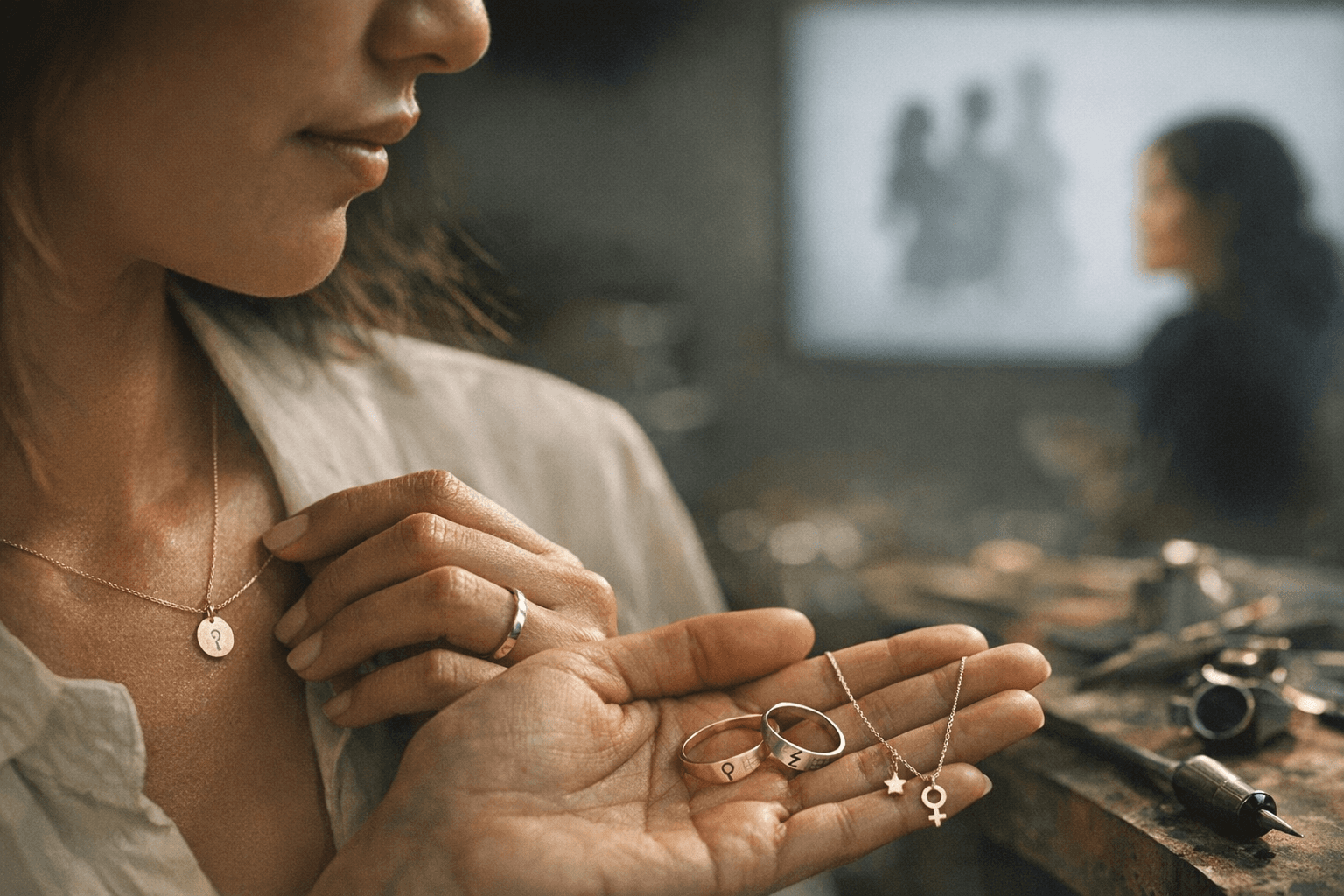
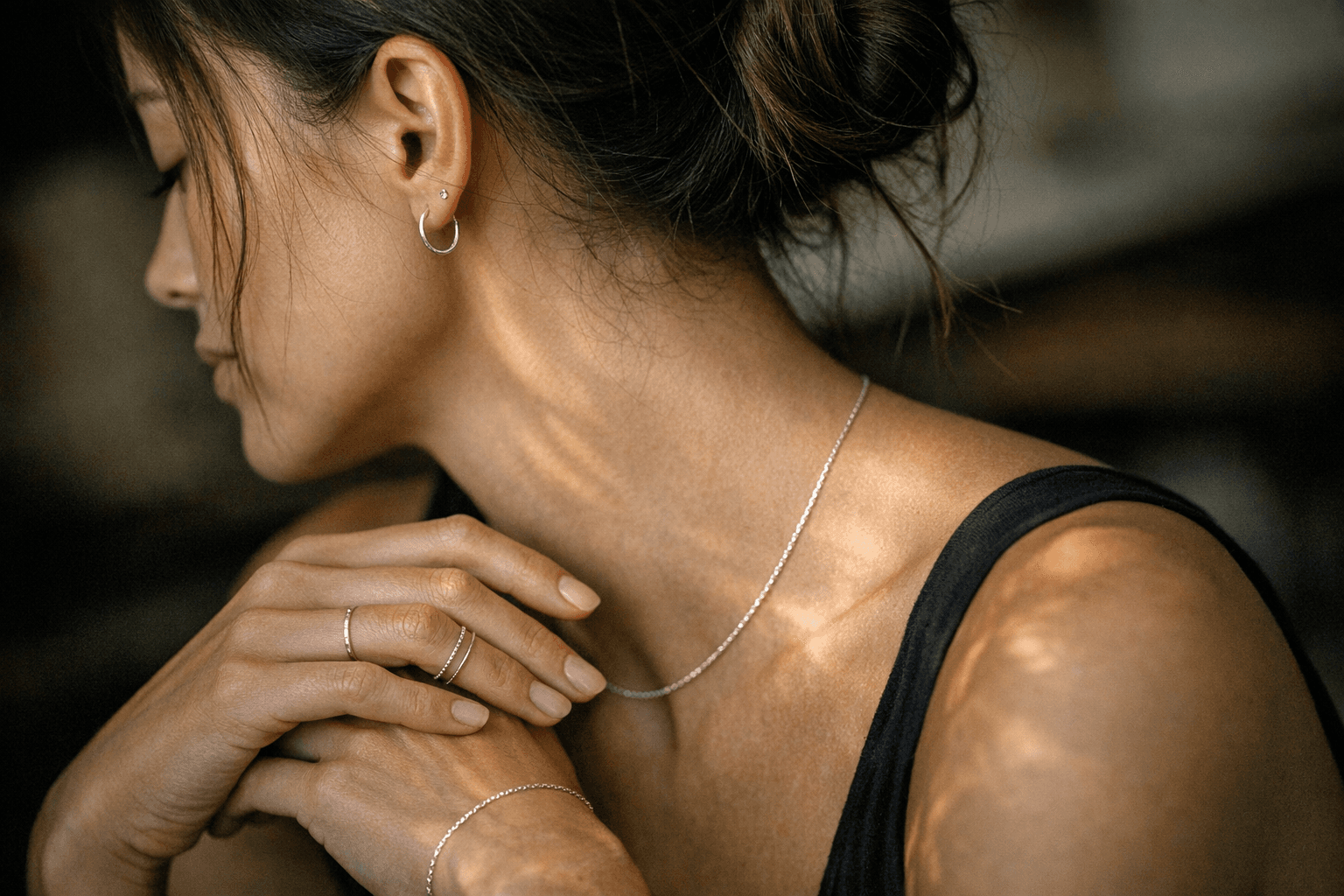
Thin chains remain the baseline of minimalist fine jewelry—explicitly named in a buyer‑oriented guide that maps 2026 European preferences as an example of the "minimalist and dainty segments" alongside small hoops and thin stacking rings. The same guide lists a metal range as "9K–18K gold or sterl" (the source text is truncated at "sterl"), which signals that buyers should expect fine‑metal options rather than plated or purely demi‑fine constructions. Vogue’s market mood—"After several seasons of layered necklaces and stacking rings, the experts are pointing to a simpler mood for 2026"—reinforces choosing one finely crafted chain that functions as a daily heirloom; Lucy Delius goes further: “I think customers will be investing more in fine jewellery than demi‑fine,” says Delius. Practically, buyers traveling to Europe should bring a short list (Notesfromeurope recommends a "sweet spot of 3 - 7 pieces" and "maybe two or three options" while shopping to avoid stock outages) and compare prices on brand websites with country settings changed to see local EUR/GBP pricing and remember "it's important to bear in mind that prices advertised to customers in the EU already include VAT (sales tax) by law."
2. Small hoops
Small hoops are the minimalist earring of choice in 2026, explicitly cited by the original buyer guide and reframed by trend editors as the kind of piece that can read both quiet and purposeful. Lostpoem Se’s trend framing—"Not flat. Not discreet. But shaped, sculpted, architectural"—points to a new generation of hoops that are slim in profile but three‑dimensional in execution; its "Grace Earrings" are described as "Geometric hoops with pearls integrated into the structure. A refined reinterpretation of the classic hoop — intelligent, modern, essential." That description illustrates how small hoops are no longer purely utilitarian studs but micro‑sculptures that can incorporate pearls or small mixed‑metal touches. Vogue’s observation that 2026 is "all about big, bold and sculptural pieces" need not exclude minimal hoops; rather it means the minimal hoop should have considered proportion and finish so it stands on its own. If you prefer to hedge between minimal and statement, Lostpoem Se’s list of Key Jewelry Trends—"Intentional, harmonious layering" and "Long drop earrings"—suggests wearing a single refined hoop with one sculptural piece rather than heavy stacking.
3. 9K–18K gold
The metal story for minimalist fine jewelry in Europe clusters firmly in the 9K–18K range: the original guide lists "thin stacking rings in 9K–18K gold or sterl" (truncated), while maker examples across publications show the same spectrum in practice. Ngyou's material palette explicitly spans "silver, 14ct, 18ct, and 9ct gold, pearl, diamond, and opal all coexisting in one extraordinary object," demonstrating how designers combine karat golds for both visual effect and durability. Forbes’ Collect 2026 examples anchor the premium end of the scale: Louise O'Neill’s Labyrinth Brooch is rendered in "18ct Yellow and White Gold" and priced at "£13,500 / $18,160," described as "handcrafted, one of a kind, and built to become someone's most treasured inheritance." For mid‑market artisanal buys, Kate Bajic’s Emerge Brooch—"sterling silver with Dendritic Agate" and priced at "£1,125 / $1,513" with dimensions 5.5 x 6 x 0.5 cm and a stainless steel pin—illustrates the range of fine materials in circulation. Buyers should therefore weigh karat (9ct through 18ct) against design and provenance: Vogue’s advice that customers will invest more in fine than demi‑fine and Notesfromeurope’s stance—"Personally, I don't play the luxury resale game, so if I am buying a piece, I'm buying it for the long haul"—both support choosing gold karats and makers whose work is meant to last. When purchasing overseas, use Notesfromeurope’s practical method—visit the brand site, change the location to the country you will visit to view local currency pricing, and remember that EU prices include VAT—plus consider shopping in Europe’s established jewelry neighborhoods: Place Vendôme for Cartier, Van Cleef & Arpels and Patek Philippe; London’s Bond Street (Cartier, Louis Vuitton, Chanel) and New Bond Street (Bulgari, Rolex), with Sloane Street and Mount Street for more intimate boutiques.
Conclusion 2026’s minimalist jewelry story in Europe is not an either/or but a calibrated selection: thin chains and small hoops deliver everyday ease, while judicious use of 9K–18K gold and designer provenance convert those quiet pieces into true investments. As Lostpoem Se puts it, "It is not about more. It is about right." Choose fewer, better‑made pieces—accounting for VAT and local stock realities—and you’ll build a collection that reads as deliberate now and becomes an inheritance later.
Know something we missed? Have a correction or additional information?
Submit a Tip