2026 Giftware Market Embraces Personalization, Sustainability and Southeast Asian Growth
Retailers are racing to deliver hyper-personalized, sustainable gifts — from one-off 3D-printed keepsakes made in hours to AI mockups generated in seconds.
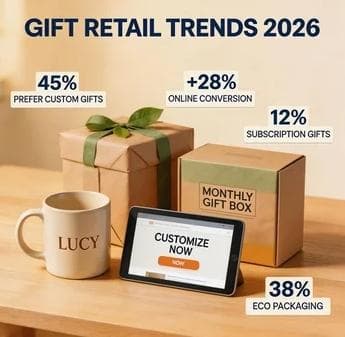
Retailers and corporate buyers are rewriting the rules of gifting as hyper-personalization and environmental responsibility move from niche to baseline. openPR reports that "in 2026, the demand for 'bespoke' is no longer a niche luxury; it is a standard expectation," noting retailers now use "on-demand 3D printing to create one-off figurines, custom home decor, and engraved jewelry within hours." That technical acceleration is matched by AI: a seller Alibaba white paper states that "Advanced AI design tools can now generate personalized product mockups in seconds, reducing the traditional design-to-production timeline from weeks to mere hours."
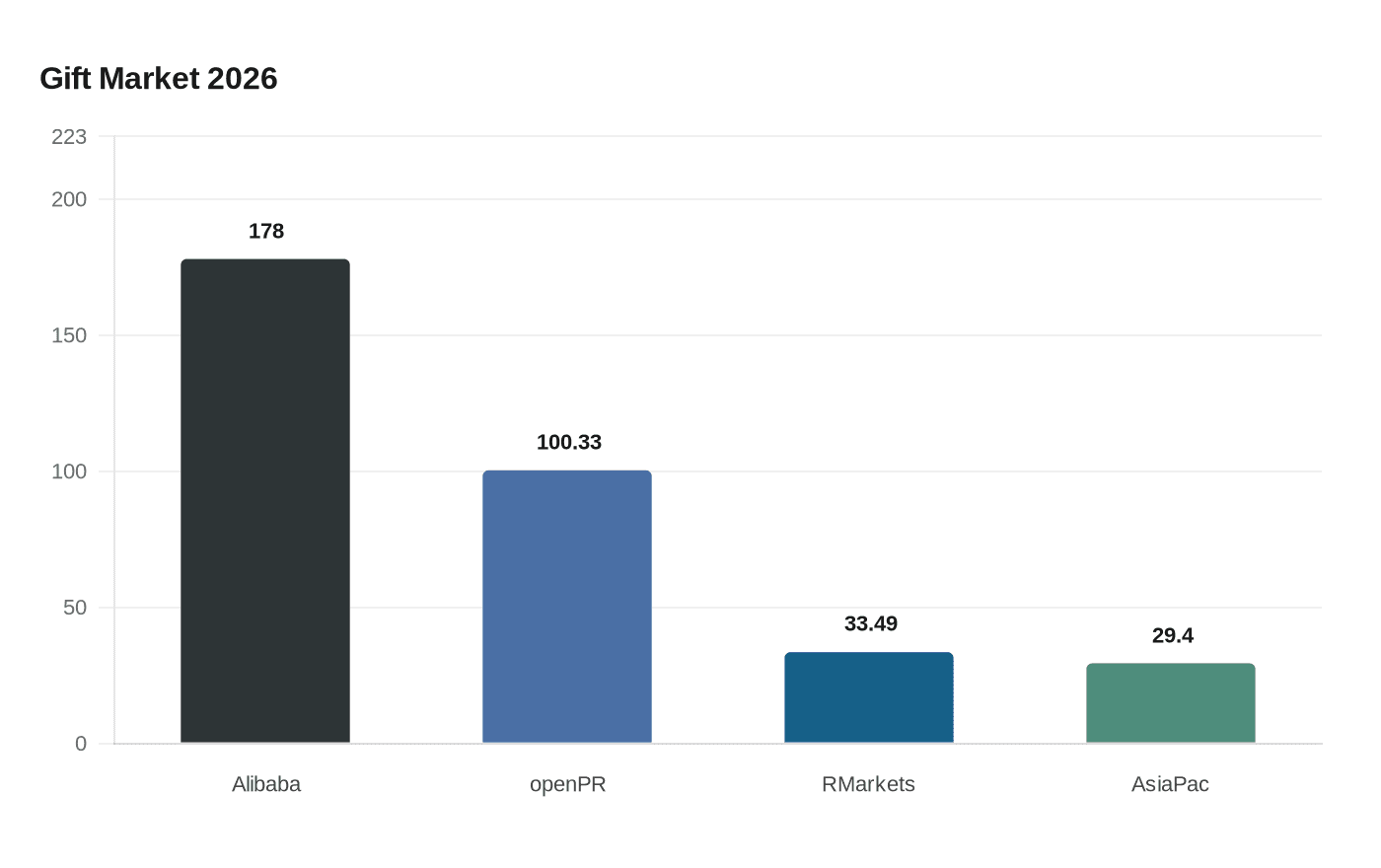
Market estimates reflect the shift but diverge by definition and scope. openPR projects the "global gift retailing market" will exceed USD 100.33 billion in 2026, while the seller Alibaba white paper pegs the "global personalized gifts market" at $178.0 billion by 2026 with a 9.6% CAGR. Researchandmarkets offers a narrower series for the "personalized gifts market," forecasting growth from $30.79 billion in 2025 to $33.49 billion in 2026 and projecting $45.09 billion by 2030 at a 7.7% CAGR. Each source uses a different market label, underscoring that figures vary by what is being counted.
Regional opportunity is concentrated in Southeast Asia, with Thailand singled out as pivotal. openPR writes that "Southeast Asia, led by Thailand, is a primary engine for the giftware industry's growth in 2026," and links that growth to a tourism rebound: "As international travel peaks, the demand for premium, location-specific souvenirs is rising. Travelers are looking for high-value keepsakes rather than low-cost trinkets." Alibaba’s white paper, titled "2026 Southeast Asia Customized Gifts & Promotional Products Export Strategy White Paper," lists Asia-Pacific at $29.4 billion for 2026 with a 6.6% CAGR, framing the region as a target for export strategy and product adaptation.
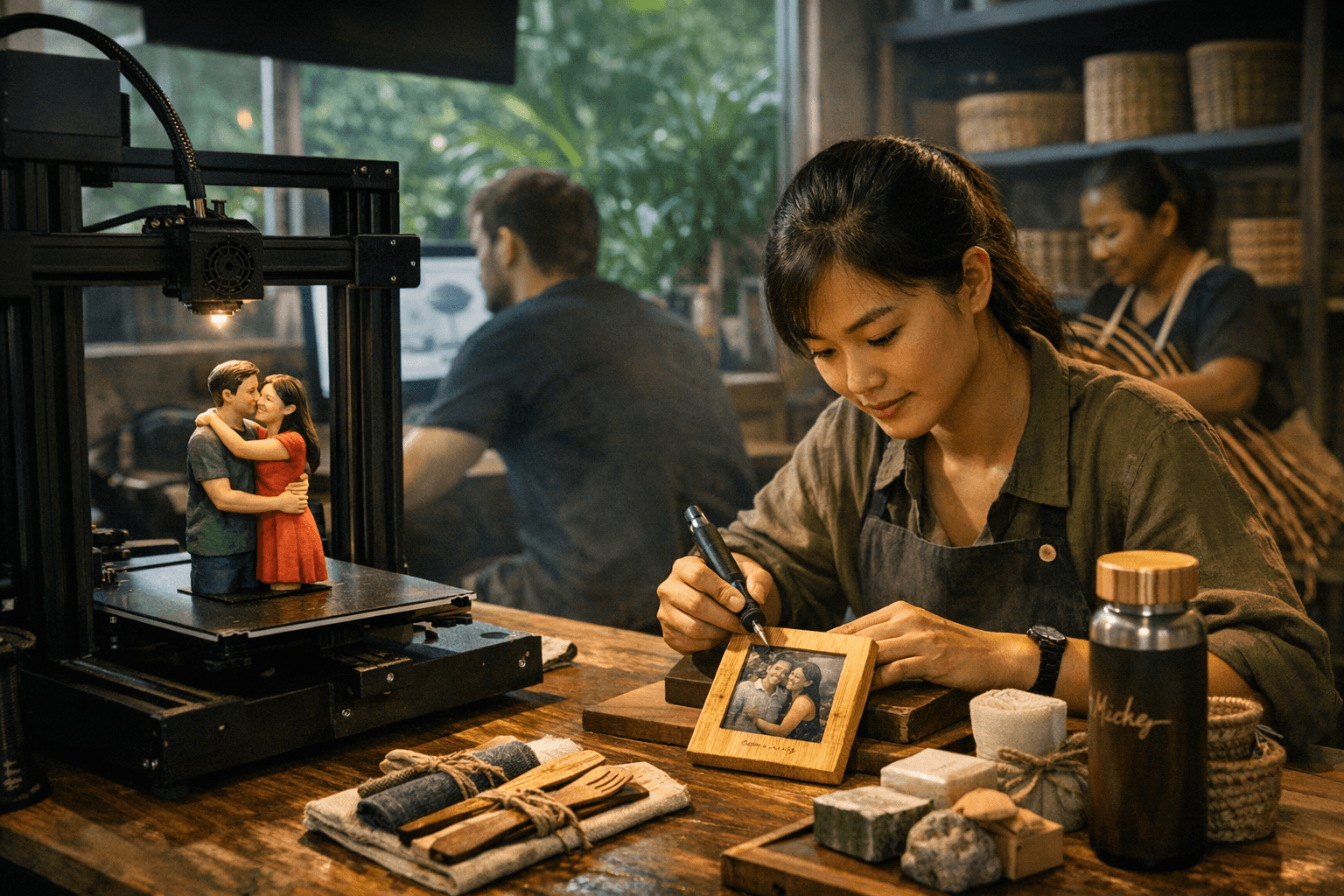
Corporate gifting is undergoing its own makeover. KRCustomizer notes bluntly, "Corporate gifting has changed a lot... Today, sending everyone the identical mug or diary is ineffective. Gifts are often forgotten or stored in drawers." The platform urges brands to "Think, not logos, when gifting in 2026. Personal gifts are noticed. Delicate gestures matter most." That practical turn aligns with research: KRCustomizer cites an IBM sustainability study and reports that "over 70% of consumers prefer brands that act sustainably," while My Igpgift argues the "green trend manifests on multiple levels" — recyclable materials, supply-chain transparency, and lifecycle design that emphasizes durability and recyclability.
Usefulness now often outperforms flash. KRCustomizer’s guidance is explicit: "People don’t want gifts that sit unused. They want things that actually help them. Desk items. Daily-use products. Simple tech accessories. Something they’ll reach for again." My Igpgift adds that personalization must extend beyond names to "tailoring gifts based on the recipient’s role, achievements, or special milestones."
The industry’s technological and logistical shifts raise supply-chain stakes. openPR warns that "navigating the complexities of 2026-from raw material price volatility to new trade tariffs-requires a manufacturing partner that understands the global landscape." Seller Alibaba’s white paper positions AI-driven rapid customization as central to that capability, enabling "true mass customization at scale."
If 2026 is defined by a single imperative, it is integration: marrying on-demand 3D printing and AI design with sustainable materials and regional market nuance. Brands that pair scalable customization platforms with durable, useful products—and partners who can manage tariffs and raw-material swings—will convert novelty into lasting brand currency.
Know something we missed? Have a correction or additional information?
Submit a Tip