2026 Veils and Accessories Guide: Lengths, Fabrics, Edges and Styling
Pearl veils are the headline trend while minimalist single-layer tulle goes day to night with simple swaps and silk-edge finishes.
Key look: A cathedral or chapel-length pearl veil as the hero piece, paired with understated jewellery to let the veil do the talking." That line says everything you need to know about veils this year: the veil is not a tiny finishing touch anymore, it is the wardrobe anchor.
Veil lengths: the vocabulary you need
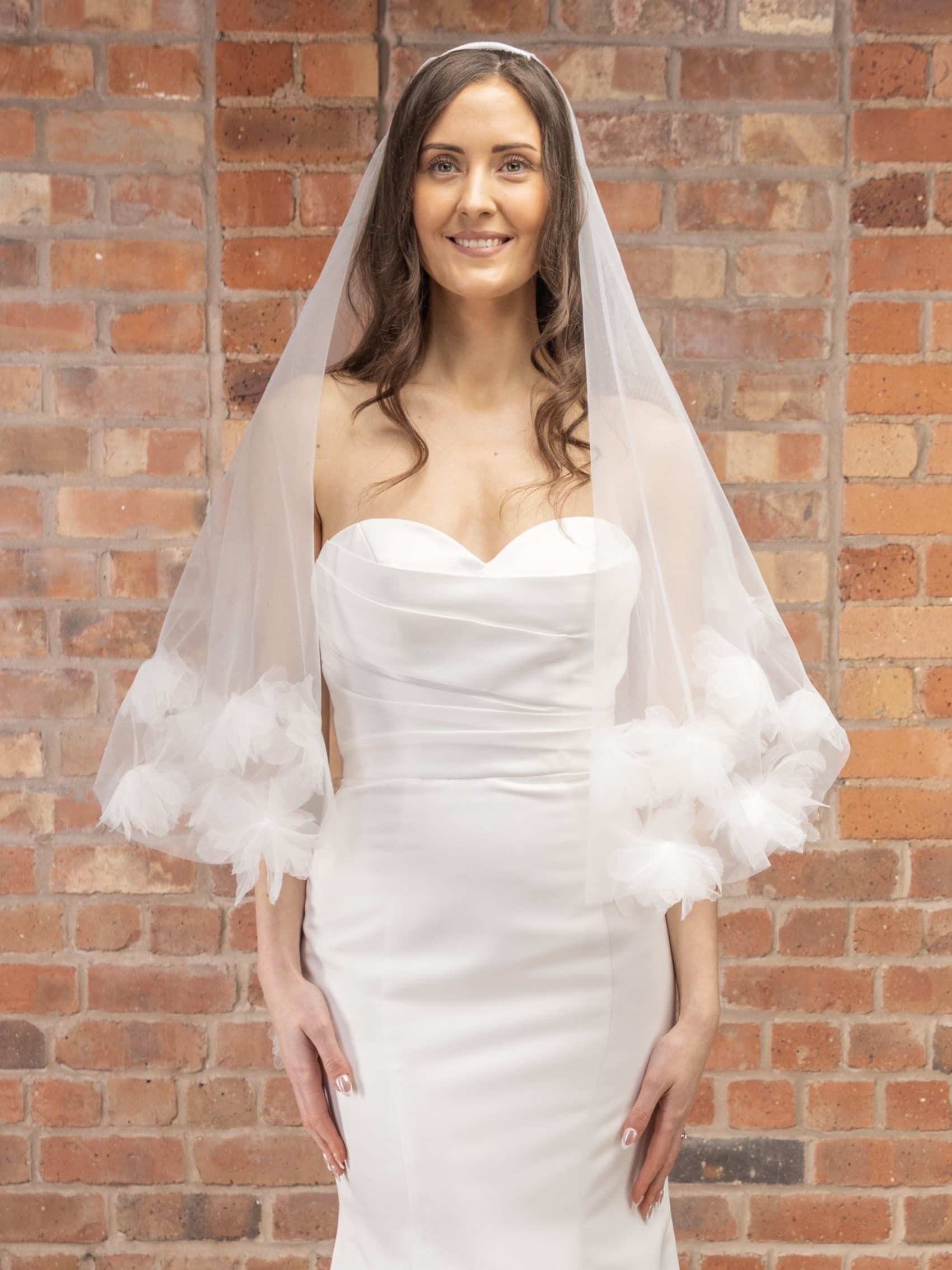
The Knot breaks the basics down into five go-to lengths: birdcage, blusher, fingertip, chapel, cathedral. Those names are your shorthand when you talk to a designer or try on options. You’ll see Tempetebrand’s imagery echoing those choices—the supplied caption even reads, “Bride is wearing fingertip tulle veil”—because fingertip remains a practical, photogenic middle ground between ceremony drama and reception ease.
Edges and finishes: subtle signals
Edge treatments are where personality shows up. The Knot lists the classics: cut edge, lace, beading. Trend reporting for 2026 pushes those details further, calling out raw-cut edges, soft silk borders, and fine silk-edge finishes as the finishes brides are choosing now. Raw-cut edges read modern and effortless, soft silk borders lend a quiet luxe, and fine silk-edge finishes are the minimalist answer when you want an intentional, tailored edge without obvious decoration.
Fabrics and construction: weight matters, layers matter
The Knot flags fabric basics like tulle weights and silk illusion; Tempetebrand gives the styling spin that matters on the day: single-layer tulle that “floats rather than drapes,” and soft tulle used as the base for pearl embellishment. Single-layer elbow or fingertip veils with a fine silk-edge finish are called out as a “Key look” to pair with sleek column dresses or bridal co-ords. In short, lighter tulle and fewer layers keep movement easy and let details like pearls or a silk border read clearly in photos and under low light.
The Double-Duty Approach: one veil, two looks
“Brides in 2026 are thinking about their veil across the whole day.” That sentence captures the practical creativity happening on wedding days: rather than tossing the veil after the vows, many brides rework it for the party. Tempetebrand lists the exact moves: removing a blusher layer, switching the placement, or letting it trail more casually as the evening relaxes. If you want a simple ceremony-to-reception game plan, follow these steps:
1. Keep a dedicated clip or pin in your emergency kit and a trusted attendant on hand.
2. Ceremony: wear the veil with full placement and, if applicable, the blusher in front.
3. Transition: remove the blusher layer, reposition the comb to sit lower or to the side, or let the veil trail loosely over shoulders for a relaxed silhouette.
4. Night: switch to lighter styling that encourages movement on the dance floor while keeping the veil as a statement piece.
Those moves keep the veil active all night: “The veil becomes part of the evening look rather than a daytime-only accessory.”

Minimalism: clean lines, maximum impact
“Minimalism isn't going anywhere - and in 2026, it's evolving.” Expect veils with barely-there finishes: raw-cut edges, soft silk borders, and single-layer tulle that floats rather than drapes. These are the veils built to sit with structured bridal separates, crepe fabrics, and architectural tailoring. Tempetebrand’s playbook gives a clean formula: a single-layer elbow or fingertip veil with a fine silk-edge finish worn with a sleek column dress or bridal co-ord. The aesthetic is architectural, not girlish; the veil becomes part of an engineered silhouette rather than an ornament applied afterward.
Pearl veils: the accessory brides can't stop wearing
“Pearl veils are no longer a niche request - they're a bona fide trend, and one that's only getting stronger.” Designers and stylists are scattering pearl embellishments on soft tulle to make a look that “create[s] a romantic, textured effect that photographs beautifully in both natural and candlelight.” Pearls read luxurious without weight: “They feel luxurious without being heavy, and distinctive without being costume-y.” That’s why brides are wearing them with everything from simple slip dresses to ornate lace gowns, “treating the pearl veil as the statement piece around which the rest of the look is built.” For a headline moment, follow Tempetebrand’s key look: a cathedral or chapel-length pearl veil as the hero piece, paired with understated jewellery to let the veil do the talking.
- If you want movement and photographs that catch highlights, choose soft tulle with scattered pearl embellishments.
- If you want a modern, sculpted finish, choose raw-cut edges or a silk-edge finish and single-layer construction.
- If you plan to keep the veil on for the reception, design in the double-duty moves up front so combs and layers are easy to rework.
How to choose between drama and restraint
Match the veil to your dress language, but think about the day in sequence. If your gown is ornate, a minimal veil—single-layer tulle with a fine silk-edge finish or raw-cut edge—will balance the look. If your gown is simple, let the veil be the anchor: chapel or cathedral pearl veil for maximum storytelling. Use these quick checklist items when you consult with a milliner or bridal atelier:
Styling notes for photographers and planners
Pearl veils were singled out for how they behave under different light: “Scattered pearl embellishments on soft tulle create a romantic, textured effect that photographs beautifully in both natural and candlelight.” That’s a production note and a styling brief. If candlelit reception photos matter to you, prioritize veils with surface texture that catches light instead of heavy embroidery that flattens in dim scenes.
Final stitch
“It’s a shift in how brides think about the veil - not as a finishing touch, but as an anchor.” Choose your veil by deciding whether you want the accessory to do the pulling or the supporting. Whether you commit to a cathedral pearl statement, a fingertip tulle that travels from aisle to dance floor, or a silk-edged, single-layer minimalist veil paired with architectural tailoring, make the veil part of the day’s choreography. The right length, edge, and fabric will determine not just how you look when you say yes, but how you move and photograph through the whole evening.
Know something we missed? Have a correction or additional information?
Submit a Tip