24 Attorneys General Sue to Block Executive Order Federalizing Mail Voting Rules
An executive order threatening criminal prosecution of state officials for mail ballot noncompliance sparked a 24-state lawsuit filed Thursday in federal court.
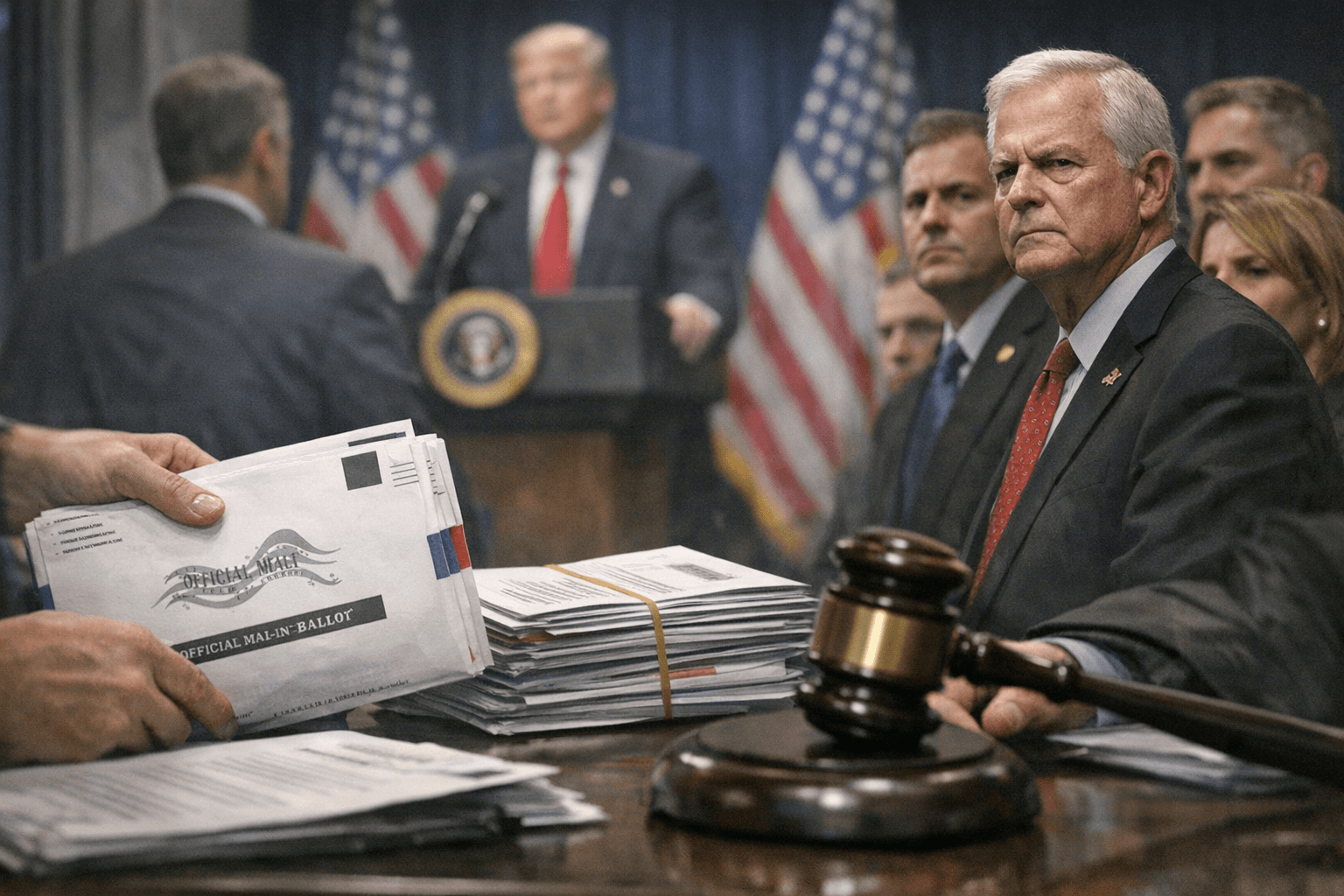
Twenty-four state attorneys general and governors filed suit in federal court Thursday to block a presidential executive order that would insert direct federal control into the mechanics of absentee ballot distribution, challenging what the coalition called an unconstitutional effort to displace state-run election systems.
The lawsuit, filed in the U.S. District Court for the District of Massachusetts, targets the executive order signed March 31 that directs federal agencies to build and maintain their own list of eligible absentee voters and instructs the U.S. Postal Service to deliver mail ballots only to voters who appear on that federal list. The complaint also challenges provisions that, according to the coalition, threaten state officials with the loss of federal funding or criminal prosecution for failing to comply.
Michigan Attorney General Dana Nessel, one of the coalition's named plaintiffs, put the stakes plainly. "Mail-in ballots are a safe and secure voting option that over 2.2 million Michiganders availed themselves to in the 2024 election," Nessel said. "I will protect that choice against an administration that is hellbent on taking it away."
The coalition's legal argument runs on three tracks: the president lacks constitutional and statutory authority to override state election administration rules; the parallel federal eligibility list would disenfranchise voters by creating a system outside any state's control; and the order's enforcement mechanisms conflict with federal statutes specifically designed to protect state administration of elections. Nessel's office characterized the practical harm as falling hardest on single parents, seniors, and military voters who depend most heavily on absentee options.
Michigan Secretary of State Jocelyn Benson also condemned the order and committed to swift legal action to protect voter access. Election law experts say the case will rapidly test foundational questions about federalism and separation of powers, specifically how far a president may go to condition or direct state election procedures.
If the coalition secures preliminary relief, the order's most consequential provisions could be stayed while the litigation proceeds. A ruling striking down the order would reinforce the longstanding legal principle that states hold primary authority over election administration. A ruling upholding executive power, which most legal analysts view as the less likely outcome given that history, would transform absentee ballot distribution nationwide.
With the 2026 midterms approaching and 24 states aligned against the order, the case is expected to move through the courts quickly, with implications that could reach well into the 2028 presidential election cycle.
This article was produced by Prism’s automated news system from verified source data, official records, and press releases, then run through automated quality and moderation checks before publishing. The system is built and supervised by the people who set the standards it runs under. Read our full AI policy.
Did this article answer your question?

