30-year Treasury yield hits highest since 2023 on inflation fears
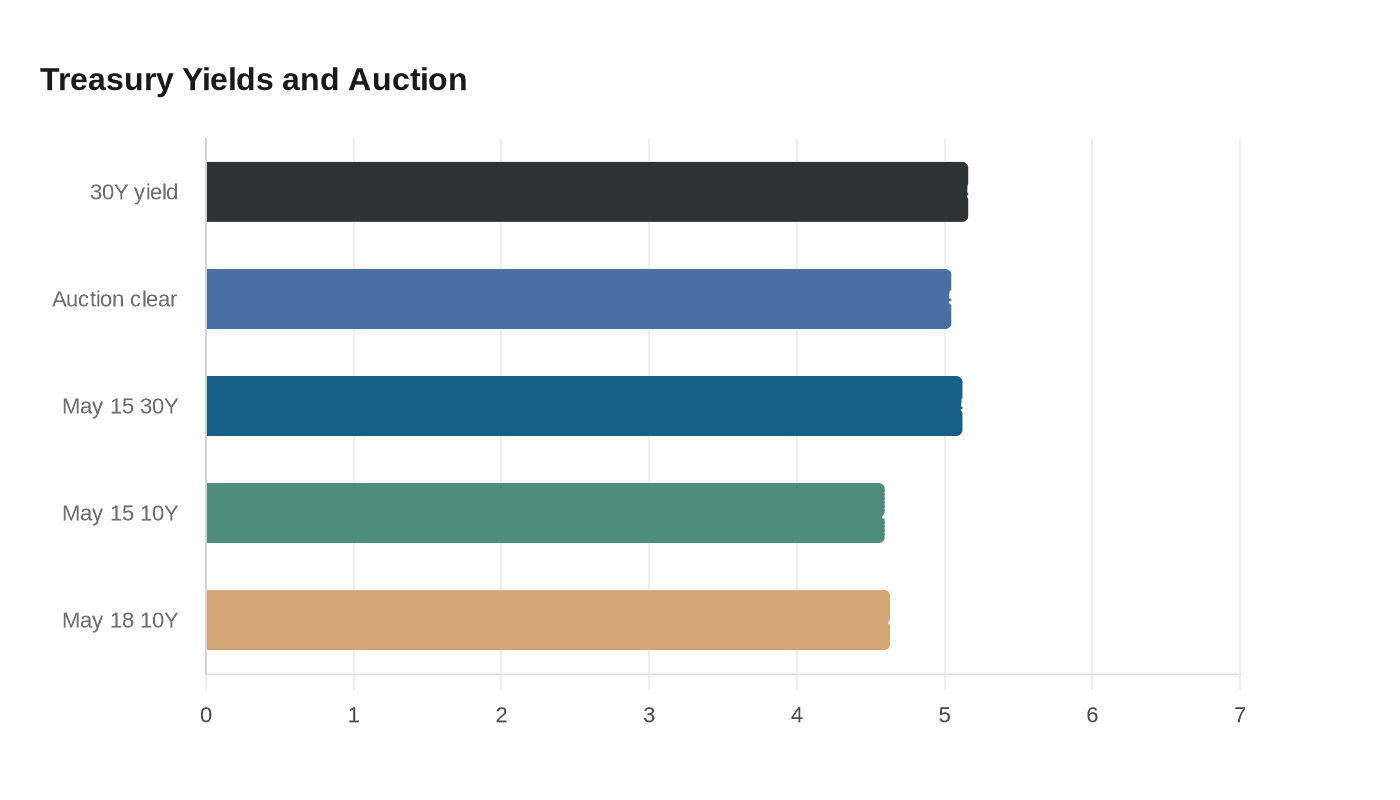
The 30-year Treasury yield climbed to 5.16%, its highest since October 2023, as oil-fueled inflation fears rippled through markets.

A jump in the 30-year Treasury yield to 5.16% is pushing up the borrowing costs that hit families first: mortgages, auto loans, business financing and, eventually, the federal debt bill. The move, which took the long bond to its highest level since October 2023, reflected a sharp selloff in U.S. government debt as investors priced a hotter inflation path.
The pressure built after a $25 billion auction of new 30-year bonds cleared at 5.046%, the first time buyers had locked in 5% yields on the long bond since 2007. By mid-May, the 30-year yield had already been hovering near that threshold, and on May 15 it topped 5.121% as the 10-year Treasury yield surged to 4.595%. On May 18, the 10-year moved even higher, jumping to 4.631%, its highest since February 2025.
The selloff was not confined to the United States. Bonds from Tokyo to New York extended losses as rising energy prices from the Middle East war fed fears that inflation could re-accelerate just as central banks were trying to cool it. Traders increased wagers on rate hikes from global central banks, reversing the safer, lower-yield backdrop that long-duration government bonds had enjoyed earlier this year. Bloomberg called the week’s decline the worst in about a year, while Reuters said the move was driven by inflation fears and higher oil prices rather than a traditional safe-haven bid for Treasuries.
Markets are also trying to sort out how much of the move is about the Federal Reserve’s next steps. CNBC reported that Treasury yields spiked as traders tried to price interest-rate policy under the new Federal Reserve chair, Kevin Warsh, while other market commentary pointed to concerns over energy-driven inflation and the broader warning coming from Iran-related tensions. Daleep Singh and Jiaxing Li have also been among the analysts and strategists weighing whether the latest move reflects a temporary oil shock or the beginning of a more lasting reset in bond yields.
That reset has already altered the tone of 2026. Bloomberg said in March that the U.S. Treasury market had erased all of its gains for the year amid stagflationary angst from the oil-price surge. For households and companies, the immediate risk is straightforward: higher long-term yields feed into mortgage rates and corporate borrowing costs, while Washington faces a more expensive path to finance its growing debt. If oil stays elevated and inflation expectations keep rising, the bond market is signaling that rates may need to stay higher for longer than investors had hoped.
Know something we missed? Have a correction or additional information?
Submit a Tip