31,000 Kaiser frontline clinicians begin open-ended strike in West
Thousands of registered nurses and health professionals walked out at Kaiser facilities in California and Hawaii, raising immediate care and labor-cost concerns.
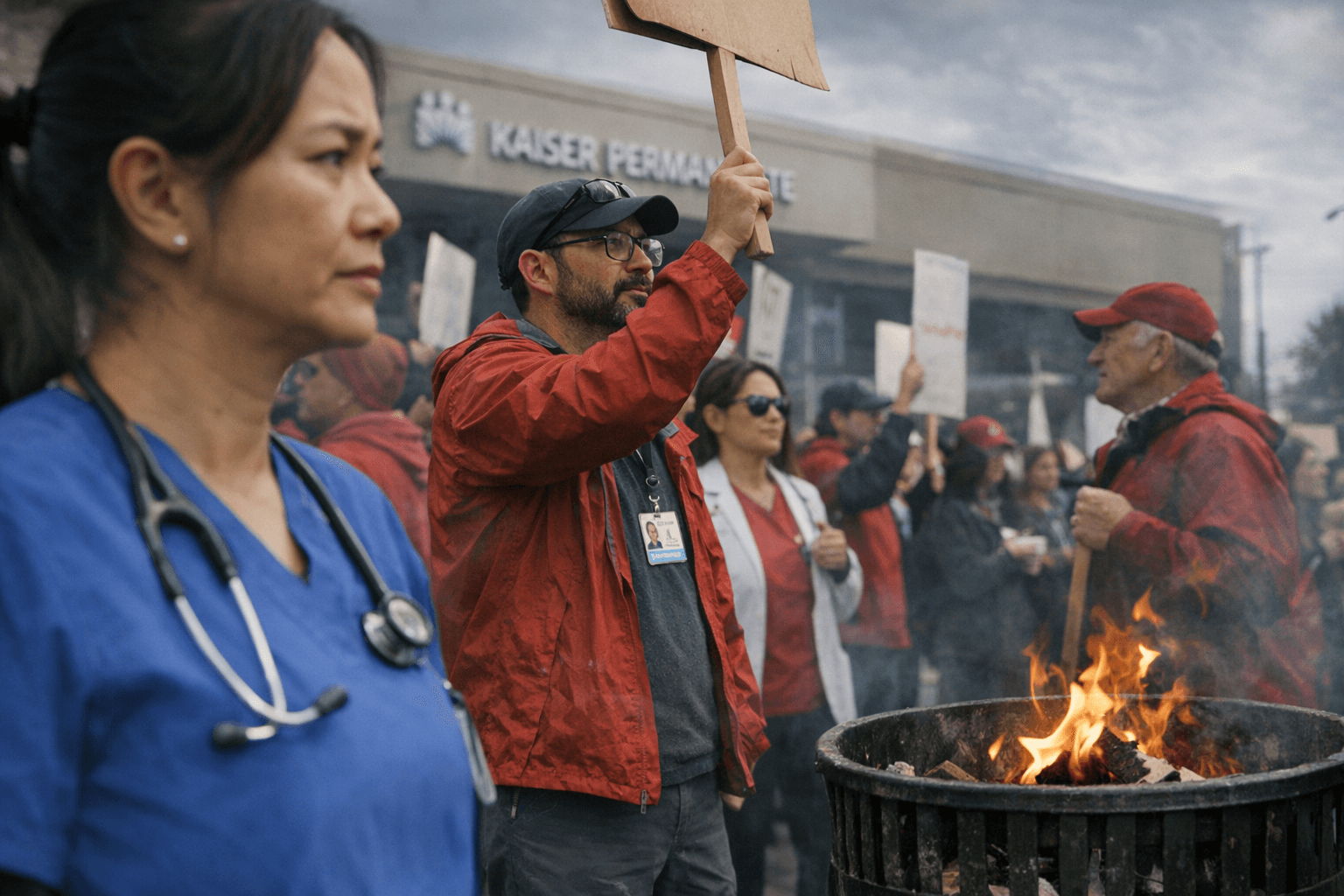
More than 31,000 registered nurses and allied health professionals walked off the job Monday in an open-ended strike at Kaiser Permanente facilities across California and Hawaii, testing the capacity of one of the nation’s largest integrated health systems and signaling renewed momentum in health-care labor organizing.
The walkout, by members of the United Nurses Associations of California/Union of Health Care Professionals and other locals in the Alliance of Health Care Unions, began January 26 and continues into this week. The scale of the action, thousands of frontline clinicians in hospitals, clinics and outpatient centers, poses immediate operational challenges for patient access and longer-term financial implications for Kaiser and the broader health-care market.
Clinics and hospital units rely on the striking staff for routine inpatient care, outpatient procedures and intensive nursing coverage. While emergency departments are legally required to remain open, routine appointments and elective procedures are likely to face delays as Kaiser mobilizes contingency plans. Hospital systems typically respond to strikes by reallocating nonstriking staff, contracting temporary agency or travel nurses, and postponing lower-priority services. Those measures raise short-run operating costs and strain margins, because temporary staffing is often paid at premium rates.
For Kaiser, a nonprofit integrated system with an extensive hospital and clinic footprint in the two states, the labor stoppage tests a core trade-off in U.S. health care: wage and staffing improvements demanded by frontline workers versus cost containment pressures facing health systems operating under fixed-rate contracts and insurance reimbursement models. If Kaiser hires large numbers of temporary staff or grants substantial wage concessions, its per-encounter costs will rise, with potential ripple effects for bargaining with payers and its internal budgeting.
The strike also has broader market implications. Health-care employers nationwide are watching unions gain leverage after a period of sustained organizing among nurses and other clinical staff since the pandemic. Large-scale walkouts can push up local wage baselines for nurses and allied professionals, increase demand for travel nurses, and accelerate capital investment in automation and outpatient redesign to reduce labor intensity. Insurers and employers paying for care may face higher negotiated rates over time if wage gains are secured.
Policy questions will follow. State regulators and federal oversight agencies monitor continuity of care during labor actions and the use of contingency staffing. Legislators who have pursued safe-staffing laws and expanded collective bargaining rights for health workers will view the strike as evidence in debates over statutory protections, funding for public hospitals and workforce training pipelines.
Economically, the strike underscores persistent long-term trends in health-care labor markets: accelerating demand for skilled clinicians, demographic pressures from an aging population, and a tight supply of nurses despite expanded training programs. Those structural forces suggest that labor costs are likely to remain an important component of health-system budgets, even as providers pursue efficiency gains.
Negotiations that follow will determine whether the walkout resolves quickly or evolves into a protracted conflict. For patients, the immediate concern is access to timely care. For policymakers and market participants, the question is whether this strike represents a temporary disruption or a sign of enduring upward pressure on wages and staffing standards across U.S. health care.
This article was produced by Prism’s automated news system from verified source data, official records, and press releases, then run through automated quality and moderation checks before publishing. The system is built and supervised by the people who set the standards it runs under. Read our full AI policy.
Did this article answer your question?

