60 Minutes Goes Inside New Orleans' Hidden Mardi Gras Indian Tradition
Black Masking Indians have sewn their suits and walked New Orleans' backstreets since 1885; 60 Minutes brought this living institution to a national audience on Sunday.
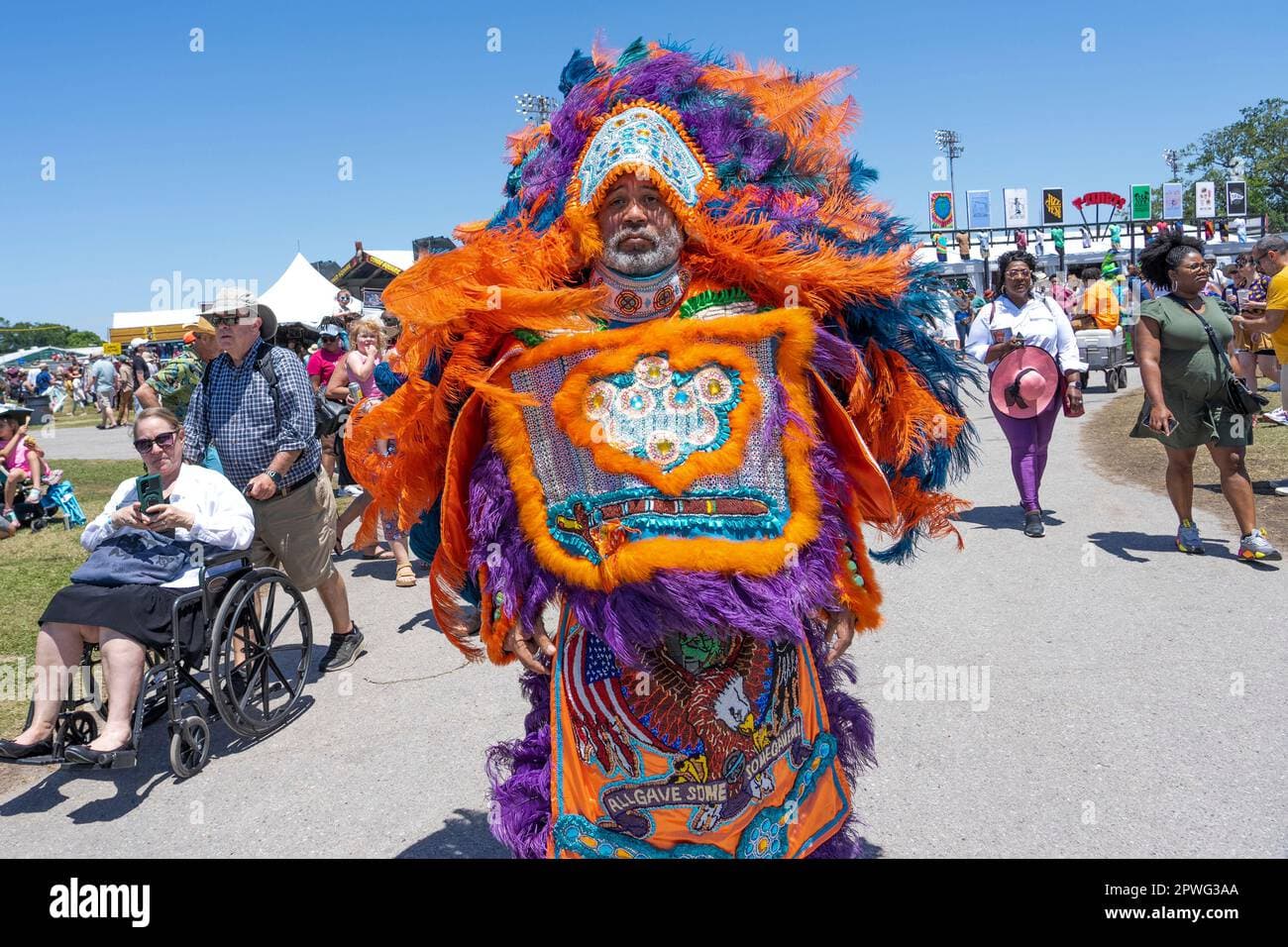
The suits alone tell you what kind of institution this is. Each one takes a full year to build, assembled bead by bead in kitchens and living rooms across New Orleans' Black neighborhoods, worn for a single morning in the streets, then dismantled so the work can begin again. This Sunday, 60 Minutes brought the Mardi Gras Indians, also known as Black Masking Indians, to a national television audience that had little idea the tradition existed.
The roots reach back to the 19th century, when New Orleans' white Mardi Gras krewes were closed to Black residents. Rather than abandon Carnival, Black New Orleanians built something older and more deliberate: an elaborate masking practice that honored the Native American communities of the Gulf South who had sheltered people escaping enslavement. The first formally recorded tribe, The Creole Wild West, was organized in 1885 by Becate Batiste. What began as an act of cultural resistance grew into a multigenerational institution with dozens of active tribes spread across the city's neighborhoods.
The tradition draws from West African, Afro-Caribbean, and Native American forms, layered over more than a century of New Orleans street life. Its musical vocabulary is so embedded in the city's culture that the 1965 Dixie Cups hit "Iko Iko" traces directly to Mardi Gras Indian chants, drawing from a linguistic blend of Choctaw, Chickasaw, Louisiana Creole, French, and West African languages. Historian Richard Brent Turner has traced the regalia and musical forms to Central African cultures from Bakongo peoples, Haitian Carnivals, and the African-American traditions that coalesced at Congo Square.
The tribal structure itself functions as a form of community governance. The Big Chief holds the highest rank and controls the route and timing of the procession, which is never announced in advance. The Spy Boy moves ahead to scout for rival tribes. The Flag Boy relays signals back to the Big Chief. When two tribes meet in the streets, the result is not a confrontation but a high-stakes aesthetic competition, each tribe presenting beadwork, plumage, and artistry against the other. The smaller the beads and the more intricate the needlework, the greater the mastery.
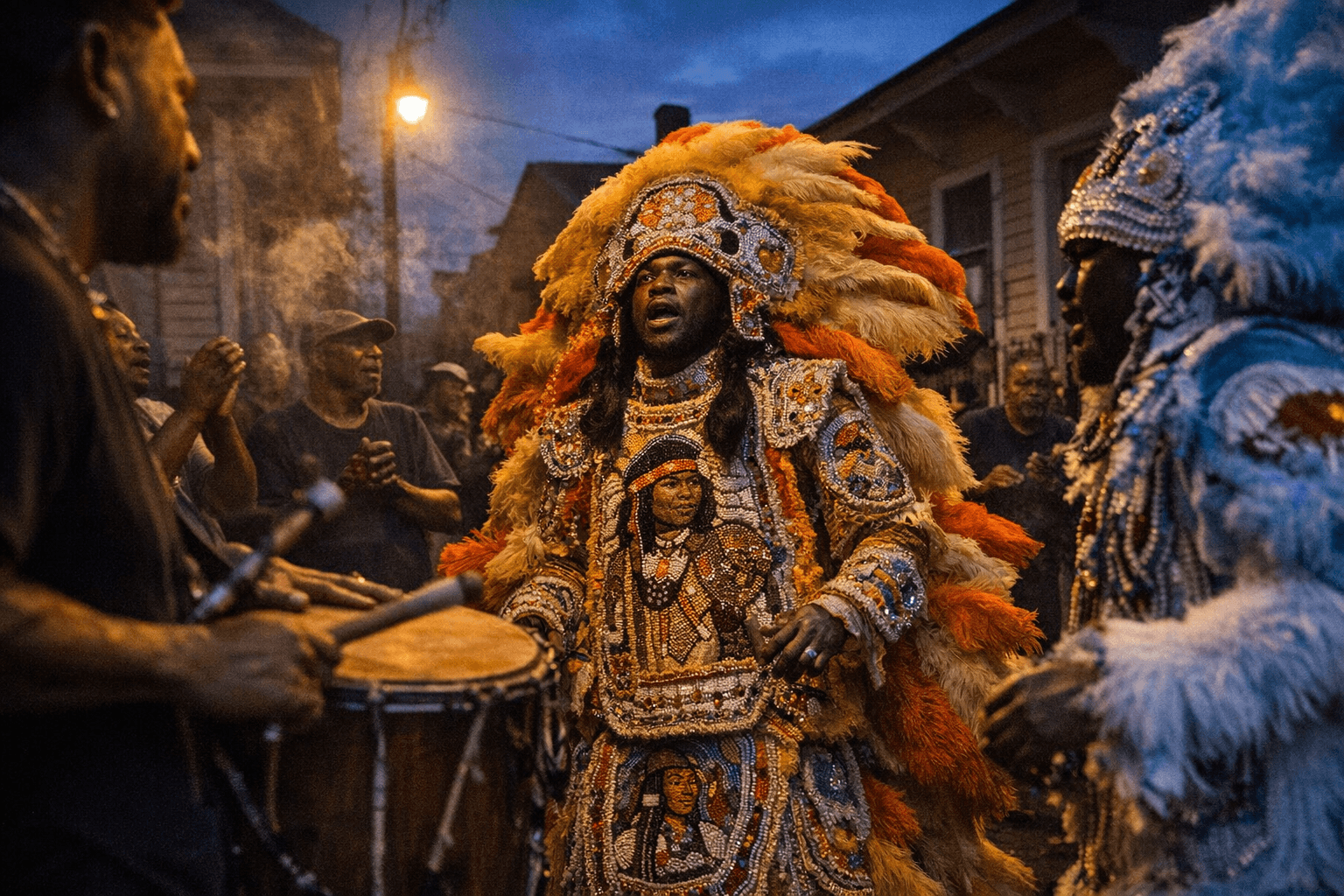
Big Chief Bo Dollis Jr., one of the tradition's most recognized figures, has described growing up surrounded by suits so expansive their feathers blocked out the sun. Demond Melancon, Big Chief of the Young Seminole Hunters and a contemporary visual artist whose work has been exhibited internationally, represents what the tradition demands of its practitioners: artistic discipline, cultural knowledge, and a year-round commitment to the craft that no camera can fully compress into an hour.
What 60 Minutes documented is not a performance staged for visitors. The tribes emerge from Black New Orleans neighborhoods on their own terms, on routes no official parade map has ever listed, carrying a practice that survived segregation, Hurricane Katrina, and now the steady economic pressures of gentrification. The broadcast provided the access. The tradition predates the cameras by more than a century.
This article was produced by Prism’s automated news system from verified source data, official records, and press releases, then run through automated quality and moderation checks before publishing. The system is built and supervised by the people who set the standards it runs under. Read our full AI policy.
Did this article answer your question?