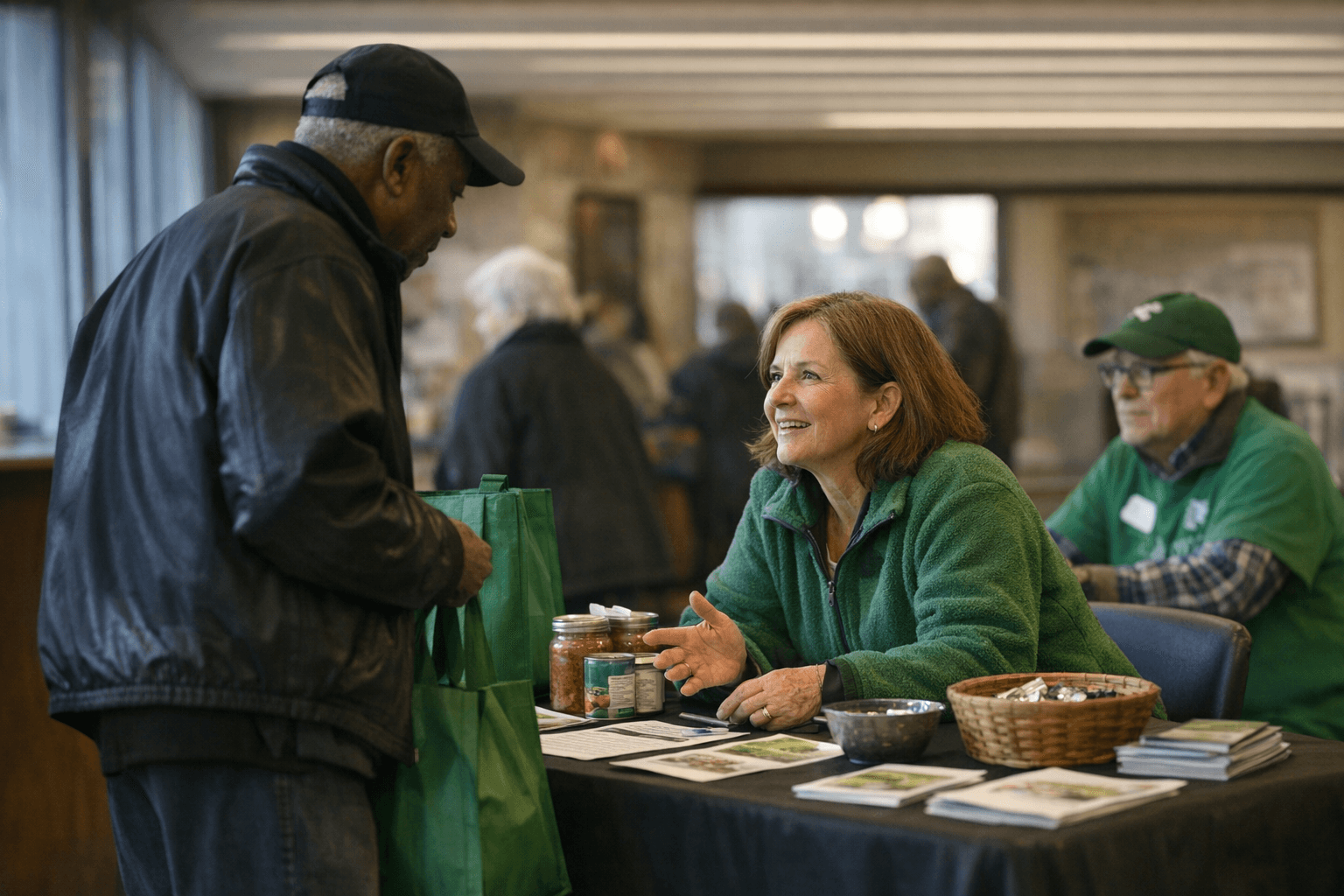
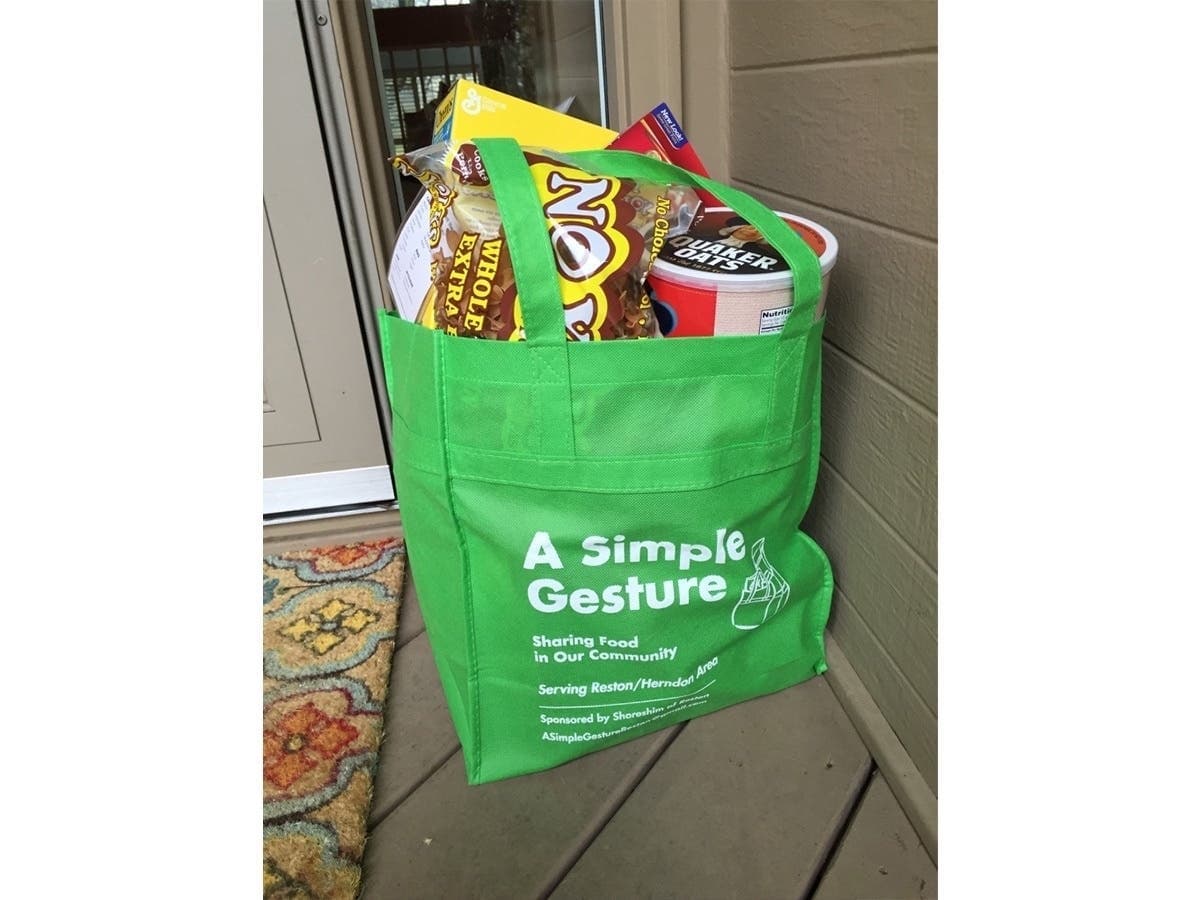
A Simple Gesture’s Green Bag Program Recovers Surplus Food for Pantries
A Simple Gesture recovers surplus food through a Green Bag program for individuals, a business food recovery match and school SHARE refrigerators to stock pantries and feed students.
Our Green Bag Food Donor Program is for individuals wanting to sign up to donate nonperishable food on a recurring basis to help keep our local food pantries keep their shelves stocked," A Simple Gesture says, outlining a recurring-donation track aimed at steady pantry resupply.
The nonprofit also runs a Food Recovery Program for businesses. "Our Food Recovery Program is designed to rescue surplus food by matching food industry businesses with vetted nonprofits that serve the community. If you are a restaurant, event venue, grocery store or other business with surplus food, we can help get it to our neighbors, not the landfills," the organization states. On its site the group signals a GREEN BAG SCHEDULE and navigation cues such as "DONATE SURPLUS FOOD," "Donate," "FILL THE GAP," and "FIND FOOD," indicating a mix of individual and institutional collection pathways.
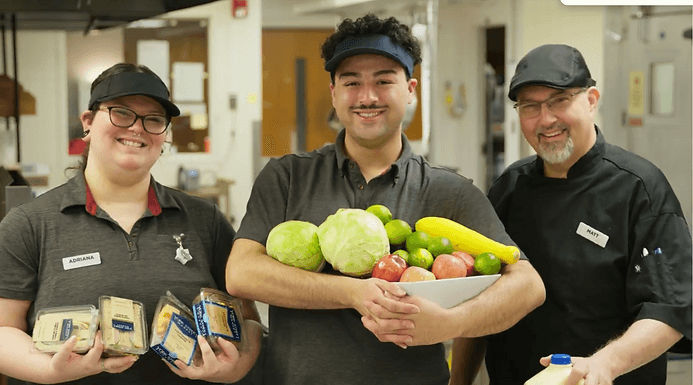
A school-facing element is explicit and localized. "Our SHARE refrigerators are part of our Food Recovery Program. Schools all around Guilford County donate their unopened, unwrapped food from the School Nutrition Program to the SHARE fridge. Students in the school are welcome to grab extra food from the fridge whenever they need a little extra nutrition during the day," the group writes. That model moves surplus from institutional food-service lines directly to students and into pantry shelves.
Operationally, recovery programs often mirror institutional standard operating procedures. The University of California, Berkeley SOP states: "STANDARD OPERATING PROCEDURE (OVERVIEW) This section provides a brief overview of the two standard procedures for food recovery at UCB." Its Process One is clear: "Process one is intended for campus entities that are acting as 'recovery teams' (i.e., transporting food to the UCB Food Pantry or an off-campus food bank or nonprofit that serves the food to people in need)." The SOP notes practical realities - "that exact items and quantities will not be known until the time of donation" - and assigns oversight roles: "The recovery team lead will train and manage recovery team members." The document emphasizes donor and recovery responsibilities: "Prior to food pick up, donor entities will handle food following all relevant safety regulations and keep all necessary records," and adds that "The recovery team or donor may repackage food into food safe containers for transport."
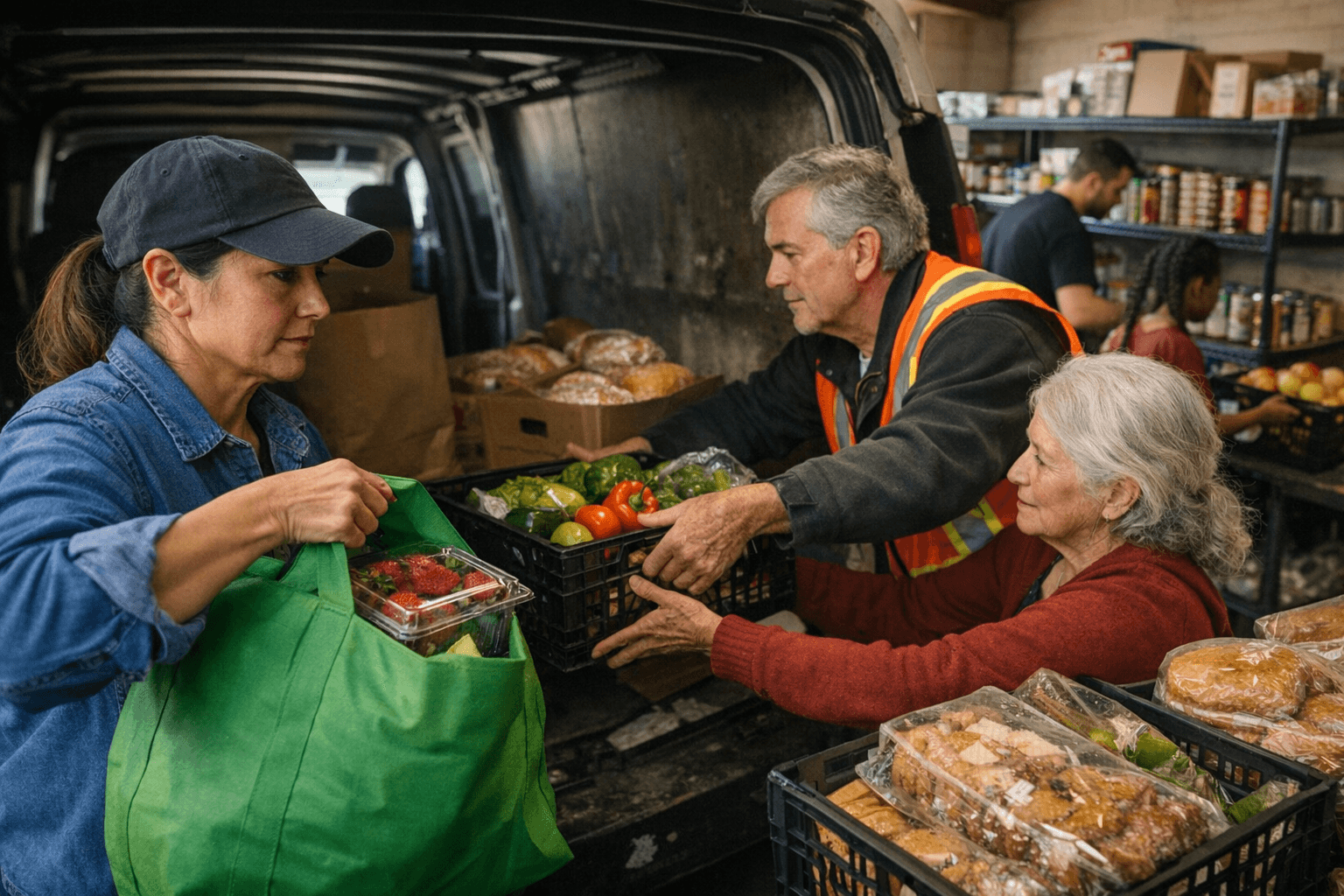
Those operational touchpoints matter for workers. Recovery team leads, volunteer drivers, kitchen staff and school nutrition employees face training needs, recordkeeping duties and safety compliance as part of daily logistics. Academic field work on similar programs reinforces those workforce strains. "Food recovery is an important aspect of the global food system, as it diverts food from going to waste, and redirects it for human consumption to people who need it most," a study notes while also reporting that "Findings show that FareStart partners struggle with funding as non-profit organizations, with a reliable volunteer base, and with unclear use, impact, and recipients of their donations."
For workplace readers - food-service managers, school nutrition directors, pantry supervisors and volunteers - A Simple Gesture’s mix of individual Green Bag donors, business matching and school SHARE refrigerators presents a workable funnel to reduce waste and feed neighbors. The model still leaves unanswered operational questions such as partner lists, volumes recovered, the GREEN BAG SCHEDULE details, vetting criteria and liability arrangements. As recovery programs scale, those specifics will shape how much strain, and how much benefit, lands on the front-line workers who run pickups, manage fridges, and stock pantry shelves.
Know something we missed? Have a correction or additional information?
Submit a Tip