AAPIs say federal policy changes are harming their communities, survey finds
A majority of AAPIs said federal policy changes have harmed their communities, and 1 in 5 reported race-based harassment in the past year.

A majority of Asian American and Pacific Islander adults said recent federal policy changes have hurt their communities, underscoring a widening gap between Washington’s policy fights and how those fights are experienced on the ground.
The Asian American Foundation’s sixth annual STAATUS Index, conducted by NORC at the University of Chicago and released May 1, surveyed 1,778 U.S. adults during AAPI Heritage Month and ahead of the United States’ 250th anniversary. The findings showed that less than half of all U.S. adults saw recent federal actions as harmful to Asian Americans, while a majority of AAPIs said they were.

TAAF said the concerns were tied to immigration enforcement, tariffs, trade tensions, safety fears and federal actions targeting diversity, equity and inclusion efforts. The report was designed to measure the disconnect between broad public perception and AAPI lived experience, a divide that Norman Chen, TAAF’s chief executive, has pointed to as central to the organization’s work.
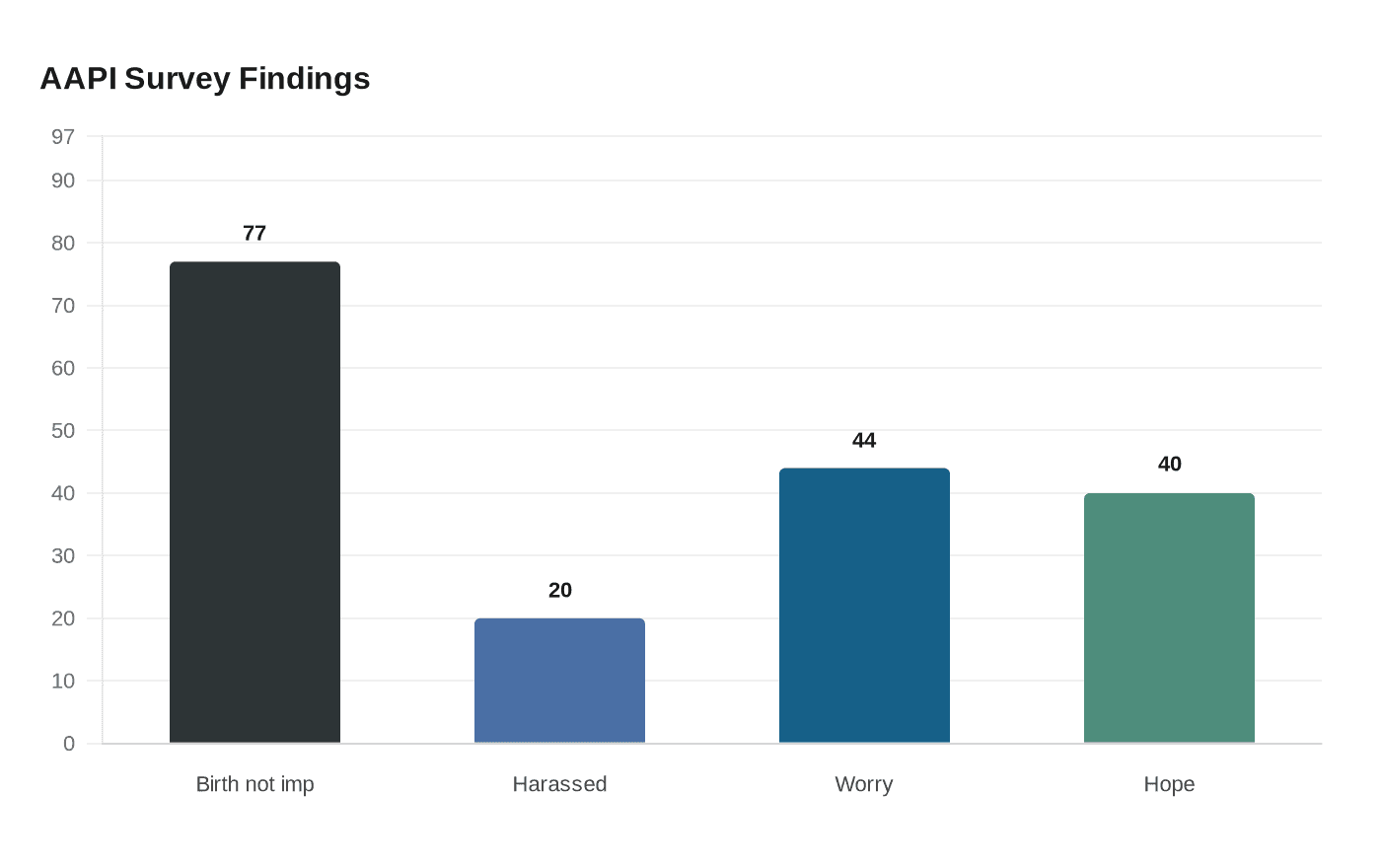
The survey also showed how sharply Americans disagree over belonging. Half of U.S. adults said being born in the United States is important to being truly American, but 77% of AAPIs said birth in the United States is not important to that identity. The findings suggest that many AAPI adults continue to reject a narrow definition of Americanness even as immigration and identity have become louder political fault lines.
The report came amid broader concern about discrimination and safety. One in five AAPI adults said they had been harassed, threatened or insulted because of their race or ethnicity in the past 12 months. AAPIs were also the only racial or ethnic group in the survey for which worry, at 44%, outpaced hope, at 40%.
TAAF released the index in a political climate shaped by attacks on immigrant communities and intensifying debate over federal policy. On April 24, TAAF condemned President Trump for amplifying racist rhetoric targeting Chinese and Indian immigrants, a reminder that the pressure many AAPI families feel is not abstract. For communities already navigating discrimination, changing rules on immigration, trade and workplace equity have become part of daily life, not just campaign rhetoric.
This article was produced by Prism’s automated news system from verified source data, official records, and press releases, then run through automated quality and moderation checks before publishing. The system is built and supervised by the people who set the standards it runs under. Read our full AI policy.
Did this article answer your question?

