ACA enrollment falls 13% as subsidy expiration prices out millions
Monthly ACA premiums jumped 58% after subsidies expired, and February enrollment fell to 19.2 million, wiping out 3 million coverage slots in a year.
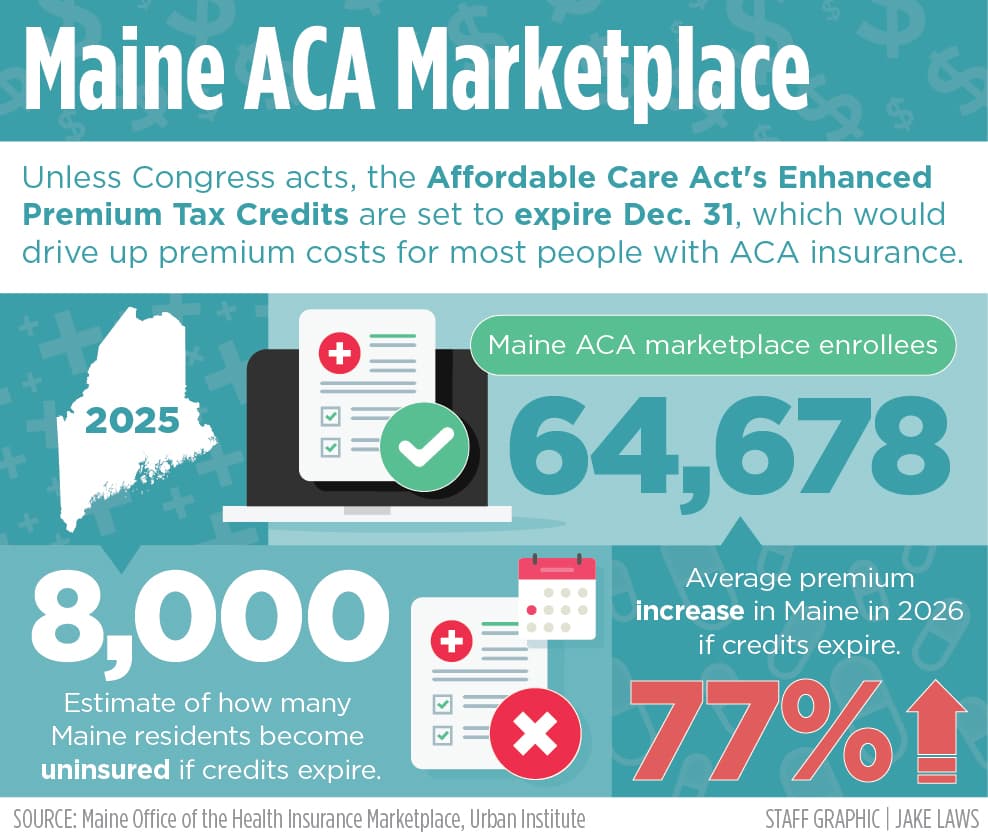
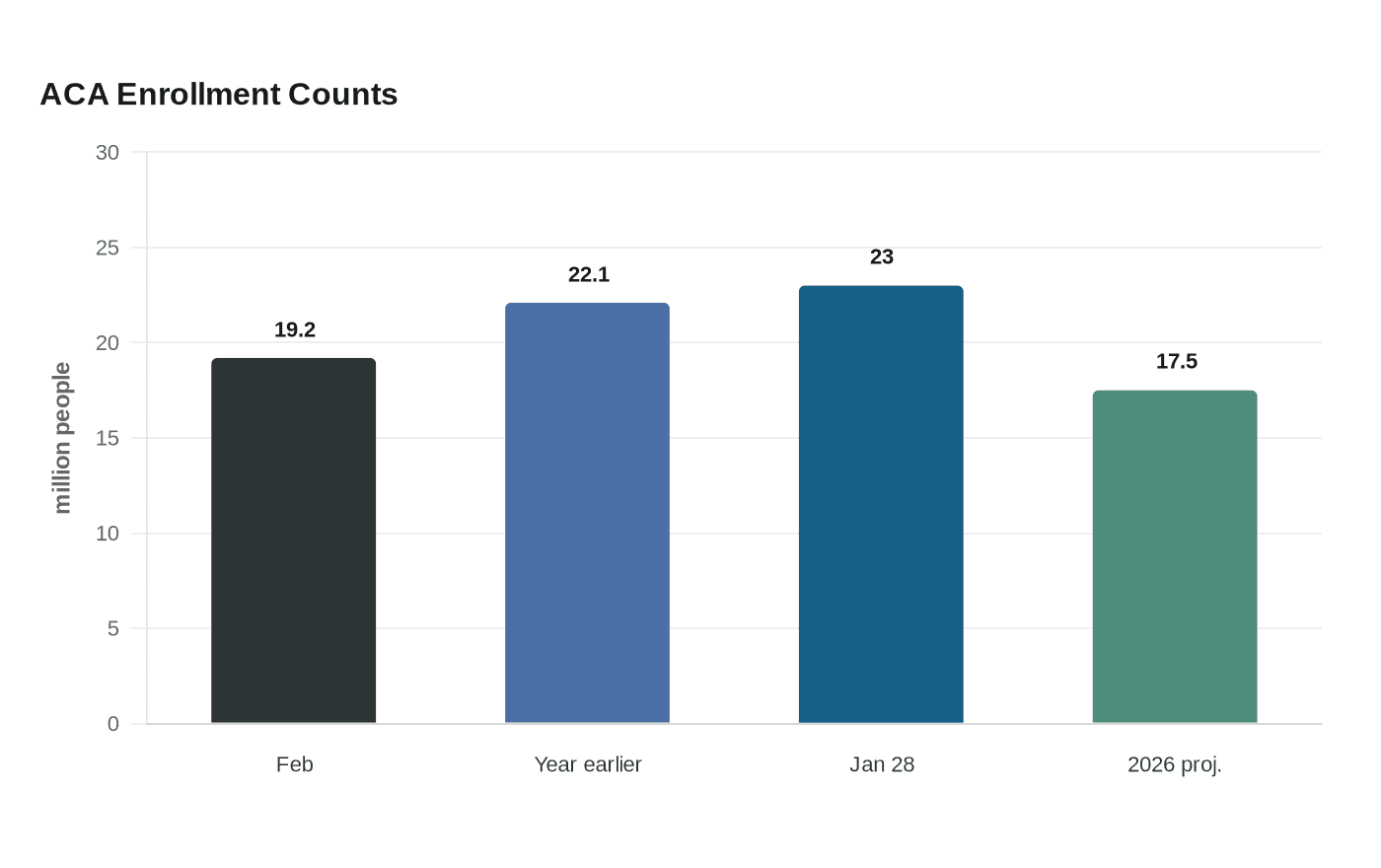
New federal data show 19.2 million people were enrolled in Affordable Care Act marketplace plans in February, down from 22.1 million a year earlier, a 13% drop that erased about 3 million coverage slots. The decline comes just as the expiration of enhanced premium tax credits at the end of 2025 pushed monthly payments sharply higher for millions of households.
Washington has pointed to a crackdown on fraudulent and phantom enrollments as one explanation for the drop, and the Office of the Assistant Secretary for Planning and Evaluation said improper, phantom and fraudulent enrollment peaked at 5.6 million in 2025. But the sharper evidence points to affordability: KFF found average monthly premium payments rose 58%, from $113 to $178, after the enhanced credits expired, while average deductibles climbed 37% to a record $3,786. The same analysis projects average monthly enrollment could sink to about 17.5 million in 2026, and possibly as low as 16.5 million, if the slide continues.

The people hit hardest are not all low-income enrollees at the very bottom of the subsidy scale. KFF found a disproportionately large share of the enrollment drop came from households with incomes between 400% and 500% of the federal poverty level, just above the point where the richest marketplace subsidies phase out. That fits the warning signs that were already visible in January, when federal sign-ups were running about 800,000 below the pace of the previous year. By Jan. 28, the Centers for Medicare & Medicaid Services said 23.0 million consumers had selected 2026 coverage during open enrollment, including 3.4 million new consumers and 19.6 million returning or auto-reenrolling consumers, before the post-enrollment bill payments and grace periods revealed how many shoppers could not keep coverage.

The enhanced premium tax credits were created in the American Rescue Plan Act in 2021 and extended through 2025 by the Inflation Reduction Act. Their disappearance has now turned the marketplace into a more expensive product for families who do not get employer coverage and can least absorb higher bills. KFF Health News said the subsidy fight became entangled with the longest-ever government shutdown, and some buyers saw premiums double or more even before the credits vanished completely.
The political stakes reach far beyond enrollment counts. KFF found 88% of marketplace growth since 2020, or 11.4 million of 12.9 million new enrollees, came in states President Trump won in 2024, giving the subsidy lapse an outsized footprint in Republican-leaning regions. The Congressional Budget Office warned in December 2024 that letting the enhanced credits expire would raise the number of uninsured by 2.2 million in 2026 and lift benchmark premiums as well. As coverage falls, hospitals and clinics face a less stable payer mix and a bigger risk that more care will go unpaid, while the future of the ACA increasingly hinges on whether Congress restores the subsidies or leaves affordability to erode further.
This article was produced by Prism’s automated news system from verified source data, official records, and press releases, then run through automated quality and moderation checks before publishing. The system is built and supervised by the people who set the standards it runs under. Read our full AI policy.
Did this article answer your question?