ACLU, FIRE Ask Montana Supreme Court to Overturn 2003 Speech Precedent
A Helena man convicted after telling officers to "get f—ed" has sparked a First Amendment challenge targeting a 23-year-old Montana Supreme Court precedent.
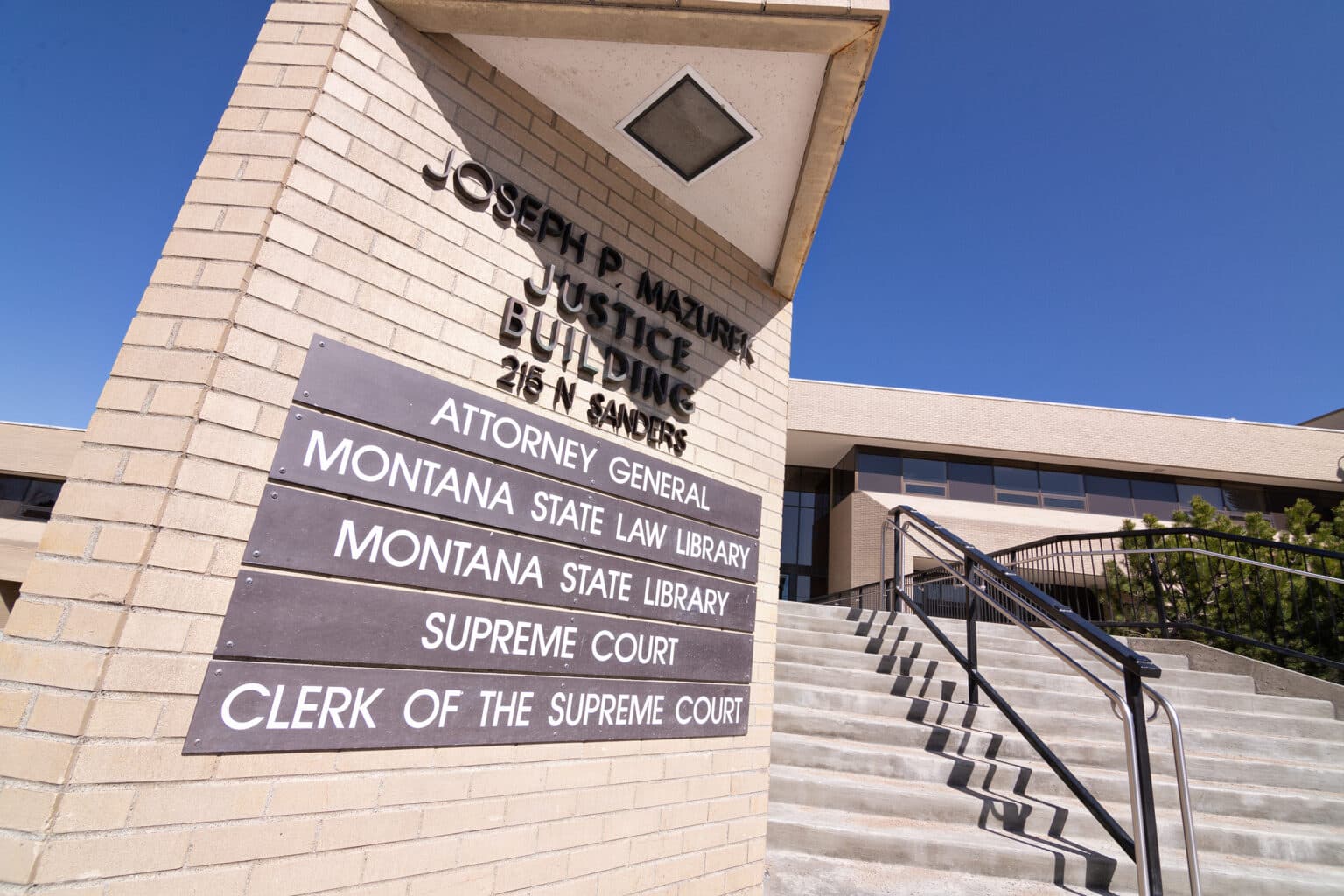
Two of the country's leading civil-liberties organizations filed briefs with the Montana Supreme Court on March 6 asking the justices to strike down a 2003 precedent that both groups say quietly added an unconstitutional hurdle to First Amendment protection in Montana.
The filing by the ACLU of Montana and the Foundation for Individual Rights and Expression targets State v. Robinson, a 2003 Montana Supreme Court opinion that required speech to contribute "to our constitutionally protected social discourse" in order to receive First Amendment protection. The groups argue that requirement goes well beyond what federal law demands and was improperly used to uphold a Lewis and Clark County conviction against Helena resident Matthew Gordon Mayfield.
Mayfield's case has the same basic shape as the 2003 Robinson matter. According to court records, he allegedly told two Helena police officers to "get f—ed" while disputing the arrest of another man. Helena police arrested Mayfield on the grounds that he was interfering with that arrest. Lewis and Clark County District Court Judge Menahan relied on State v. Robinson in finding Mayfield guilty, a reliance the ACLU and FIRE now say should be revisited because, in their view, the Montana Supreme Court got Robinson wrong at the outset.
The core legal objection is straightforward: for more than a century, the U.S. Supreme Court has held that the First Amendment does not protect "fighting words," speech that tends to provoke an immediate physical reaction. What courts are not supposed to do, the groups argue, is layer on a second question asking whether the speech also adds value to the public conversation. That is precisely what the Montana Supreme Court did in 2003, and attorneys for the groups say the Robinson standard "must be struck down."
If Robinson stands, they warned, Montana courts would be required to evaluate both whether speech provokes a fight and whether a judge decides it contributes to social discourse. That dual inquiry, the groups said, "sets a dangerous precedent" and places additional hurdles on speech that conflict with both state and federal constitutional guarantees. They further cautioned that the 2003 ruling could contradict a number of U.S. Supreme Court decisions, calling the high court "the highest arbiter of constitutionally protected freedoms."
The parallels between the 2003 case and Mayfield's situation are difficult to miss. Robinson also involved a man arrested by Helena police after directing a profane name at an officer. The ACLU and FIRE characterized the two cases as following "very similar contours," making Mayfield's appeal a direct vehicle for the Montana Supreme Court to reconsider whether the social-discourse test has any legitimate place in First Amendment analysis.
The Montana Supreme Court has not yet responded to the filing. If the justices agree to revisit Robinson and reverse it, Montana's standard for evaluating contested speech would shift back into alignment with federal law, removing the social-discourse test entirely.
Know something we missed? Have a correction or additional information?
Submit a Tip

