Adams County Braces for Extreme Cold, Wind Chills of -20 to -25
A deep Arctic air mass is plunging Adams County into dangerous cold with wind chills near -20 to -25, increasing risks to travel, pipes, power lines, and health.
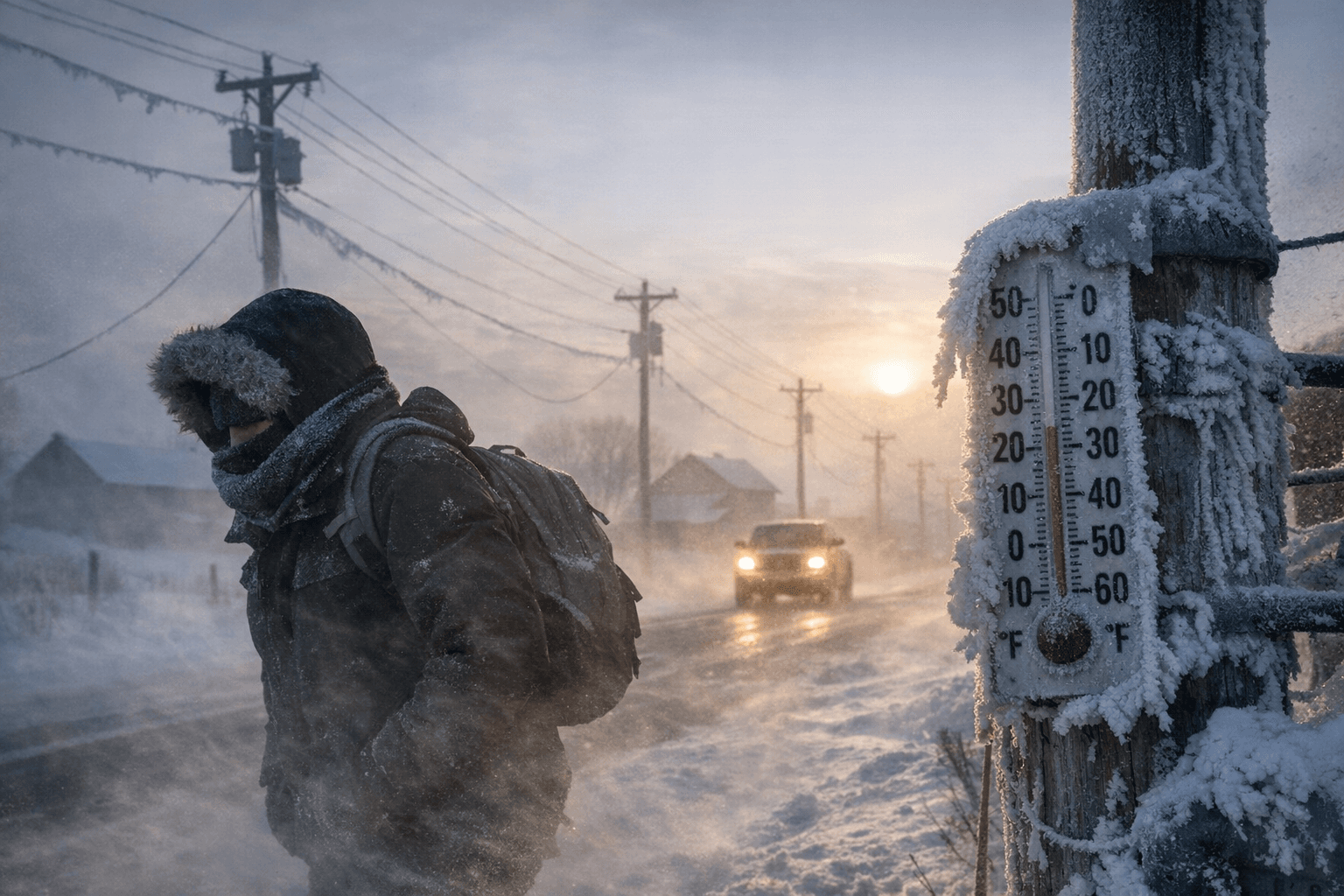
Adams County is facing a stretch of extreme cold as a deep Arctic air mass pushes temperatures well below normal and wind chills approach -20 to -25, officials say. The National Weather Service warns the severity of wind chill could trigger official advisories and warnings, and state agencies are urging residents to limit travel, protect homes and check on vulnerable neighbors.
Governor Mike DeWine underscored the threat, saying, “Although the statewide threat for heavy falling snow has passed, the extreme cold is only just beginning and is expected to last for some time,” and added, “I encourage everyone to take caution for their own health and safety and for the health and safety of family, friends, and neighbors.” The Ohio Emergency Management Agency described the situation as a “deep Arctic air mass that will keep temperatures well below normal. The coldest wind chill factor is expected with values of 20 to 25 degrees below zero; below-normal temperatures are expected to continue throug”
The National Weather Service uses the Wind Chill Index to guide public action: a Wind Chill Advisory is issued for values between -15°F and -24°F for at least three hours, while a Wind Chill Warning is issued for index values below -25°F for at least three hours. According to the National Weather Service, 1,100 Americans died due to cold weather from 1988 to 2023, a sobering reminder of the risks.
Travel and vehicle safety guidance from the Ohio State Highway Patrol is direct: “With extremely cold temperatures forecasted for the week, the Ohio State Highway Patrol is urging drivers to stay home if possible. If you must travel, your preparation should begin with a thorough check of your vehicle:” If a vehicle becomes stuck, follow the patrol’s steps: “Turn on your hazard lights and call #677 or 911 for assistance. It is important that you clear your tailpipe of any possible debris to decrease the chance of carbon monoxide poisoning.” If your vehicle breaks down or crashes, the patrol advises, “Turn on your hazard lights, safely move your vehicle as far off the roadway as possible, and call #677 or 911 for assistance. It is important that you remain inside your vehicle until help arrives.”
Cold-weather medical guidance highlights frostbite and hypothermia risks. Frostbite is “the freezing of the skin and body tissue,” with symptoms including loss of feeling and a white or pale appearance in fingers, toes, earlobes, face, and the tip of the nose; victims should be moved to a warm location, have exposed skin covered without rubbing, and seek medical attention immediately. Entergy lists hypothermia signs: “In adults, warning signs of hypothermia include shivering, exhaustion or feeling very tired, confusion, fumbling hands, memory loss, slurred speech and drowsiness. In babies, signs include bright red, cold skin and very low energy. If you notice any of these signs, take the person’s temperature. If their temperature is below 95° F, the situation is an emergency. Get medical attention immediately.”
Home preparations include dressing in layers, wearing a hat and mittens, keeping outer garments water repellent and loose-fitting, and covering your mouth with a scarf to protect lungs. Residents should follow space-heater, fireplace and generator safety and make plans to prevent frozen pipes by insulating them and letting a faucet trickle. Post-storm hazards remain significant: ice can greatly increase weight on branches and power lines, “a one-half inch of ice accumulation on power lines can add 500 pounds of extra weight,” and ice can increase branch weight by 30 times, so stay clear of falling ice and debris.
Call 2-1-1 to find warming centers or shelters near you, and use 9-1-1 for emergencies. Continue to check the media for emergency information and follow instructions from public safety officials. Check on older friends, relatives, and neighbors by phone, text or in person if it is safe to travel.
The cold is expected to persist through the week; take actions now to protect health, vehicles, homes and neighbors as Adams County rides out this Arctic blast.
Know something we missed? Have a correction or additional information?
Submit a Tip