Adriano, R. Larcos top football gaming’s most iconic players debates
Adriano and R. Larcos became immortal because football games turned licensing gaps, arcade physics and memory into their own kind of stardom.

The rise of football’s digital memory
The argument over football gaming’s most iconic players is really an argument over how memory is made. In the right game, a striker’s pace, a defender’s nameplate or even a licensing workaround can matter as much as a trophy cabinet, and sometimes more.
Three franchises sit at the center of that history. FIFA International Soccer arrived in 1993, Pro Evolution Soccer began in 2001, and Football Manager traces its roots back to Championship Manager in 1992. Together, they have shaped football fandom for more than three decades, not just by simulating the sport, but by teaching players which names, traits and moments deserve to linger. FIFA became the best-selling sports video game franchise in the world, with more than 325 million copies sold as of 2021, a scale that turned digital football into a mass cultural product rather than a niche pastime.
From licensing problem to cultural identity
The industry’s biggest turning points were commercial as much as creative. EA and FIFA announced on 10 May 2022 that their 30-year partnership would end after FIFA 23, closing one era while opening another under the EA FC banner. Konami, meanwhile, rebranded PES as eFootball, signaling that football games were no longer just about reproducing the sport on screen, but about building new ecosystems around licensed players, legends and fantasy modes.
That shift matters because the earliest versions of these games were built around scarcity. Rights deals were incomplete, squads were patched together, and players often appeared under altered names. Those limitations did not weaken the games. They created folklore. A generation of fans learned football through imperfect databases, exaggerated attributes and renamed stars, which meant some digital players became better remembered than the real squads they represented.
Why Adriano became a game-day legend
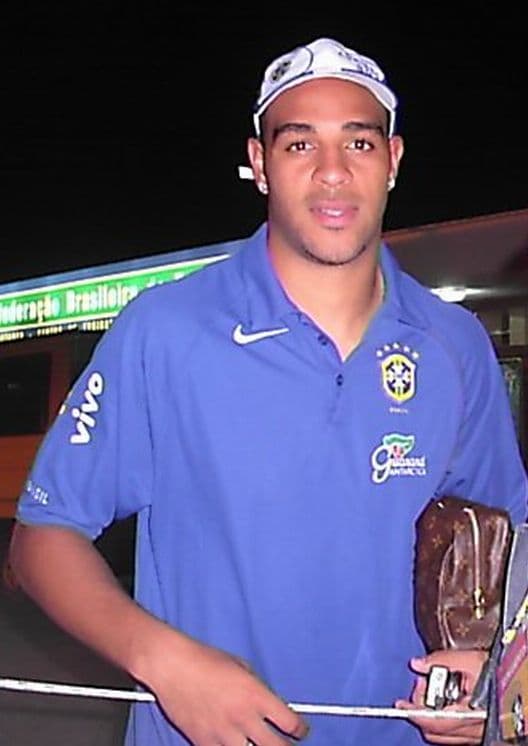
Few examples capture that better than Adriano Leite Ribeiro. In the PES 6 era, he became a cult video-game striker because his pace and power translated into something close to myth. He was not just an effective player on the screen, he was a solution to every tactical problem, the kind of forward who could change how a match felt in a single burst.
That is why current fan retrospectives and rankings still place Adriano among the all-time greats of football gaming. His digital version became a benchmark for what a dominant striker should feel like, and that memory has outlasted many of the weekly lineups and club rosters that surrounded him. In football gaming, that kind of status is not earned only through realism. It comes from repeatable impact, the ability to dominate hundreds of matches, and the emotional imprint of a player who felt unstoppable whenever the controller was in hand.

R. Larcos and the beauty of unlicensed football
If Adriano represents the power fantasy of football gaming, R. Larcos represents its improvisational genius. Early PES games did not always have the Brazil license, so Roberto Carlos appeared under a disguised name, becoming R. Larcos and, in some versions, Roberto Larcos. That workaround could have been a footnote. Instead, it became one of the most iconic examples of PES’s unlicensed-era creativity.
The appeal went beyond the joke of a fake name. Players came to know R. Larcos as part of a broader culture where missing rights were not just a constraint, but a source of identity. The altered names, unfinished kits and odd squad omissions became part of the ritual of playing PES, a shared code that fans recognized immediately. In retrospect, that era gave the series a distinctive cultural texture. It did not merely imitate football; it asked players to complete the picture themselves.
Football Manager and a different kind of celebrity
Football Manager shaped football memory in a different way. Its roots go back to Championship Manager in 1992, and Sports Interactive later released the first Football Manager title after that era ended. Where FIFA and PES often turned players into on-screen icons, Football Manager turned them into data points, hidden gems and tactical obsessions.
That made the series a quieter but longer-lasting influence on football culture. Instead of a single stunning goal or impossible shot, Football Manager created its own kind of fame through reputation, development and long-term planning. Over time, the game taught fans to value scouting reports, potential and squad-building logic, which fed into the modern football conversation about recruitment and player development. It helped build a generation that sees football not only as spectacle, but as an information system.
How modern football games sell nostalgia
The modern version of football gaming is built on an idea the early games only stumbled into: nostalgia can be a feature, not a byproduct. Konami’s eFootball now includes a Dream Team mode where players can choose footballers, whether active stars or football legends. That model reflects a broader shift across the genre, from fake names and limited rights to curated memory and fantasy lineups.
This is where the market story becomes especially interesting. Football games are no longer just measured by annual sales or console presence. They now compete on who can package football history most convincingly, who can let players recreate old obsessions, and who can sell the emotional charge of remembered greatness. The legends economy is not an accident. It is a central product strategy.
Why these debates keep growing
The reason Adriano and R. Larcos still headline these debates is simple: football games did not just mirror real-world fame, they helped manufacture a parallel version of it. FIFA’s 325 million-copy scale made that cultural reach enormous, but the real legacy lies in how individual digital players became shared references across countries, consoles and generations.
As football gaming moves further into licensed legends, Dream Team modes and branded reboots, the old arguments will only sharpen. The best remembered virtual footballers are often not the most decorated real-life names. They are the ones who felt decisive on screen, lived in the imagination of millions of players, and turned a video game into a lasting part of football’s collective memory.
This article was produced by Prism’s automated news system from verified source data, official records, and press releases, then run through automated quality and moderation checks before publishing. The system is built and supervised by the people who set the standards it runs under. Read our full AI policy.
Did this article answer your question?