Aerial image shows devastation after Venezuela's deadly twin earthquakes
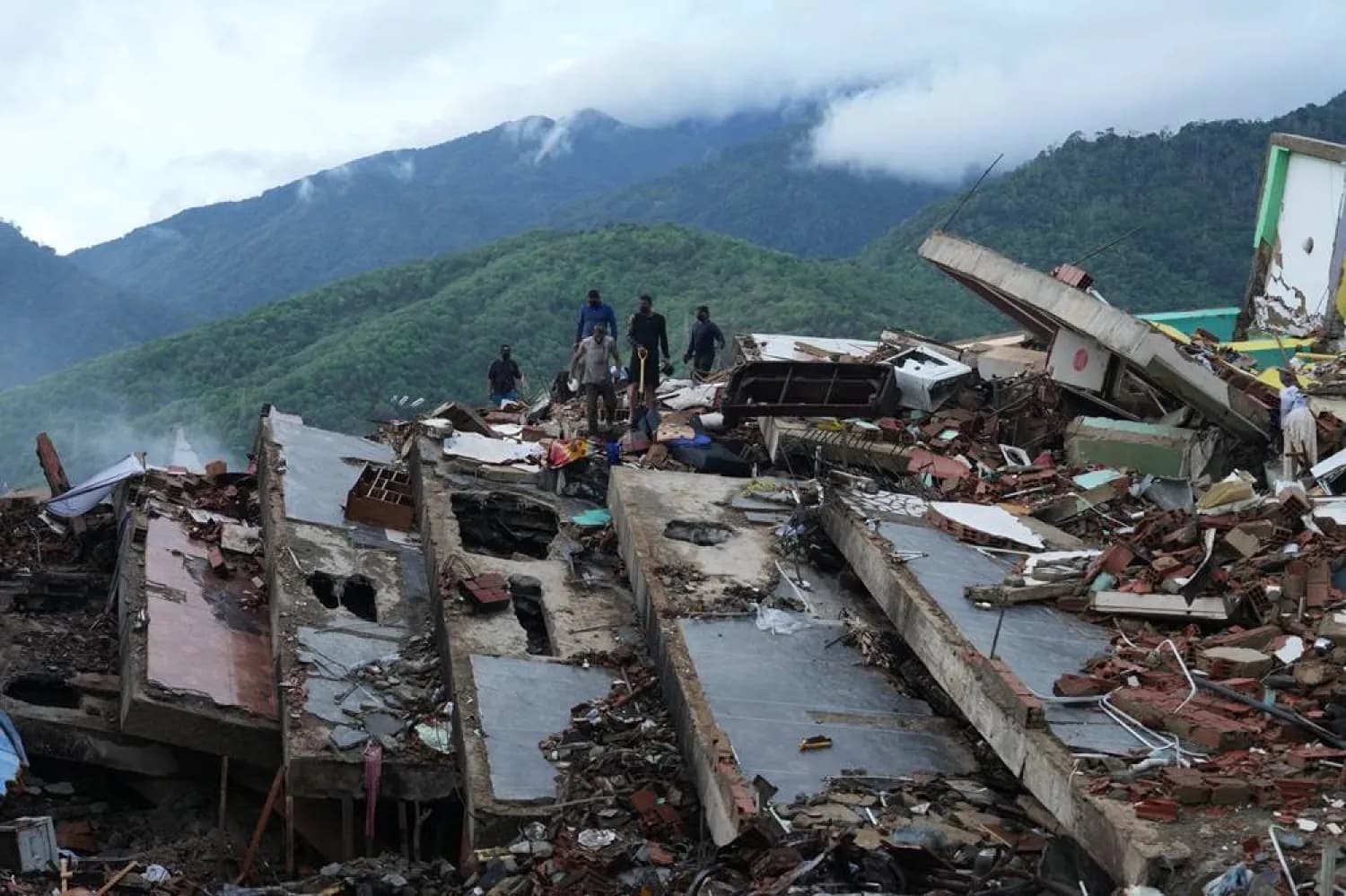
A collapsed block in Catia La Mar sits in a sea of rubble, as twin quakes left more than 1,900 dead and nearly 60,000 buildings damaged or destroyed.

A collapsed multistory block in Catia La Mar shows how violently two earthquakes ripped through Venezuela’s Caribbean coast on June 24, when magnitude 7.5 and 7.2 shocks struck within about a minute of each other just after 6 p.m. local time. The aerial view captures a dense coastal neighborhood in La Guaira state, the hardest-hit part of the country, where whole streets were turned into debris fields and rescue crews have been forced to work around ruined buildings.
The scale of the destruction extends far beyond a single block. Scores of multistory buildings collapsed across northern Venezuela, and by June 30 the confirmed death toll had climbed to more than 1,900. NASA satellite analysis suggested almost 60,000 buildings may have been damaged or destroyed, while Microsoft’s AI for Good Lab estimated that about one-third of Catia La Mar’s nearly 30,000 structures were damaged. The quakes were also felt in parts of Colombia and Brazil and triggered tsunami alerts.
On the ground, rescuers have faced a race against time in neighborhoods where thousands were still missing days after the shaking stopped. Questions over who is in charge of the response have added to the confusion, with equipment stalled and aid moving slowly into some of the worst-hit areas. Residents in La Guaira, including Catia La Mar and nearby Caraballeda, have described shortages and a sense that their communities were being left to fend for themselves.
The collapse has sharpened scrutiny of Venezuela’s building stock. Engineers and urban planners say the damage points to older buildings, substandard construction, soft soils and a lack of retrofitting that left many structures unable to withstand strong shaking. Some housing complexes in northern Venezuela were built quickly during oil booms and may not have followed earthquake-resistant best practices, and many buildings from the 1950s and 1960s were never modernized.
That has renewed pressure for a broad audit of state housing, especially developments tied to Hugo Chávez’s social-revolution era. With La Guaira still sifting through rubble and rescue operations continuing, the collapsed building in Catia La Mar stands as a visible measure of a disaster that has spread from one coastal state into a national test of engineering, emergency response and long-delayed structural repairs.
This article was produced by Prism’s automated news system from verified source data, official records, and press releases, then run through automated quality and moderation checks before publishing. The system is built and supervised by the people who set the standards it runs under. Read our full AI policy.
Did this article answer your question?