Affordable DIY Space-Saving Foldaway Ping-Pong Table for Basements, Clubs
Practical DIY plans now outline how to build an affordable foldaway ping-pong table, helping basements and clubs save space while keeping good playability.
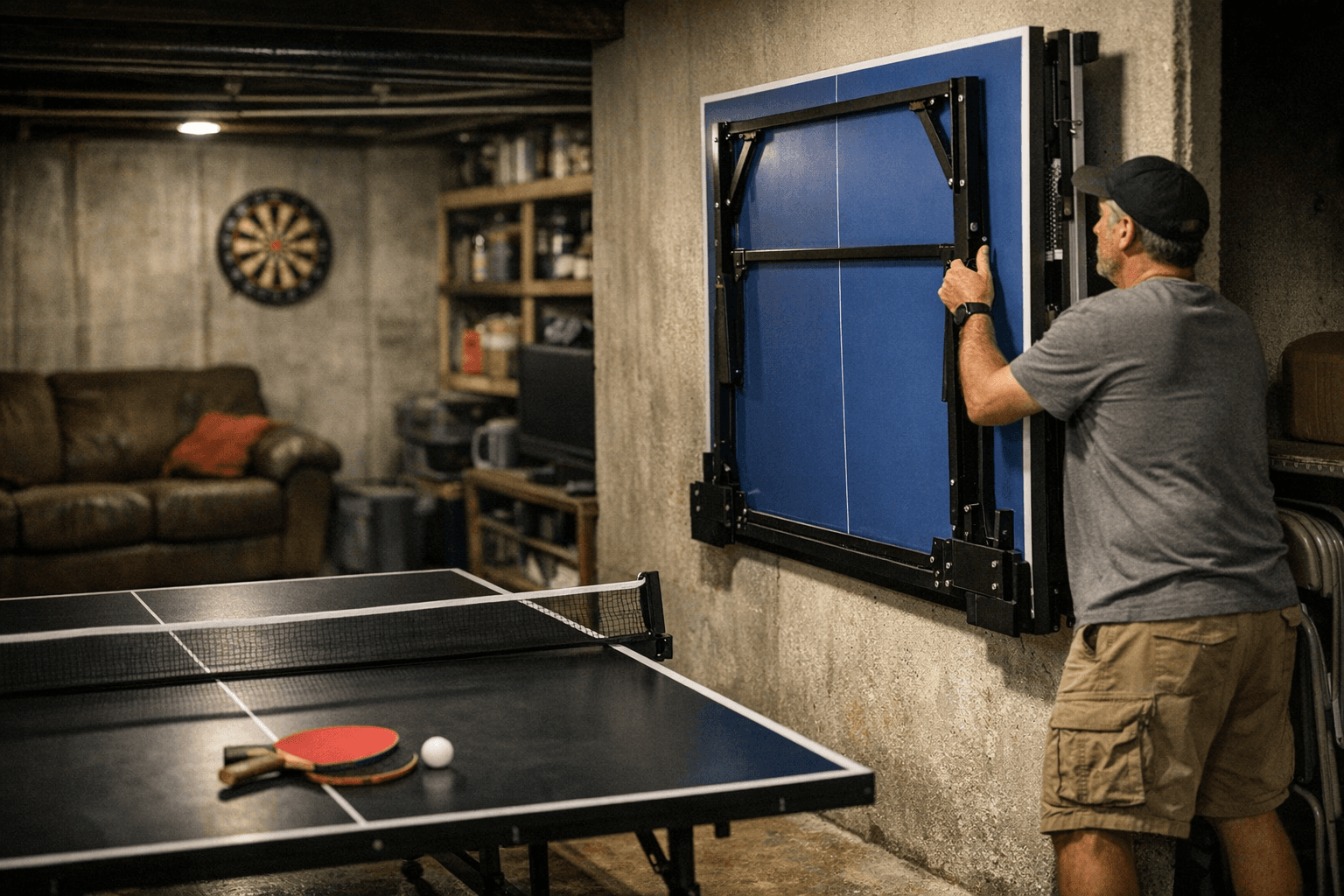
Clubs, community centers, and basement players can now build a robust, space-saving foldaway ping-pong table using common materials and basic shop skills. The design prioritizes consistent bounce, safe folding, and easy storage so multi-use rooms keep their floor real estate without giving up competitive play.
Start with the playing surface: use 18mm (3/4") exterior-grade plywood for rigidity and durability. Cut two matching halves sized to your available room and edge-trim each panel to protect against chipping. Fasten metal corner braces at each corner for impact resistance and to maintain a square playing surface. To get a consistent bounce, apply a matte, non-reflective primer and finish coat formulated for wood; a thin, even paint layer produces a livelier bounce than heavy coats. Paint playing lines in contrast color following recreational dimensions so players get familiar borders and service cues. Seal the surface with a weatherproof finish to resist moisture and frequent wiping.
The foldaway mechanism centers on hinge and leg hardware that lock securely. Join the two tabletop halves with continuous center hinges designed for load-bearing use, and mount folding leg hinges with locking pins that engage when the table is deployed. Position leg brackets so the legs fold neatly under each half when stored; locking pins prevent accidental collapse during play. Add casters with brakes to one or both halves for mobility. Braked casters let you roll the assembled table into position and lock it firmly during matches or practices.
Net attachment should be removable and simple. Use clamp-style nets that mount to the side edge trim for quick set up and removal, or install bolt-on T-brackets recessed into the table edge if you prefer a fixed mounting point that still detaches. Verify net height and tension once the table is deployed to preserve consistent service and volley conditions.
Safety and playability depend on routine checks. Level-check the table surface after installation and use shims or adjustable leg plates to correct any unevenness. Fit edge protection to prevent chipping and finger pinches when folding. Inspect locking pins, hinges, and caster brakes regularly and tighten fasteners as part of simple maintenance. For transport and storage, fold the halves upright, engage leg locks and caster brakes, and lean the unit on a padded wall bracket or in a storage bay to avoid accidental tipping.
For clubs and players balancing space and play quality, this build offers a practical, affordable alternative to expensive commercial units. Measure your room, gather the listed materials, and run a single prototype before full construction to dial in hinge placement and finish thickness. With routine maintenance, a foldaway plywood table will serve countless rallies and club nights while freeing floor space for other community activities.
Know something we missed? Have a correction or additional information?
Submit a Tip