Afghan cousins' photos capture life and longing under Taliban rule
Two Afghan cousins turn black-and-white images into witness, tracing daily life and longing under Taliban rule while protecting themselves through anonymity.
Seeing life through concealment
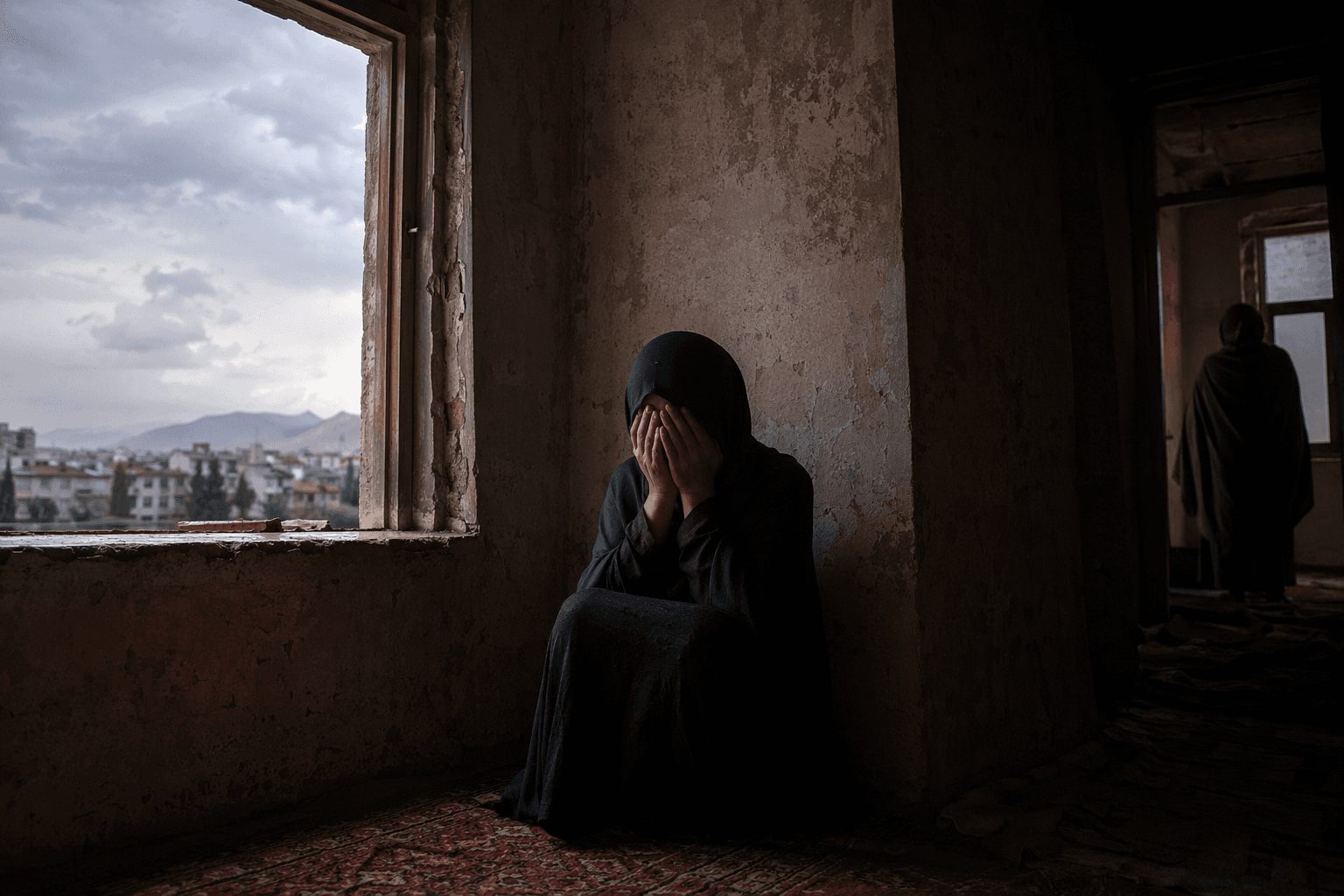
At Photoville Festival in Brooklyn Bridge Park, the photographs of Mahnaz Ebrahimi and Somayeh Ebrahimi arrive as more than an art display. They read like a quiet archive of survival, made by two Afghan cousins who are also Hazara women, and who learned to turn scarcity, fear, and distance into a visual language for daily life under Taliban rule. The exhibition, titled *Autofiction And Realism In Afghanistan*, is on view across Brooklyn and the other four New York City boroughs through May 30, 2026.
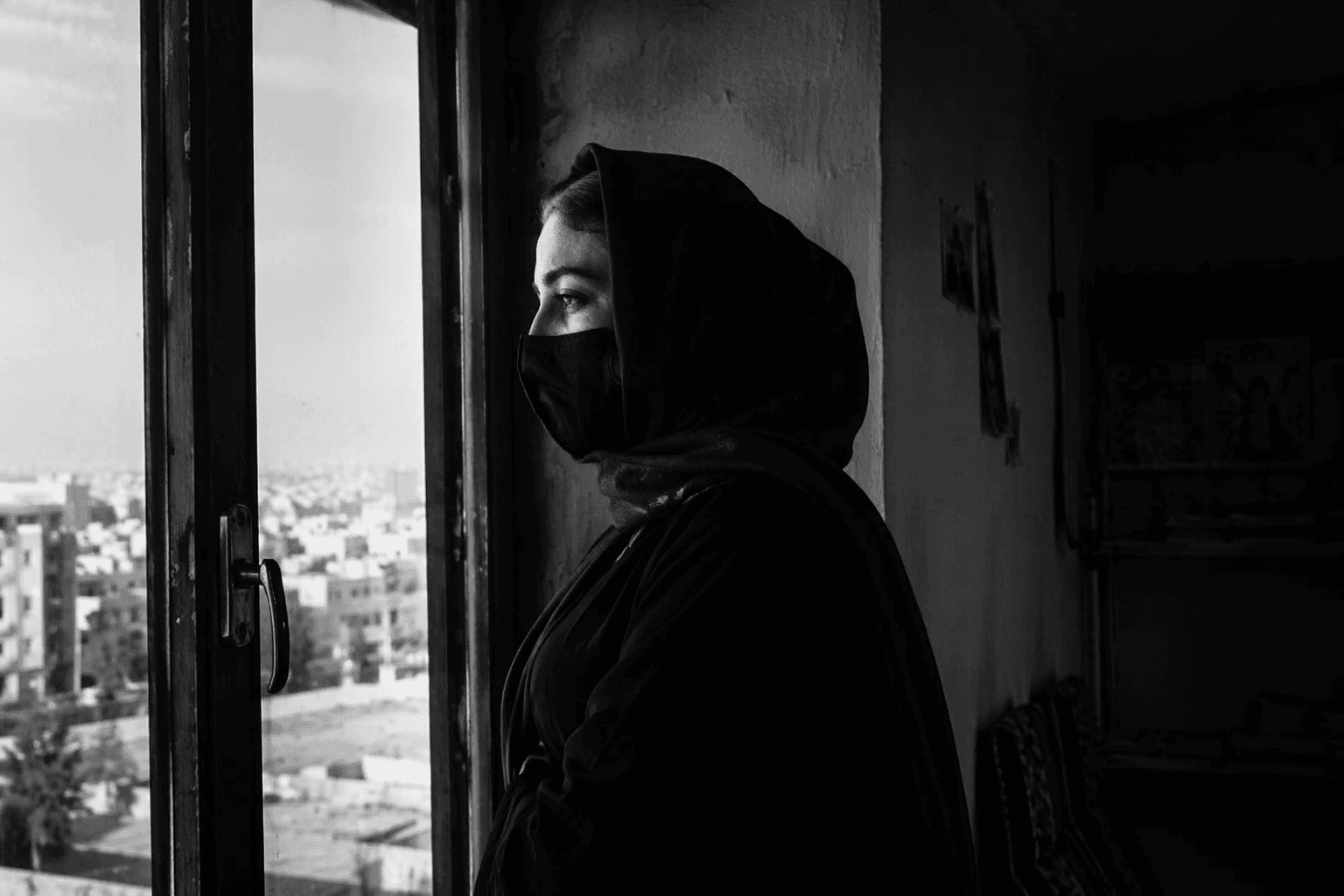
The work matters because it is doing two things at once. It records what life looks like for the artists now, and it imagines what life might still hold in the future. That tension, between realism and longing, is the emotional center of the project and the reason the photographs land so forcefully in a city far from the Afghan mountain village where the cousins now live.
From Kabul to a remote mountain village
Mahnaz Ebrahimi, born in 2000, and Somayeh Ebrahimi, born in 2001, were born in Qom, Iran, before moving back to Afghanistan with their family. Before the Taliban returned to power in August 2021, the cousins worked as carpet weavers in Kabul, a craft that ties labor, patience, and pattern into a single domestic economy. After the takeover, they fled the capital for a remote mountain village in Afghanistan, where they now work in agriculture with their family.
That trajectory, from weaving in the city to farming in isolation, helps explain the emotional register of the photographs. Their images are not detached documentary studies. They come from women whose lives were remade by displacement, who now make art from a place of remoteness and constraint. Photoville describes the pair as bearing a triple burden: they are women, artists, and Hazara in a system where repression is the law.
How the photographs were made
According to Photoville, the cousins began making photographs in 2023 with virtually no technical resources. The pictures are mostly black and white, a choice that strips away distraction and gives the work an austere clarity. It also lends the images a timeless severity, as if they were pulled from both immediate life and the long memory of what women are forced to endure.
The project’s structure is as important as its subject matter. The scenes are intentionally non-geolocated, and the pair uses a form of pseudo-anonymity so that what is shown can stand for the experience of many Afghan women, not only their own. That concealment is not a gimmick. In a place where visibility can invite punishment, anonymity becomes a practical tool, and symbolism becomes a form of self-protection.
The title itself, *Autofiction And Realism In Afghanistan*, captures that balance. These photographs are grounded in the cousins’ actual circumstances, yet they also carry a literary quality, a sense that private longing and public reality can exist in the same frame. The effect is especially powerful because the women are not only documenting hardship. They are also insisting on interior life, on desire, on the stubborn fact of dreaming.
From Instagram to Madrid to Brooklyn
The work first reached Madrid-based curator Edith Arance in 2023. She edited an initial selection in the summer of 2024, and the series was first shown in November 2024 at Galería Sura in Madrid, Spain. Galería Sura opened that same month and focuses on emerging photographers from Southwest Asia and Africa, giving the cousins’ work a platform built for artists whose stories are often pushed to the margins.
Arance, who was born in Madrid in 1990 and studied art history at the Complutense University of Madrid, recognized the force of the images not just as art but as political testimony. Their Instagram-based work stood out to her for the way bleak surroundings were paired with poetic and political meaning. That combination is what makes the photographs travel so well from one exhibition space to another. They are rooted in a specific Afghan reality, but they speak in symbols that can be read far beyond it.
Brooklyn is the latest stage for that movement. Photoville Festival, which runs from May 16 to 30, places the work inside a large public platform rather than a sealed gallery, allowing viewers across Brooklyn Bridge Park and beyond to confront the images as living evidence of what repression does to ordinary life.
A wider crackdown on Afghan women
The photographs arrive amid a tightening campaign against women and girls in Afghanistan. Rights advocates say the Taliban has issued more than 150 edicts affecting women’s lives. In August 2024, the group codified a morality law that required women to cover their faces in public and restricted singing, reading aloud, and speaking audibly outside the home. Human Rights Watch said in April 2026 that nearly five years after the 2021 takeover, little meaningful freedom of expression survives inside Afghanistan, especially for women.
That pressure extends beyond the country’s borders, according to Human Rights Watch, which says the Taliban has even tried to project its rules outward. Against that backdrop, the Ebrahimi cousins’ work becomes a record of what survives when public speech is narrowed and visibility itself is policed. The images do not simply show women under restriction. They show women making a record anyway.
Why the anonymity matters
What is lost when women can only speak to the world through concealment is not just names or locations. It is the ordinary ease of being seen as a full person in a public space. These photographs answer that loss by turning anonymity into authorship. They refuse the false choice between silence and exposure.
That is why the exhibition feels so urgent in Brooklyn. The cousins’ images are beautiful, but their beauty is inseparable from risk, from exile, and from the labor of making a life visible without making it vulnerable. In that sense, *Autofiction And Realism In Afghanistan* is not only an art project. It is a visual record of endurance, carried from a remote Afghan village to a public park in New York, where two women who cannot safely speak in their own country still manage to be heard.
Know something we missed? Have a correction or additional information?
Submit a Tip