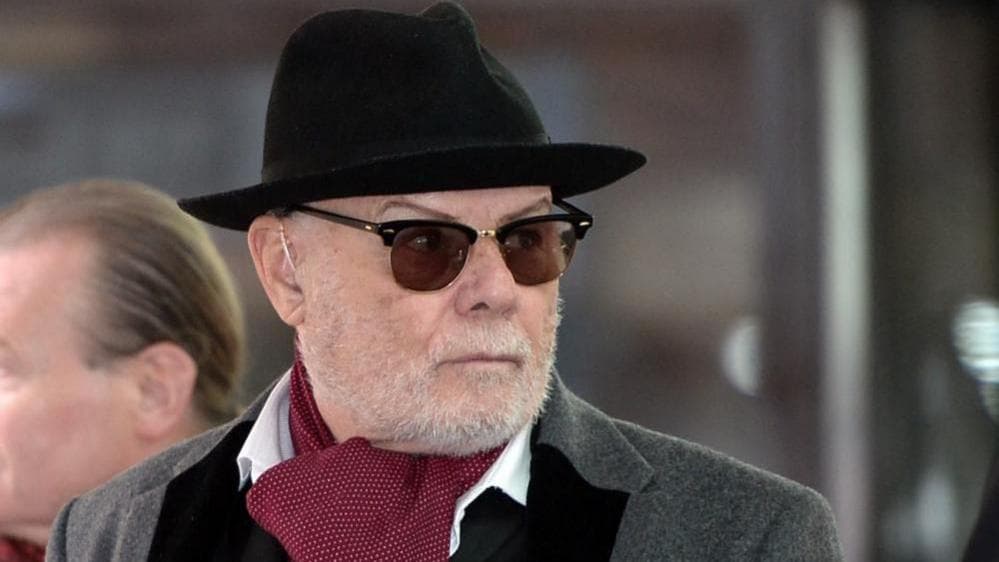
Afrika Bambaataa, Founding Father of Hip-Hop Culture, Dies at 68
The man who turned a Bronx street gang into hip-hop's founding organization died with a 2025 default judgment against him and at least 12 sexual abuse accusations shadowing his name.
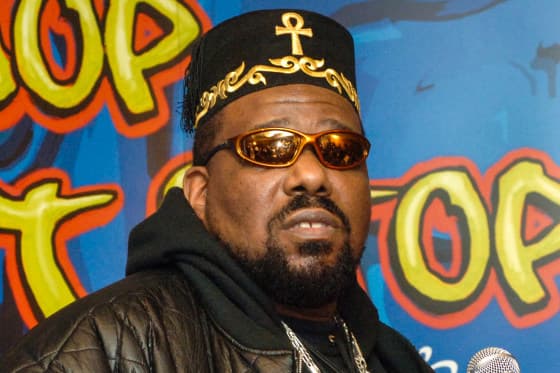
Afrika Bambaataa, born Lance Taylor in the South Bronx's Bronx River Houses and later recognized as one of hip-hop's three founding fathers alongside DJ Kool Herc and Grandmaster Flash, died April 9, 2026, from complications of prostate cancer in Pennsylvania. He was 68. His passing arrived less than a year after a New York State Supreme Court judge entered a default judgment against him in a civil sex abuse lawsuit he never answered, leaving a movement he helped build now forced to reckon with who controls its founding narrative.
Taylor grew up amid the particular devastation of the South Bronx in the 1960s and early 1970s, where landlords were burning apartment buildings for insurance money rather than investing in repairs, and where low-income Black and Puerto Rican families had almost no economic escape. As a teenager he joined the Black Spades, one of the Bronx's most feared street gangs. He later redirected that energy, co-founding the Zulu Nation in 1973 and formally establishing it as the Universal Zulu Nation on November 12, 1977, the first formal hip-hop organization in history. The organization's founding philosophy channeled the creativity of outcast youth into a movement built on peace, unity, love, and having fun.
His musical reach was equally transformational. "Planet Rock," released in 1982 under the name Afrika Bambaataa and the Soulsonic Force, fused elements of Kraftwerk's 1977 tracks "Trans-Europe Express" and "Numbers" with an electronic hip-hop beat driven by the Roland TR-808 drum machine, produced by Arthur Baker and keyboardist John Robie. The record went gold and is widely credited with creating the first fusion of rap and electronic music, spawning an entire school of electro-boogie that reverberated through decades of dance music. He followed with "Looking for the Perfect Beat," "Renegades of Funk," a 1984 collaboration with James Brown titled "Unity," and a pairing that same year with Sex Pistols frontman John Lydon on "World Destruction." In 1985, he appeared on the anti-apartheid anthem "Sun City" alongside Bruce Springsteen and Run-D.M.C. Three years later he joined the Stop the Violence Movement on the single "Self Destruction," which went gold and raised $400,000 for the National Urban League.
In 1981, graffiti artist Fab Five Freddy brought Bambaataa to perform at the Mudd Club in downtown Manhattan before a predominantly white audience, a cross-pollination that helped hip-hop breach its South Bronx borders. By 1982 he was leading the culture's first international tour, carrying dancers, artists, and DJs outside the United States. French rapper MC Solaar was among the international artists he influenced. Tommy Boy Records, his former label, said in a statement following his death: "With his passing, we reflect on his contributions to the genre and broader culture, which continue to this day."
Those contributions became inseparable from serious criminal allegations beginning in April 2016, when Bronx political activist and former music industry executive Ronald Savage publicly accused Bambaataa of molesting him in 1980, when Savage was 15. Three more men, including Hassan Campbell, followed with similar accounts. Bambaataa denied all of it, calling the accusations "baseless and a cowardly attempt to tarnish my reputation and legacy in hip-hop," and told HOT97's Lisa Evers: "I never abused nobody." The Universal Zulu Nation disassociated itself from him in May 2016, and he formally resigned as its head on May 6 of that year. The organization issued a public apology in June 2016, acknowledging that some members "chose not to disclose" the abuse. A Vice investigation published in October 2016 documented accounts from alleged victims and witnesses. He was never criminally charged. Savage later recanted portions of his original accusations, and the two reportedly reconciled.
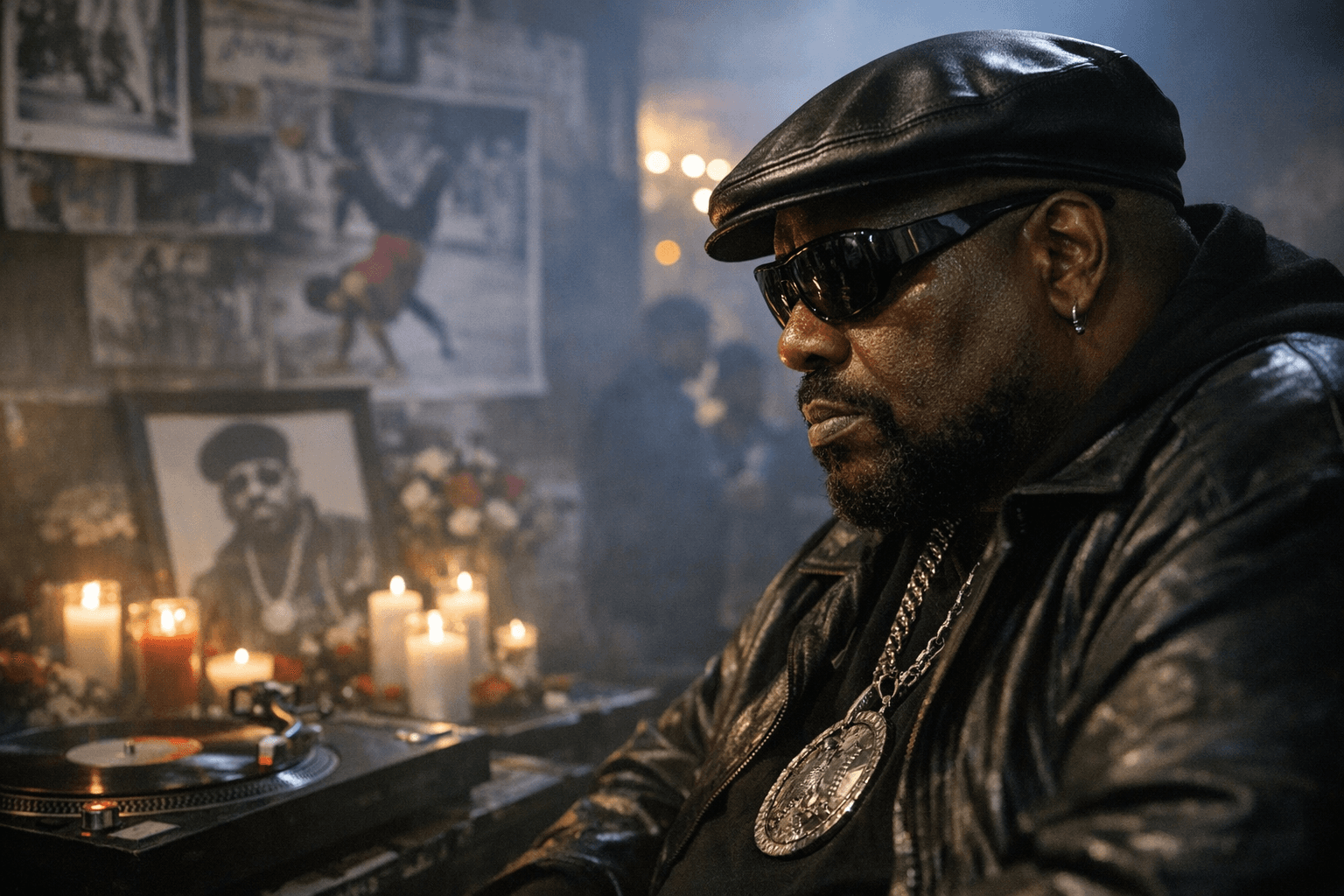
The civil record proved harder to escape. In 2021, a John Doe filed suit in New York State Supreme Court alleging that Bambaataa repeatedly sexually abused and sex trafficked him between 1991 and 1995, beginning when the plaintiff was 12 years old. Bambaataa never responded. In May 2025, Judge Alexander M. Tisch granted a default judgment "without opposition" in the plaintiff's favor. In total, at least 12 men publicly accused Bambaataa of sexual misconduct. In November 2024, French hip-hop pioneer Solo of the group Assassin alleged in his autobiography that he had also been victimized by Bambaataa and claimed to have witnessed Bambaataa assaulting a minor. As recently as July 2024, journalist and activist Leila Wills, co-founder of Hip-Hop Stands With Survivors, filed an FCC complaint after Bambaataa appeared for a DJ set on HOT97.
Tributes followed the news of his death alongside unresolved grief. His manager, Naf, said: "He was more than a man. He was a movement. A father to a culture." Mick Benzo, a friend and Zulu Nation member, wrote that he had spoken with Bambaataa two days before his death and found him in good spirits. The Hip-Hop Alliance, headed by early rapper Kurtis Blow, acknowledged that "his legacy is complex and has been the subject of serious conversations within our community."
Rapper Fat Joe's 2023 description of Bambaataa as one of "the three founding fathers of the whole culture" still stands as the standard historical shorthand. But the question of how institutions, archives, and artists memorialize him now falls to a community actively navigating the line between acknowledging invention and protecting survivors. Who controls the story of hip-hop's origins, and on whose terms it gets told, is no longer an abstract debate. Bambaataa's death, and the legal record he left behind, have made it urgent.
This article was produced by Prism’s automated news system from verified source data, official records, and press releases, then run through automated quality and moderation checks before publishing. The system is built and supervised by the people who set the standards it runs under. Read our full AI policy.
Did this article answer your question?