AI-generated copy of Madison Beer album appears on Spotify under fake name
Fans discovered on March 3 that a near-perfect AI duplicate of Madison Beer’s Locket appeared on Spotify under “Sarah Yamaguchi,” raising copyright and platform-accountability questions.
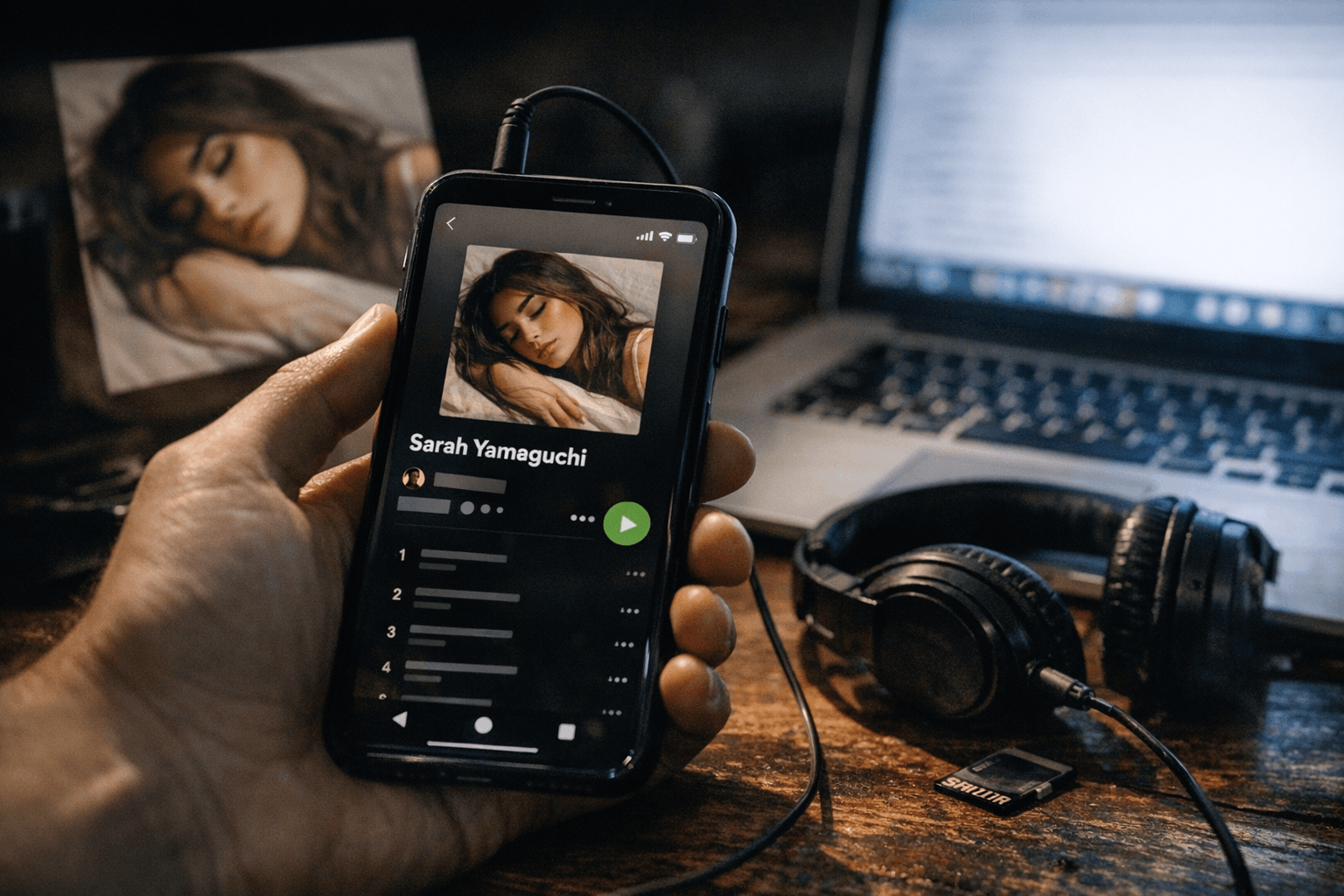
On March 3, 2026 fans and music watchers discovered an apparent AI-generated duplicate of Madison Beer’s album Locket on Spotify under the pseudonymous artist name “Sarah Yamaguchi,” a finding that immediately raised legal and commercial alarms for the artist, her label and listeners ahead of a planned tour.
The upload reportedly mirrors the original album’s full tracklisting and sequencing. Locket, released Jan. 16 through Epic Records and Sing It Loud, is Beer’s third studio album and her first since 2023’s Silence Between Songs. The record entered the Billboard 200 at No. 10, becoming Beer’s first top-ten album in her home country, and was set to be supported by a North America and Europe tour in the coming weeks. The proximity of the discovery to tour promotion and streaming-based revenue cycles sharpens the financial stakes for Beer and her team.
Industry observers of the incident pointed to technical signs that the files were not merely covers or remixes but recreations produced with generative tools. “An apparent AI-generated duplicate of Locket by Madison Beer has surfaced on Spotify under the name ‘Sarah Yamaguchi,’ raising serious concerns about copyright infringement and the growing misuse of artificial intelligence in music distribution,” InMusic reported. “Early analysis suggests the vocals and production were recreated using generative tools designed to mimic tone and arrangement.” The same outlet cautioned that replication of a commercially released album “without authorization, marks a troubling escalation.”
The appearance of the duplicate exposes a practical vulnerability in streaming distribution. Platforms routinely rely on rights holders and distributors to flag unauthorized material before it is taken down, a process that can leave artists exposed to weeks or months of misattributed streams and potential revenue diversion. If the upload is confirmed to be infringing, it could violate both copyright law and Spotify’s own distribution policies; however, no formal takedown notice or legal filing has been publicly confirmed by Madison Beer, her labels or Spotify at the time of reporting.
Social media amplified the discovery within hours. Fans circulated a viral image and short posts, including a fragmented Twitter post reproduced by one outlet: “GUYS ???????? 😭😭 pic.twitter.com/sIYxqtpatB.” Coverage described the reaction as one of alarm and outrage, with calls for swift platform action. As SunFM put it, “From the music to the lyrics and even the song titles, the entire project appears to have been replicated and processed through AI - sparking serious conversations about ownership and protection in the digital age.” A Facebook post later claimed the uploads had been removed after a complaint, but that assertion is uncorroborated by other sources and remains unverified.
Beyond the immediate copyright question, the incident underscores broader industry pressures: how streaming services authenticate uploads, how labels and distributors prove ownership, and how artists protect vocal identity and creative work as generative models improve. For consumers, the episode threatens playlist integrity and trust in catalog metadata; for artists and session professionals, it raises the prospect of unauthorized replicas siphoning streams and confusing audiences during critical promotional windows.
As investigators and platform teams examine timestamps, ISRCs and distributor metadata, the central unresolved facts remain whether the tracks were definitively synthesized, who uploaded them and whether Spotify or Madison Beer’s camp has taken formal action. The episode is likely to accelerate calls for clearer platform verification rules and faster takedown mechanisms to protect creators in an era when entire albums can be cloned with increasing fidelity.
Know something we missed? Have a correction or additional information?
Submit a Tip