AI Gutted Her Career, Then a Fake Job Offer Almost Finished the Job
Katya's story captures a growing crisis: workers displaced by AI are becoming prime targets for sophisticated employment scams preying on desperation.
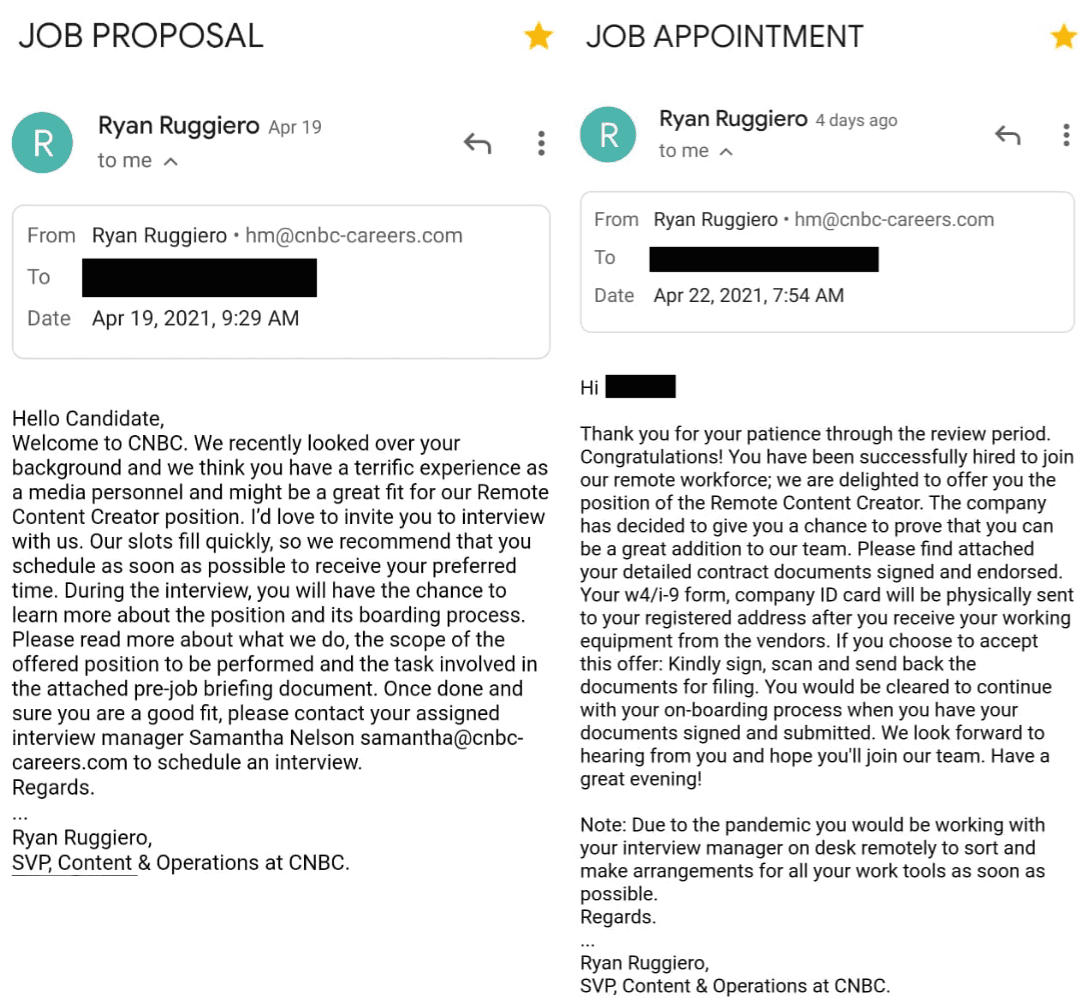
The LinkedIn notification arrived like dozens before it, another suspiciously perfect job opportunity promising flexible hours and competitive pay. Katya almost scrolled past it. Almost.
Her hesitation lasted only a moment. After years of financial instability, she was desperate enough to click.
Katya's trajectory mirrors that of a generation of knowledge workers now caught in a brutal convergence of economic forces. She graduated with a journalism degree full of ambition, only to find the industry contracting faster than she could establish herself. Freelance work paid poorly and unpredictably. Graduate school offered temporary shelter and the promise of reinvention. Content marketing seemed like the pragmatic pivot, a field that valued writing skills while offering the stability journalism never could.
Then AI arrived at scale.
The tools that flooded the market between 2023 and 2025 did not merely assist content marketers; they replaced entire workflow layers that junior and mid-level professionals had occupied. Companies that once employed teams of writers found they could generate acceptable copy at a fraction of the cost. Katya found herself competing not just against other humans, but against systems that never slept, never negotiated rates, and never needed health insurance.
By early 2026, she was among millions of white-collar workers in a labor market that had shifted faster than any retraining program could accommodate. The unemployment figures captured some of this displacement, but not its texture: the quiet erosion of professional identity, the shrinking savings accounts, the recalibration of what "stable employment" even means anymore.

That vulnerability is precisely what scammers have learned to exploit.
Fraudulent job postings targeting AI-displaced workers have surged across professional networking platforms, with LinkedIn remaining the preferred hunting ground. The operations are often sophisticated, complete with fabricated company profiles, stolen corporate branding, and multi-stage interview processes designed to extract personal information or upfront payments before the illusion collapses. Victims frequently report losing thousands of dollars or having their identities compromised, damage that compounds an already precarious financial situation.
The scams work because they are engineered to meet desperate people exactly where they are. They speak the language of the contemporary job market, referencing remote flexibility, AI collaboration skills, and competitive compensation in industries that still appear to be hiring. The emotional math is simple: when legitimate opportunities are scarce, the threshold for skepticism drops.
Katya's story does not end with a clean resolution. She caught the warning signs before meaningful harm was done, but the experience left her shaken in ways that extended beyond the immediate threat. The fake offer had felt real enough to hope for, and that hope itself was the wound.
Her situation reflects a structural failure that neither platform moderation nor individual vigilance can fully address. The labor market disruption driving workers toward risky clicks is accelerating, and the fraudulent ecosystems targeting them are growing more sophisticated in parallel. Until meaningful policy responses and retraining infrastructure catch up to the pace of AI-driven displacement, millions of workers will remain in the crosshairs, desperate enough to click.
This article was produced by Prism’s automated news system from verified source data, official records, and press releases, then run through automated quality and moderation checks before publishing. The system is built and supervised by the people who set the standards it runs under. Read our full AI policy.
Did this article answer your question?