AI predicts every first-round pick in 2026 NBA mock draft
AI locks the top three, then the first round turns messy fast, exposing how much uncertainty still sits beyond the opening names.

1. AJ Dybantsa to the Washington Wizards.
The AI’s cleanest call is the rare one that looks closest to real scouting consensus: Washington won the lottery, Dybantsa goes first, and the draft lands June 23-24 at Barclays Center in Brooklyn with ESPN platforms carrying it exclusively for the 24th straight year. That kind of certainty is the exception, not the rule, in this board.
2. Cameron Boozer at No. 2.
Boozer gives the top of the board the same star power that has driven the 2026 discussion for months. The model’s willingness to keep him near the very top shows where the consensus really is strongest, before the noise starts swallowing the rest of the round.
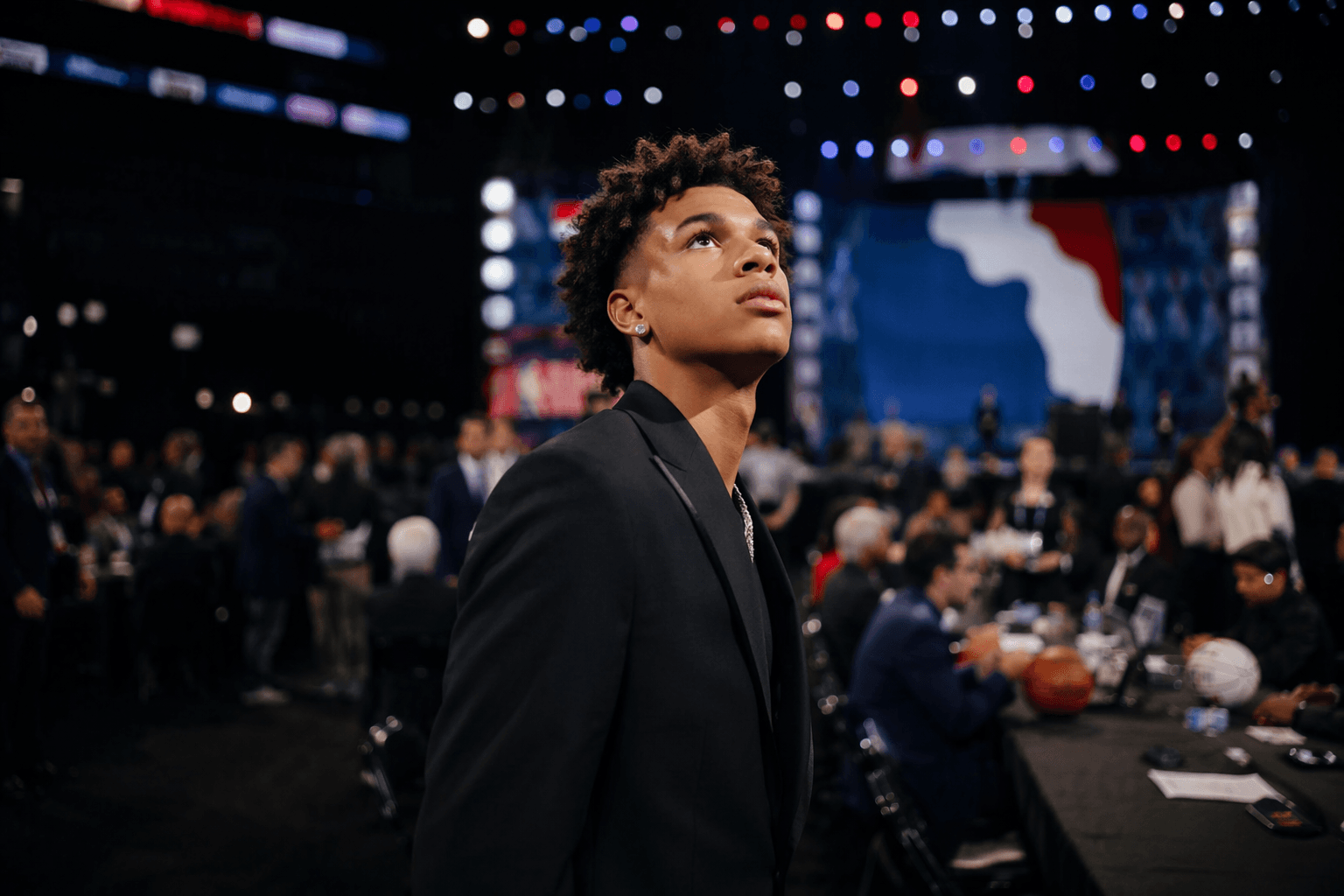
3. Darryn Peterson at No. 3.
Peterson remains in the same elite tier as Dybantsa and Boozer, which is exactly why the first three picks are the least controversial part of the exercise. Even the broader draft conversation has centered on whether he is the safest guard in the class or simply one of three equally plausible franchise bets.
4. Caleb Wilson at No. 4.
This is where the mock starts to show its seams. The NBA’s June 13 withdrawal deadline removed 38 early-entry names, and the May 10-17 combine in Chicago added measurements and testing, but the AI still only begins to wobble once the top trio is gone.
5. Keaton Wagler at No. 5.
CBS Sports says the first true domino among the class’s four premier lead guards belongs to the Clippers at No. 5, and Wagler is the first guard to hit that middle-lottery pressure point. That is the kind of slot where AI can sound authoritative while really echoing the same guard-heavy chatter everybody else is already repeating.
6. Mikel Brown Jr. at No. 6.
Brown extends the guard run and reinforces the idea that the middle of this draft is built around lead-guard value. CBS Sports notes that five of the top eight prospects on its Big Board project as lead guards, which is exactly the kind of positional cluster that can make an automated mock look firmer than it really is.
7. Darius Acuff Jr. at No. 7.
Acuff is one of the four lead guards CBS Sports has framed as the class’s key comparison group, and his placement here keeps that debate alive. The board is no longer about who is elite at the top, but about how teams sort similar guards against one another.
8. Brayden Burries at No. 8.
Burries keeps the guard-heavy stretch going and shows how quickly the first round becomes a backcourt sorting exercise. That is useful if you want a quick snapshot of the class, but it can mislead fans into thinking there is more agreement here than there actually is.
9. Kingston Flemings at No. 9.
Flemings is the last of the big guard run in this segment, and his slot makes the draft’s positional traffic even more obvious. CBS Sports has treated him as one of the four premier lead guards, so the exact order here feels more fluid than the model lets on.
10. Aday Mara at No. 10.
Mara is the first center to break up the perimeter rush, and that matters because it shows the AI eventually has to leave the guard cluster behind. Once the top names are gone, the mock begins balancing upside, size and fit instead of just replaying the loudest consensus.
11. Karim Lopez at No. 11.
Lopez gives the first round an international forward profile and broadens the board beyond the American one-and-done core. That kind of pick is where AI becomes more of a sorting tool than a scouting verdict.
12. Nate Ament at No. 12.
Ament keeps the forward depth moving and shows why the top 10 is not the only place where talent exists. In a class this top-heavy, the model can make these selections look settled even when they are really just informed placeholders.
13. Hannes Steinbach at No. 13.
Steinbach adds another forward to a stretch that is increasingly about role and projection rather than one obvious hierarchy. That is where fans should be most cautious about AI mock drafts, because the board begins to reflect the model’s confidence more than the league’s.
14. Morez Johnson Jr. at No. 14.
Johnson keeps the first round stocked with length and positional versatility, the traits automated boards tend to like because they travel well across team contexts. It is also a reminder that the draft does not flatten after the lottery, even if a machine-generated list can make it seem that way.
15. Cameron Carr at No. 15.
Carr brings another guard into the middle of the round and underlines how deep the perimeter talent runs. The mock’s structure suggests a clean hierarchy, but the reality is a dense field of similar player types and changing team priorities.
16. Yaxel Lendeborg at No. 16.
Lendeborg gives the model another Michigan forward, which keeps the board anchored in size and versatility. This is the stage where workout data and team interviews matter more than any single public ranking.
17. Chris Cenac Jr. at No. 17.
Cenac’s forward-center profile fits the sort of multi-role value teams keep chasing in the back half of the first round. AI can capture that broad appeal, but it still cannot tell readers which front office weights ceiling, floor or fit most heavily.
18. Labaron Philon Jr. at No. 18.
Philon returns the mock to another guard and shows that the backcourt pipeline does not really stop once the lottery ends. The problem for fans is that a crowded guard class can make order look decisive when the underlying differences are still narrow.
19. Bennett Stirtz at No. 19.
Stirtz is part of the long tail of lead-guard options that keeps the first round from being a one-note exercise. That depth is real, but AI can overstate how fixed the pecking order is once the top handful have gone.
20. Ebuka Okorie at No. 20.
Okorie adds more ball-handling depth and shows how the model keeps leaning into perimeter creation. When the same player archetype appears again and again, the mock starts to resemble a consensus collage more than a unique forecast.
21. Dailyn Swain at No. 21.
Swain’s guard-forward blend is the kind of hybrid profile AI often smooths into a clean ranking, even when teams may see him as something different. That is one reason automated mocks can mislead, especially once the round leaves the obvious names behind.
22. Joshua Jefferson at No. 22.
Jefferson keeps the forward group alive in the middle-late first round and reminds readers that the class still has depth well beyond the headline names. The board here is less about certainty than about which traits teams trust most.
23. Jayden Quaintance at No. 23.
Quaintance brings upside back into focus and shows why a first round can still feel unsettled even after 20 names are gone. AI is strongest when it mirrors the big-picture shape of the class, not when it pretends late-first-round order is already fixed.
24. Allen Graves at No. 24.
Graves is another forward bet in a round that keeps rewarding size and flexibility. The farther this mock goes, the more it becomes a map of possibilities rather than a prediction with a hard edge.
25. Koa Peat at No. 25.
Peat extends the forward depth and keeps the first round stocked with players whose value depends on fit and development. That is the point where fans should read an AI mock as a best guess, not as a settled draft board.
26. Christian Anderson at No. 26.
Anderson returns the board to the guard pipeline and shows just how many lead-ball handlers remain in play. The draft’s middle and late first round are where AI can sound most polished while still being mostly derivative.
27. Isaiah Evans at No. 27.
Evans adds another Duke-linked wing-guard profile to the list and reinforces the draft’s versatility theme. That kind of player is easy for a model to slot, but harder for any model to value correctly against team-specific needs.
28. Meleek Thomas at No. 28.
Thomas keeps the guard-heavy pattern alive and makes the back end of Round 1 feel like a thinning but still interesting talent pool. The prediction is useful as a shape of the class, yet it should not be mistaken for consensus at this stage.
29. Henri Veesaar at No. 29.
Veesaar brings a center back into the picture and gives the round a size finish instead of a perimeter one. That helps the mock feel balanced, but balance is not the same thing as certainty.
30. Tarris Reed Jr. at No. 30.
Reed closes the first round with another big and leaves the clearest caution of all: the deeper the AI goes into the board, the more it starts to reflect the same public chatter that human analysts are already debating. The top three are the strongest part of the prediction; everything after that is a reminder that polished ranking can look more decisive than the draft really is.
This article was produced by Prism’s automated news system from verified source data, official records, and press releases, then run through automated quality and moderation checks before publishing. The system is built and supervised by the people who set the standards it runs under. Read our full AI policy.
Did this article answer your question?