AI slows hiring, reshapes U.S. labor market without broad layoffs
AI is not flooding payrolls with layoffs; it is slowing hiring, especially for entry-level white-collar jobs, before unemployment spikes show up.
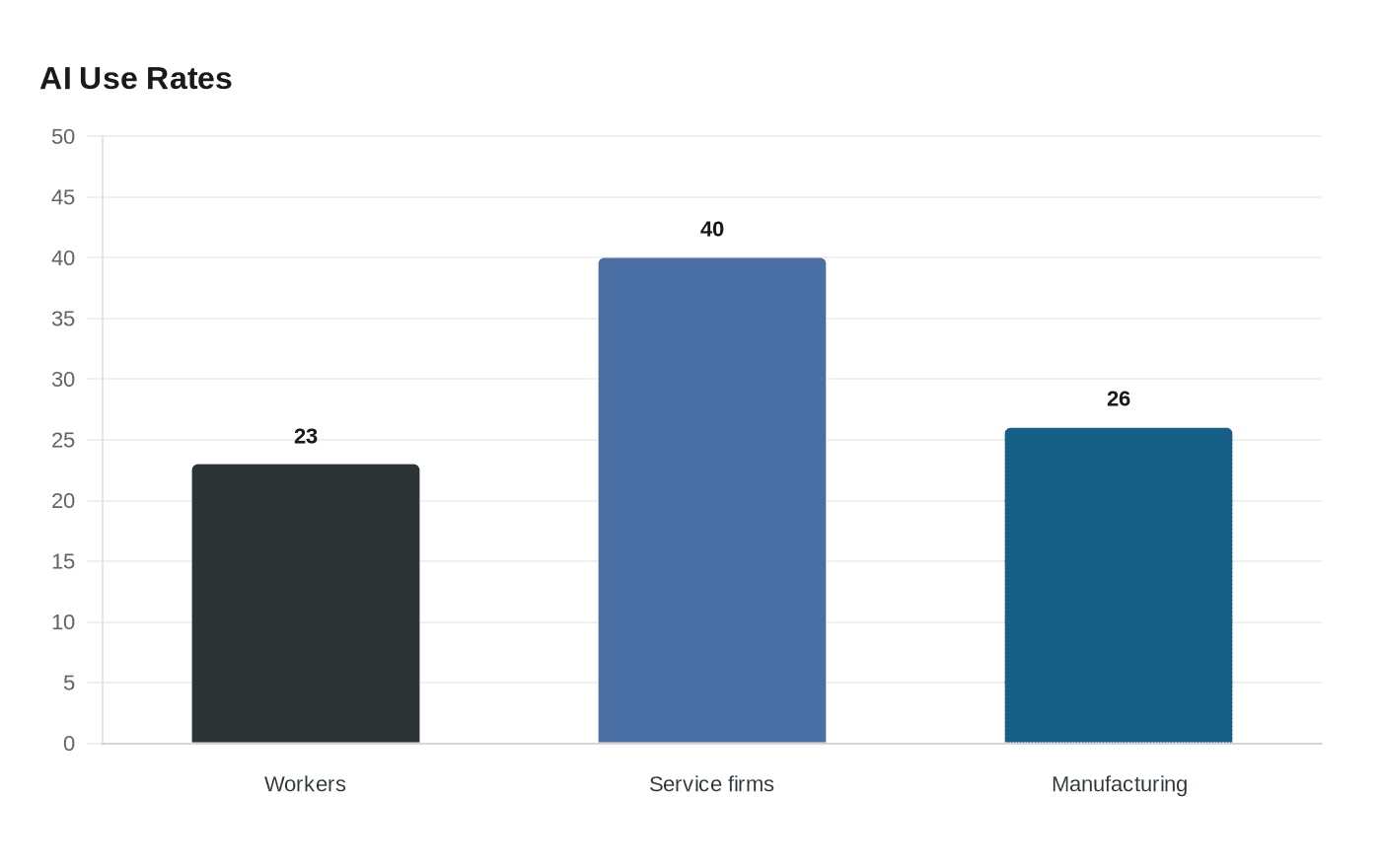
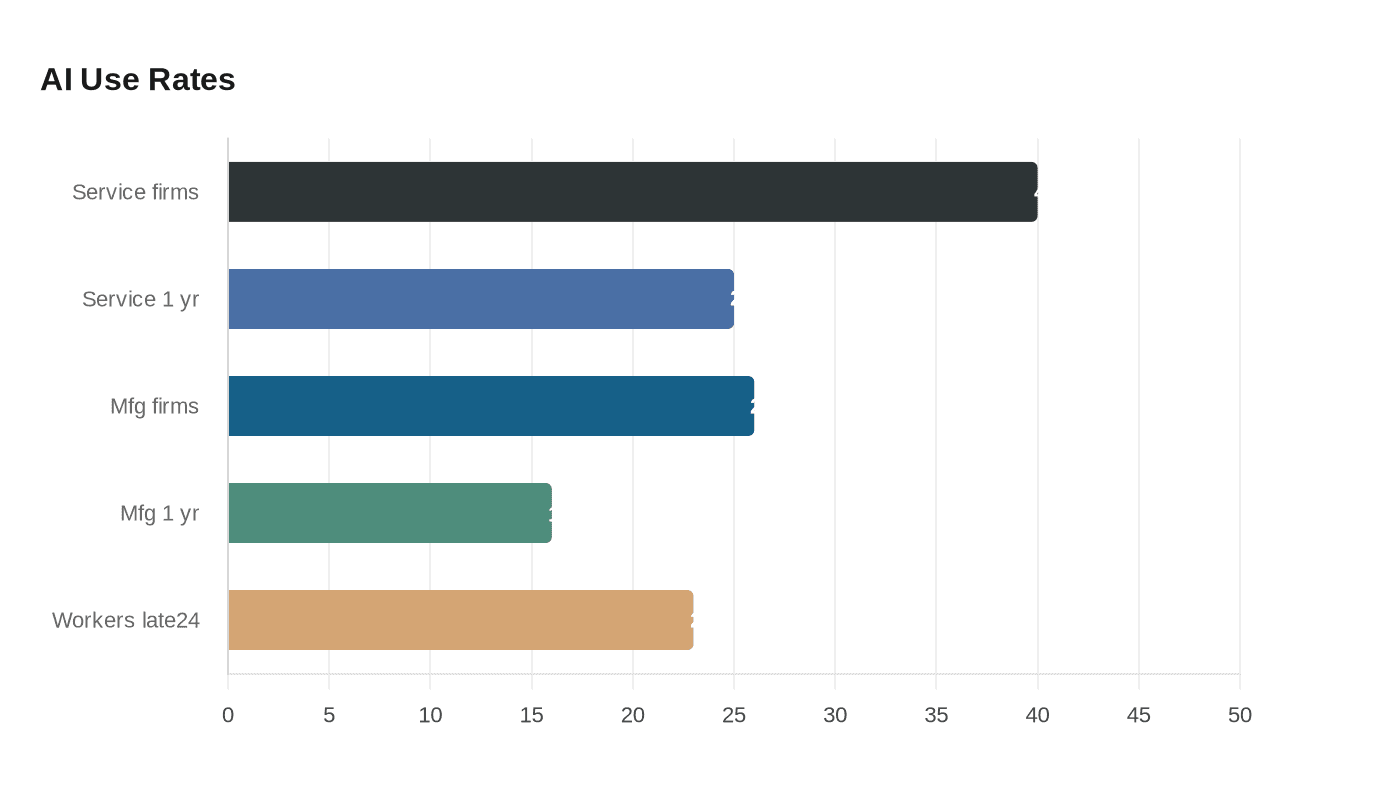
AI is starting to change the U.S. labor market in a quieter and potentially more durable way: by reducing hiring rather than triggering mass layoffs. Payroll growth slowed to an average of just 35,000 jobs a month from May through July 2025, while the unemployment rate rose to 4.2% in July, above the 3.7% average in 2019. By late 2024, 23% of employed workers said they were using generative AI for work at least once a week, a sign of how quickly the technology has spread through offices and factory floors.
The clearest near-term evidence is showing up in labor demand. In regional surveys, the Federal Reserve Bank of New York found very few firms reporting AI-induced layoffs, even as AI use rose sharply over the past year. Service firms reporting AI use climbed to 40% from 25% a year earlier, and manufacturing firms rose to 26% from 16%. Some companies said they were retraining workers; others said they were scaling back hiring because AI was taking over tasks they once filled with new employees.
That distinction matters because it changes how the labor market absorbs shock. Goldman Sachs economists estimated in April 2026 that AI was already shaving about 16,000 net jobs a month off U.S. payroll growth over the previous year. Their breakdown suggested roughly 25,000 jobs a month were being lost to substitution, while about 9,000 were being added back through augmentation. The pressure was falling hardest on Gen Z and entry-level workers, especially in routine white-collar roles such as data entry, customer service, legal support and billing.
Layoffs have not disappeared, and the AI label is appearing more often in cut announcements. Challenger, Gray & Christmas said employers announced 83,387 job cuts in April 2026, up 38% from March and the third-highest April total since 2009. Of those cuts, 21,490, or 26%, were attributed to AI, the second straight month the technology was the leading cited reason. The technology sector accounted for 33,361 cuts in the month.
Still, economists warn against treating every AI-related layoff as a simple case of automation. Some firms may be using AI as cover for broader restructuring or cost-cutting, and the New York Fed’s survey data showed retraining was more common than job elimination. Harvard economists David Deming and Lawrence H. Summers found that occupational churn in the United States was relatively stable from 1990 to 2017, but recent changes suggest AI may be beginning to alter that long-standing pattern.
The broader picture is of a labor market where the first damage may be invisible in headline unemployment figures. AI is increasingly closing off openings before they are posted, especially for younger workers and job seekers trying to enter white-collar careers, even as companies keep total layoffs contained and selectively add workers with the new skills they want.
This article was produced by Prism’s automated news system from verified source data, official records, and press releases, then run through automated quality and moderation checks before publishing. The system is built and supervised by the people who set the standards it runs under. Read our full AI policy.
Did this article answer your question?