Aid Cluster Finds Thousands of Gaza Tents Unfit for Winter
A Jan. 3, 2026 assessment by the Palestine Shelter Cluster, coordinated by the Norwegian Refugee Council, found that thousands of tents delivered to displaced Palestinians in Gaza are inadequate for winter conditions. With nearly 1.9 million people displaced and recent floods already swamping camps, the finding highlights an urgent gap in both the quantity and quality of humanitarian shelter vital to survival this season.
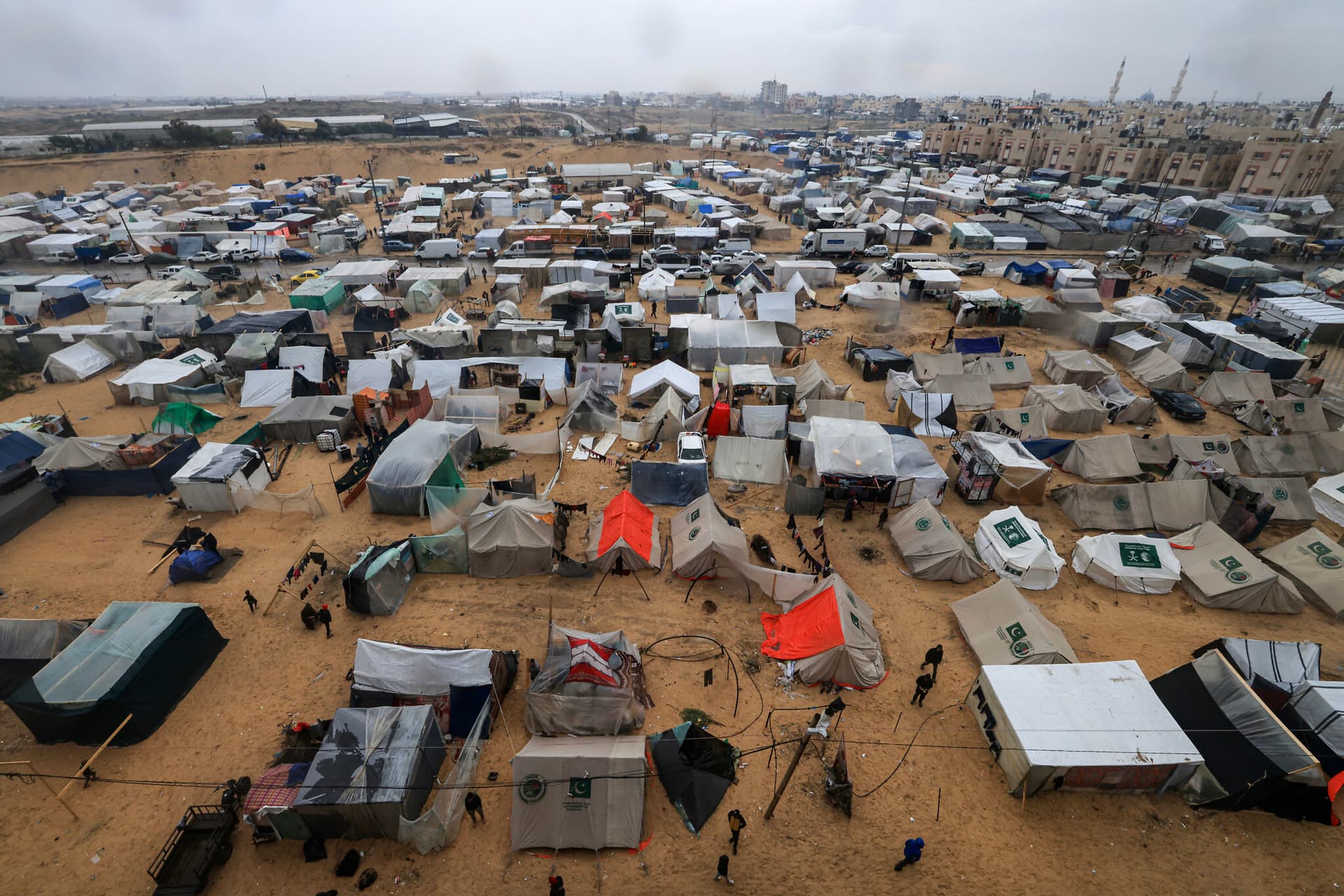
The Palestine Shelter Cluster’s consolidated Jan. 3 assessment concludes that thousands of tents supplied by some states and private actors do not provide adequate protection from cold, wet weather and flooding as Gaza enters its third winter under mass displacement. The finding underscores a dual crisis: a shortfall in overall shelter numbers and a critical mismatch between delivered items and winterization needs.
United Nations figures show nearly 1.9 million Palestinians have been displaced since October 2023, and a majority remain in makeshift or deteriorating shelters. A November 2025 assessment by the Shelter Cluster and UNHCR warned that preparations for winter were limited and negligible relative to need, a situation made worse by restrictions on aid access. The first seasonal rains on Nov. 14, 2025 prompted immediate flooding across displacement sites, and subsequent heavy rainfall and very low temperatures have intensified exposure risks for families living without reliable heating, gas or electricity.
Operational data and site-management teams recorded rising humanitarian impact. On Dec. 10, 2025, at least 465 households, 2,731 people residing in 260 tents, were reported affected by flooding, and in one day more than 1,500 people were observed to have moved from flooded sites. The Palestinian Meteorological Department warned of continued cold and wet conditions, heightening the urgency for insulated shelters and drainage measures across high-risk displacement sites and displacement/external sites managed by municipal and emergency committees.
Supply figures show a partial and uneven response. The Shelter Cluster reported that 15,590 tents have been received by U.N. and international non-governmental organizations since the truce began, and other countries have sent about 48,000 tents, totaling roughly 63,590 tents reported through those channels. Palestinian civil society leaders estimate needs closer to 300,000 tents; only a fraction of that number has entered Gaza. Beyond tents, the UN 2720 Mechanism dashboard recorded 3,905 pallets of UN-administered aid offloaded at Gaza crossings on Dec. 10, with approximately 54 percent containing food, 22 percent shelter items, 13 percent health supplies, 10 percent water, sanitation and hygiene items, and 1 percent operational equipment. Despite these arrivals, distributions of winterization items such as insulated tents, tarps, blankets and winter clothing have been constrained by entry limits and operational barriers.

Humanitarian organizations and site-management teams have documented acute consequences, including deaths and drownings linked to exposure and flooding, and widespread accounts of families sheltering in flimsy tents in locations including Deir al-Balah and Khan Younis. Aid actors such as the International Rescue Committee, in some cases working with EU partners, are providing supplies and psychosocial support programs, but stress that material assistance remains far short of requirements.
The Jan. 3 assessment carries clear policy implications. Donor governments and private suppliers must ensure procurement meets winterization and flood-resilience standards, and coordination mechanisms should publish transparent inventories and quality-check outcomes. Restrictions on aid access and recent administrative measures affecting international NGOs further weaken operational capacity and heighten protection risks for civilians. Absent immediate scaling up of insulated shelters, fuel and drainage solutions, and unimpeded humanitarian access, winter will compound an already dire humanitarian emergency for hundreds of thousands of displaced Palestinians.
This article was produced by Prism’s automated news system from verified source data, official records, and press releases, then run through automated quality and moderation checks before publishing. The system is built and supervised by the people who set the standards it runs under. Read our full AI policy.
Did this article answer your question?