Air Canada Express Jet Collides at LaGuardia as Controllers Screamed Stop
A controller cleared a fire truck onto an active runway seconds before an Air Canada jet landed, killing both pilots. The warning system never sounded.
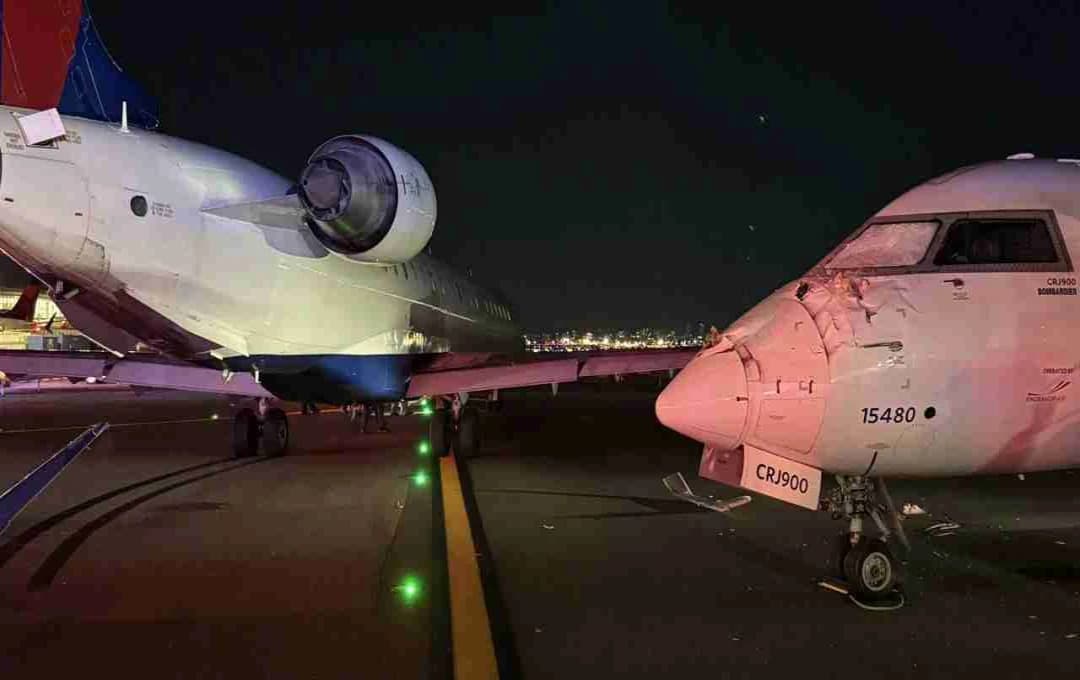
The grinding came first. Then, as passenger Liquori described it, "the loudest boom I've ever heard," as Air Canada Express Flight 8646 slammed into a Port Authority fire truck on Runway 4 at LaGuardia Airport just before midnight on March 23, 2026. The Bombardier CRJ-900's nose was ripped off on impact. Both pilots were dead before rescue crews reached the wreckage.
Understanding how a routine late-night approach became a fatal runway collision requires walking back roughly twenty minutes to a different emergency unfolding across the airport. United Airlines Flight 2384 had aborted its takeoff after an anti-ice warning light came on. The crew reported an odor in the cabin and said flight attendants were feeling ill. Controllers began coordinating equipment, and a Port Authority fire truck was cleared to cross Runway 4 with its emergency lights on.
What the controller who issued that clearance did not verify was that Flight 8646, the Jazz Aviation-operated CRJ-900 carrying 72 passengers and four crew from Montreal, was already on final approach to that same runway. When the conflict became apparent, the controller transmitted what will now be studied in safety training rooms across the industry: "Stop, truck one. Stop." Then, more urgently: "Stop, stop, stop, stop."
The truck did not stop in time. The aircraft struck it at approximately 100 miles per hour. The fire truck flipped several times across the rain-soaked tarmac. Inside the cabin, Liquori recalled "everybody was scared. Everybody thought they were going to die." After the wreckage settled, the controller's voice returned to address the destroyed cockpit: "Jazz 646, I see you collided with a vehicle there. Just hold position. I know you can't move. Vehicles are responding to you now." A second voice announced: "LaGuardia Airport is closed at this time." On that same audio, a controller is heard saying: "I messed up."
Of the 72 passengers aboard, 39 were hospitalized and nine remained in care at the latest count, some in critical condition. The two firefighters in the truck were also taken to hospitals. The pilot and copilot, both based in Canada according to Port Authority Executive Director Kathryn Garcia, were the only fatalities. The crash was the first at LaGuardia to kill anyone in 34 years, arriving nearly to the day of a 1992 USAir disaster that killed 27 of 51 people aboard.
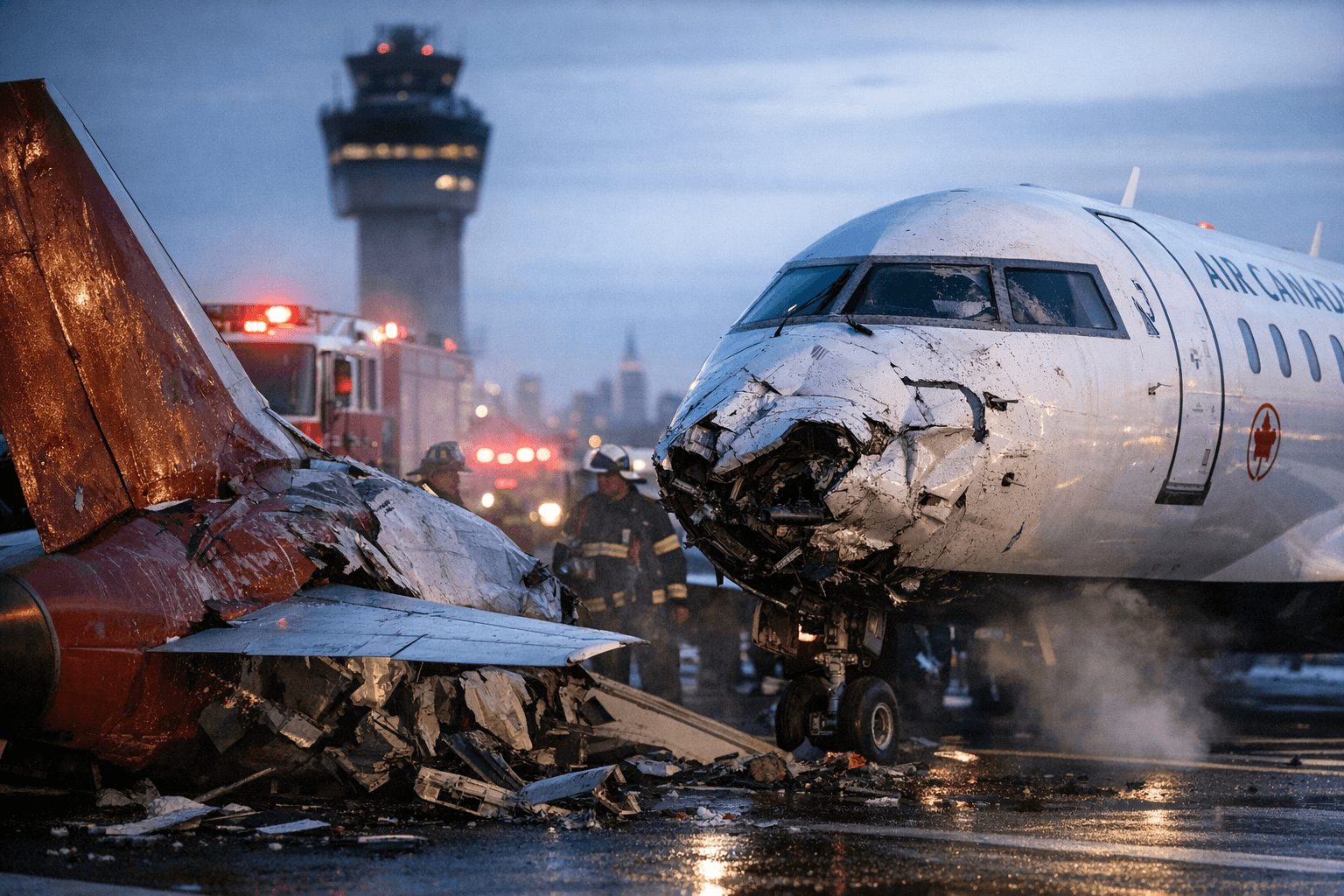
National Transportation Safety Board Chair Jennifer Homendy confirmed through the cockpit voice recorder that the truck had been cleared to cross while the aircraft was landing. She identified a compounding failure: the airport's runway incursion warning system never sounded because the Port Authority fire truck did not have a transponder. "It didn't work as intended," Homendy said. Investigators had not yet interviewed the two firefighters or reviewed the flight data recorder at the time of that disclosure.
The transponder gap exposes a regulatory fix that has existed on paper for years. Major airports require vehicles on movement areas to be trackable, but equipment compliance is uneven. Beyond hardware, the collision raises a harder problem: controller task saturation. One controller was simultaneously managing a medical emergency on the United aircraft, coordinating ground equipment, and clearing landing traffic. Aviation safety experts have long argued that standardized runway-crossing callout procedures, requiring verbal confirmation that no approach is active before any vehicle crosses an active runway, represent one of the lowest-cost and highest-impact reforms available. At LaGuardia on March 23, that check either did not happen or arrived too late.
Homendy warned against premature conclusions while investigators gather evidence, including interviews still pending with the firefighters. The FAA is separately examining controller staffing levels and whether standard runway-crossing procedures were followed while two emergencies ran in parallel. Whether the reforms that follow are proportional to what failed on Runway 4 will determine whether the next controller has better tools than a repeated, unanswered command to stop.
This article was produced by Prism’s automated news system from verified source data, official records, and press releases, then run through automated quality and moderation checks before publishing. The system is built and supervised by the people who set the standards it runs under. Read our full AI policy.
Did this article answer your question?

