Airports Set Up Food Pantries as TSA Agents Work Five Weeks Without Pay
TSA call-out rates hit 55% at one Houston airport as agents go unpaid, prompting food drives at major airports and warnings of possible closures.
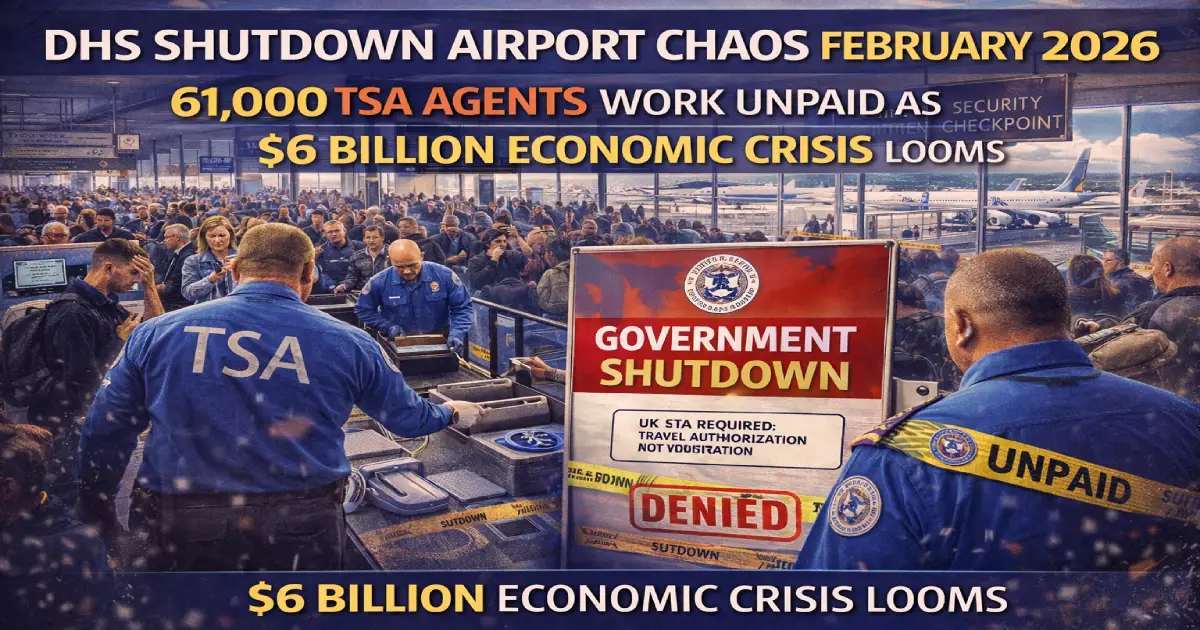
Airports across the country began handing out groceries and gift cards to their own security screeners after a congressional funding standoff left Transportation Security Administration workers collecting no paychecks for more than five weeks, pushing absence rates at some checkpoints to levels 27 times the norm.
DHS said 366 TSA employees have quit since the funding lapse began on February 14, as Democrats refused to support a DHS spending bill without guaranteed immigration enforcement reforms. The typical TSA call-out rate runs about 2 percent. On March 14, 55 percent of screeners at Houston's William P. Hobby International Airport did not show up, the highest single-day rate recorded during the current shutdown. Call-outs topped 50 percent in Houston on consecutive days and hit roughly 30 percent in both New Orleans and Atlanta, with fewer officers left to screen what the department described as an ever-growing number of travelers.
The strain showed in lines. More than a third of screeners at Hartsfield-Jackson Atlanta International Airport failed to report for a shift last week, the airport's general manager said, leaving passengers waiting up to two hours. Atlanta officials urged travelers to arrive at least three hours before departure. Some passengers at other airports missed flights after security waits exceeded three hours, and officials warned that smaller airports with thin staffing reserves could be forced to close temporarily.
DHS said the officers still showing up were working under "undue financial and emotional pressure," and that employees struggling to cover rent, food and gas were increasingly likely to leave. Replacing them takes four to six months of training, a timeline the department called untenable: "TSA simply cannot afford to lose its screening workforce."
The human cost landed in stark terms. "I've heard from officers who cannot afford copayments for cancer treatments or office visits for their sick children," Barker said, according to ABC30.
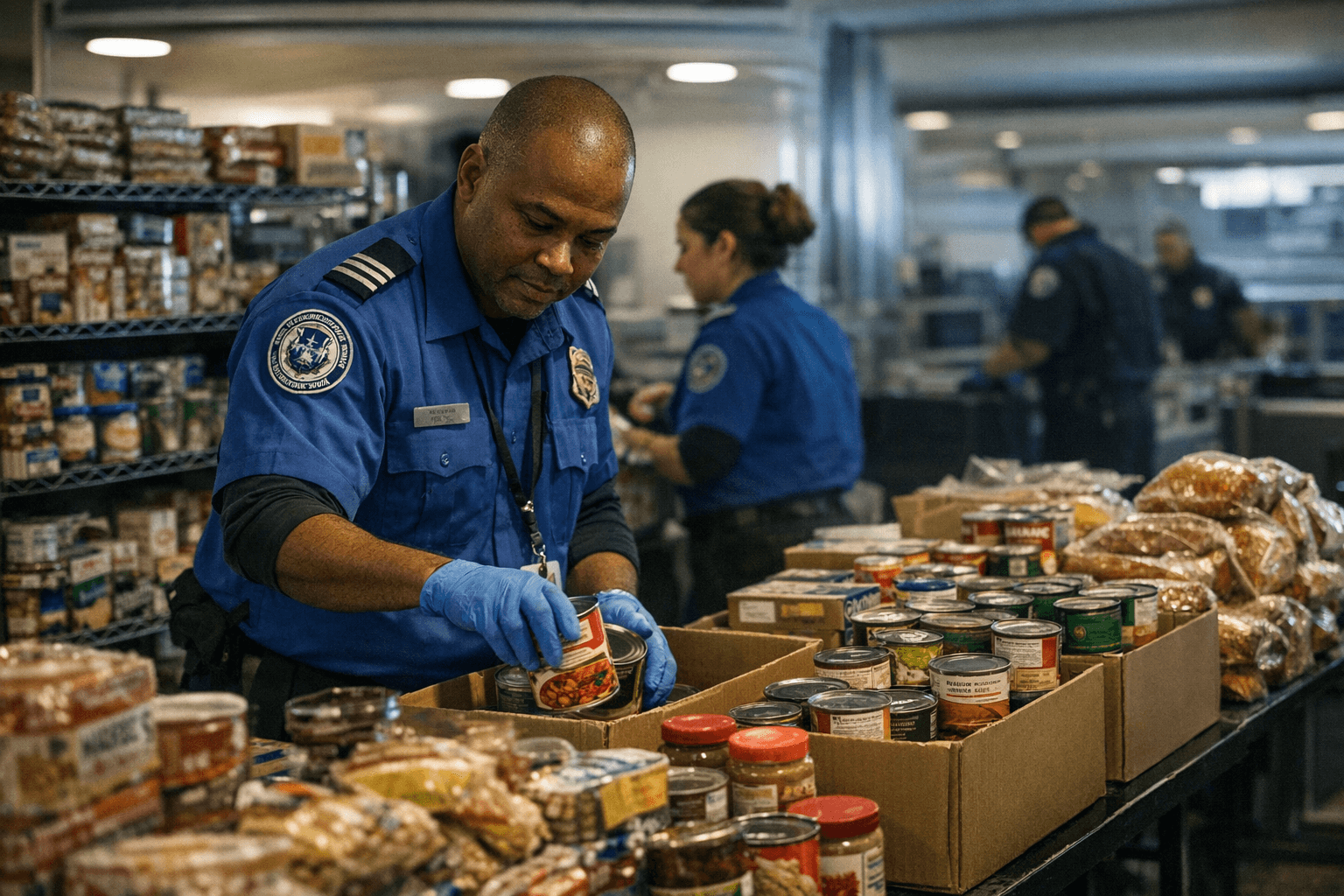
Airports responded with what resources they had. Denver International, Seattle-Tacoma International, Harry Reid International in Las Vegas and Cleveland Hopkins International Airport all set up food pantries or launched donation drives seeking grocery and gas gift cards, non-perishable food, hygiene products and infant supplies. Cleveland reopened its pantry earlier this month. "The airport is like a family, and this is our way to help out our family members here at the airport," Dynia told The Guardian.
The current impasse is the third funding lapse in six months. Late last year, federal workers including TSA officers went without pay for 43 days during what was described as the longest government shutdown in U.S. history. Congress then passed a brief two-week patch in late January before funding ran out again in mid-February. DHS noted that some workers from the previous shutdown were still paying off accumulated debt as recently as February, only to find themselves unpaid again weeks later.
The political deadlock shows no sign of breaking. With 366 screeners already gone and call-out rates at some airports more than 25 times their normal level, the math is straightforward: the airports most dependent on thin TSA rosters face the most immediate risk of operational collapse.
This article was produced by Prism’s automated news system from verified source data, official records, and press releases, then run through automated quality and moderation checks before publishing. The system is built and supervised by the people who set the standards it runs under. Read our full AI policy.
Did this article answer your question?