Alabama ordered to keep two majority-Black districts for midterms
Alabama must keep two majority-Black congressional districts for the midterms, preserving a 2024 map after judges again found the state’s GOP-drawn lines cut Black voters’ power.
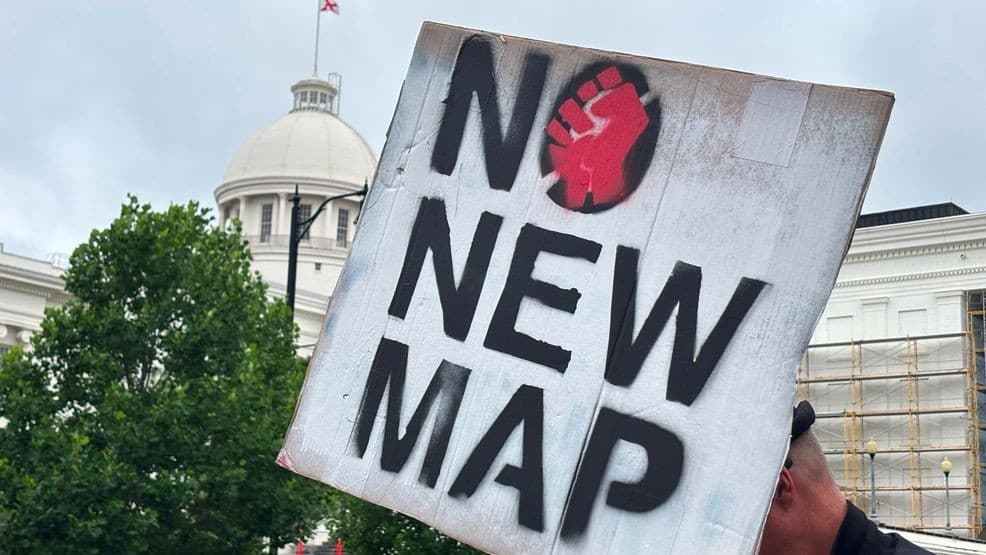
Alabama was ordered to keep using the congressional map that gave Black voters a realistic chance to elect candidates in two districts, a ruling that preserves the lines used in 2024 and blocks the state from switching to a map with only one majority-Black district before the midterms.
A three-judge panel of the U.S. District Court for the Northern District of Alabama issued the preliminary injunction on Tuesday, May 26, 2026, siding with Black voters who argued that changing the map now would invite chaos and deepen a yearslong violation of the Voting Rights Act. The Legislature-drawn 2023 map had left Alabama, a state with seven congressional seats and a Black voting-age population of more than 27%, with just one majority-Black district.

The ruling extends a redistricting fight that has already run through multiple rounds of court orders and appeals. The original lawsuit, filed in November 2021 by the ACLU, the ACLU of Alabama, the Legal Defense Fund, Hogan Lovells LLP, Wiggins Childs LLC, Greater Birmingham Ministries and the NAACP of Alabama, along with four individual voters, accused Alabama of cracking the Black Belt, a largely rural stretch of 18 counties that includes Montgomery, to weaken Black voting strength. In January 2022, the court unanimously granted a preliminary injunction, and in October 2023 it approved a special-master plan that created a second district with a Black voting-age population of 48.7%.
That district is now the 2nd Congressional District, represented by Democratic Rep. Shomari Figures of Mobile. Under the court-ordered map, Alabama had two districts in which Black voters could help choose the winner, the first time the state had such a configuration after years of litigation.
The latest decision is a sharp setback for Alabama Republicans, who had sought to return to the Legislature’s 2023 map and potentially reclaim Figures’ seat. State officials also said the change could help the GOP gain an additional U.S. House seat in November. After the Supreme Court’s earlier intervention, Attorney General Steve Marshall said Alabama should draw a map that “favors Republicans seven-to-zero,” while House Speaker Nathaniel Ledbetter called that move a “massive victory” for conservatives.
Voting-rights advocates say the dispute is about more than one state. NAACP National President Derrick Johnson warned that the effort represented “a return to Jim Crow,” and Figures said Alabama’s map fight reflects a broader backlash against Black political power. The case has become a test of how far Southern states can go after the Supreme Court’s April 2026 Louisiana ruling, which weakened the practical force of Section 2 claims in similar redistricting fights.
If Alabama appeals again, the state could ask the Supreme Court to intervene once more. Officials had already passed a law allowing the results of a May 19 primary to be voided in some districts if the map changed, a sign that the fight over Alabama’s House lines was expected to reach this point.
This article was produced by Prism’s automated news system from verified source data, official records, and press releases, then run through automated quality and moderation checks before publishing. The system is built and supervised by the people who set the standards it runs under. Read our full AI policy.
Did this article answer your question?

