Alabama Returns to Rose Bowl, Underestimated Against Unbeaten Indiana
Alabama returned to the Rose Bowl on December 30, appearing as an underdog against top ranked, unbeaten Indiana in a College Football Playoff semifinal. The matchup highlighted coaching narratives, contrast in team form, and larger questions about power, money, and momentum in college football.
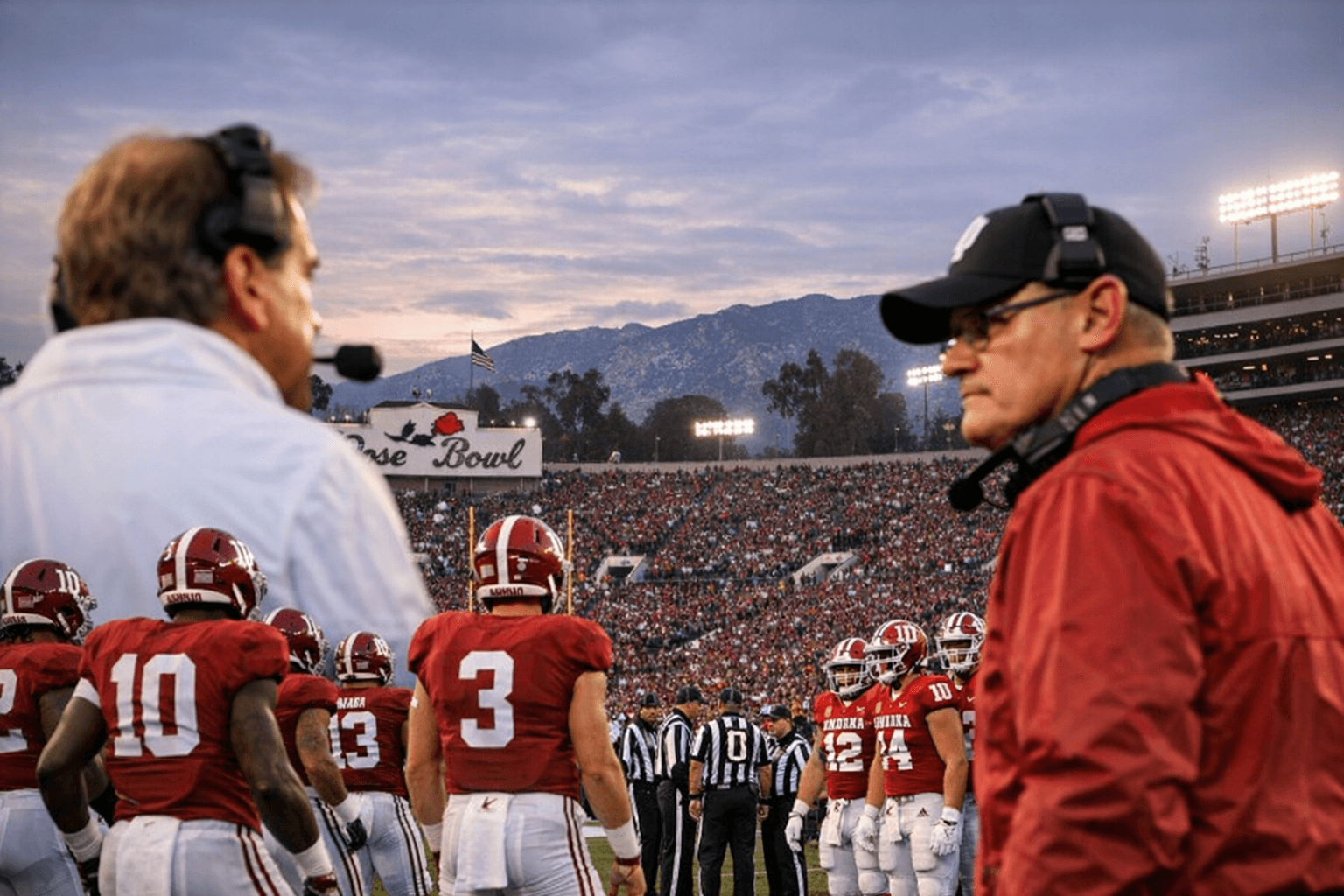
Alabama returned to the Rose Bowl on December 30 as a program accustomed to expectation but situated this season as the underdog against top ranked, unbeaten Indiana in a College Football Playoff semifinal. The matchup carried more than postseason implications. It crystallized a season in which historical prestige intersected with emerging power, and where coaching decisions, roster construction, and economic forces shaped how fans and stakeholders view the sport.
On the field the game was framed as a study in contrasts. Alabama brought the cachet of sustained national success, a deep recruiting network, and a culture built on defensive identity and high pressure. Indiana entered the game with the momentum of an undefeated campaign and the top ranking, a trajectory that forced bettors, broadcasters, and neutral observers to reassess the established hierarchy. Coming into the Rose Bowl each team presented distinct challenges for the other, from tempo and schematics to depth and special teams execution.
Coaching storylines dominated the buildup. The contest set a veteran program against a program that had climbed to the sport's summit, and the narrative centered on adjustments, game planning, and ingame resilience. How each staff schemed against the other's strengths mattered as much as talent on the depth chart. The game was a referendum on staff continuity, the ability to innovate under playoff pressure, and the willingness to take calculated risks with play calling and personnel deployment.
Key players to watch were defined more by positional importance than by names. Alabama needed its offense to sustain drives and keep Indiana's dynamic scoring engine off the field, while its defense was tasked with creating turnovers and controlling the line of scrimmage. Indiana relied on efficient ball movement, explosive plays, and limiting mistakes in special teams and red zone situations. Matchups at quarterback, along the offensive front, and in the secondary carried outsized weight, with clock management and third down conversion rates likely to determine the pace and ultimately the scoreboard.
Beyond the Xs and Os, the game underscored broader trends reshaping college football. The Rose Bowl, long a symbol of tradition, has become a stage where television revenue, name image likeness deals, and playoff positioning converge. For Alabama the financial and recruitment muscles remain formidable, but Indiana's run illustrated how program building, analytics, and player development can disrupt conventional power structures. The matchup also amplified continuing debates about athlete compensation, transfer portal dynamics, and how success on the field translates into long term institutional and commercial gains.
Socially the game carried resonance for fans and communities. For Alabama supporters, the underdog label challenged identity and expectation. For Indiana, the national spotlight amplified pride and scrutiny in equal measure. Economically the Rose Bowl drew attention to local tourism and broadcast economics, while culturally it prompted conversations about access and regional representation in marquee games.
The game was not merely a contest for a semifinal berth. It was a snapshot of college football at a crossroads, pitting historical dominance against a new model of ascent, and forcing the sport to reconcile tradition with rapid change.
This article was produced by Prism’s automated news system from verified source data, official records, and press releases, then run through automated quality and moderation checks before publishing. The system is built and supervised by the people who set the standards it runs under. Read our full AI policy.
Did this article answer your question?
.jpg&w=1920&q=75)