Alamance-Burlington unveils proposed rezoning maps for 2026-27 to ease overcrowding
Alamance-Burlington released proposed boundary maps for the 2026-27 school year as part of a six-step rezoning plan to ease overcrowding that now affects hundreds of families.
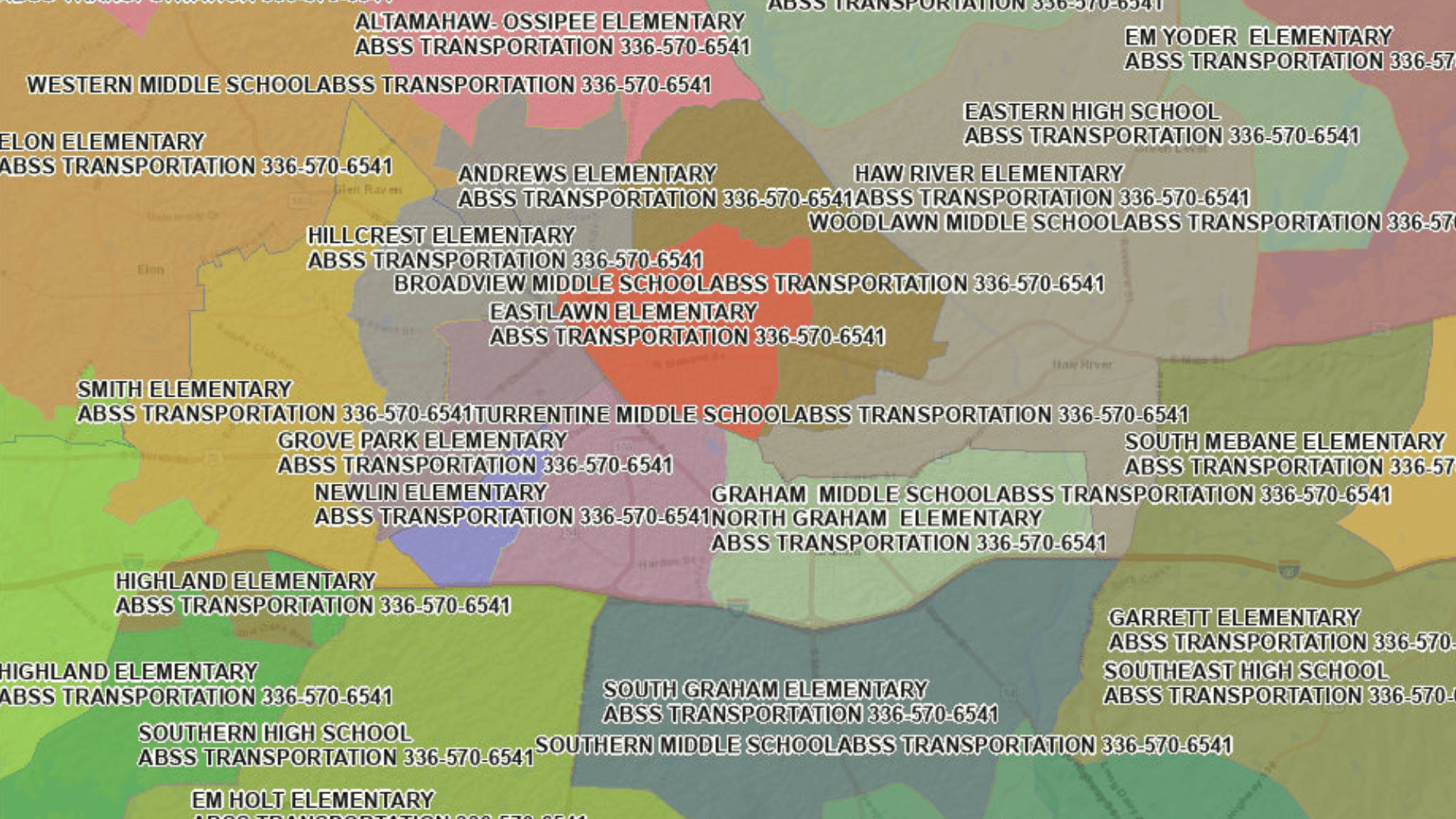
Alamance-Burlington School System unveiled proposed attendance-zone maps as the first public step in a six-step rezoning plan to redraw assignments effective the 2026-27 school year, a move aimed at easing overcrowding in the county’s fastest-growing areas. "This week, hundreds of families will get a first look at whether their student’s school might change as the Alamance‑Burlington School System unveils new proposed maps."
An explanatory piece posted March 2, 2026 summarized the district’s approach, though the online text cuts off mid-sentence: "The explanatory piece was posted March 2, 2026 and summarizes ABSS’s process working wi". The materials released so far include a color-coded map of Alamance County displaying school attendance zones with labels for some Alamance-Burlington School System elementary, middle and high schools and an overview of the district’s rezoning objectives.
The maps were produced in partnership with SchoolCAMP, described as "a firm within N.C. State University’s Operations Research and Education Laboratory (OREd)." SchoolCAMP used a planning system called IPSAC to create assignment scenarios. IPSAC breaks the county into neighborhood planning units sized between 50 and 100 K-12 students, evaluates those segments against criteria provided by the ABSS board and community surveys, and then assembles the segments into assignment maps. "Using the planning segments, the software then treats them like puzzle pieces to build the assignment map. They shift these segments around until the data shows the best balance of capacity, transportation and neighborhood stability."
District-level enrollment figures supplied in the explanatory materials show that "Enrollment in ABSS dropped during the 2020-2021 school year. It has steadily increased to near pre-pandemic totals this school year to 22,569 students, according to state data." That trajectory is the primary justification cited for rezoning: the district says population growth in parts of Alamance County has pushed some school buildings toward or beyond capacity and the new maps are meant to redistribute students across schools for 2026-27.
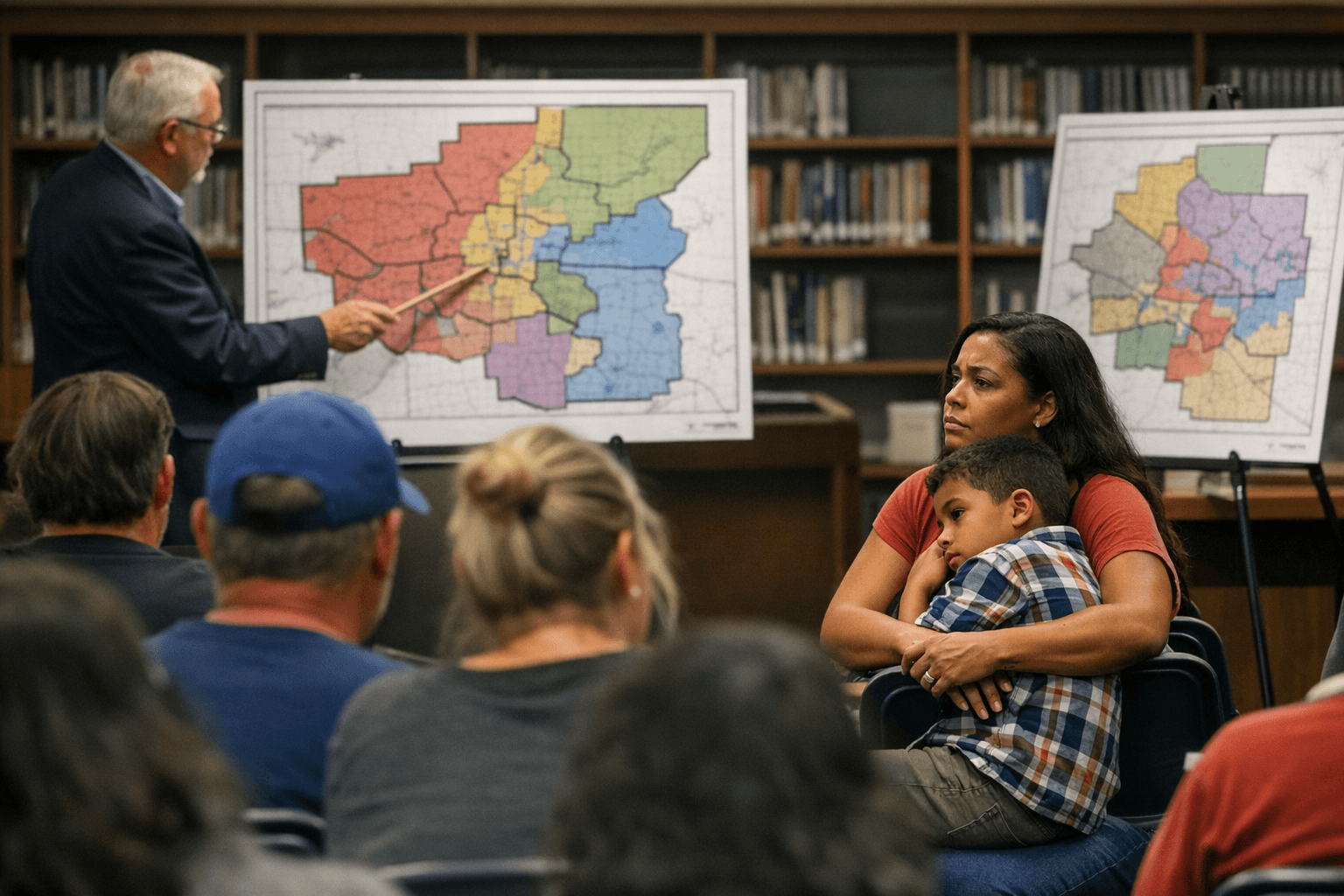
ABSS has signaled it is soliciting public input before finalizing assignments. An outreach post on the district’s social channels stated, "We want to hear from you before any maps are drawn. Over the next two weeks, we are gathering community input to understand the values and" (post text truncated). The materials also reference a prior community survey "like the one in January" as a source of the criteria used to guide mapping, but the publicly posted documents do not list the full set of criteria or the detailed results of that survey.
Key technical and scheduling details remain absent from the materials released so far: the full six-step timeline with step names and decision dates; school-level capacity figures and multi-year enrollment projections used to justify shifts; and the IPSAC input weights and constraints that quantify trade-offs among capacity, transportation and neighborhood stability. Until ABSS and SchoolCAMP release those documents, neighborhood-level impacts for Burlington, Graham, Haw River and other precincts in Alamance County will remain indicative rather than definitive for the 2026-27 assignments.
Sources:
Know something we missed? Have a correction or additional information?
Submit a Tip